










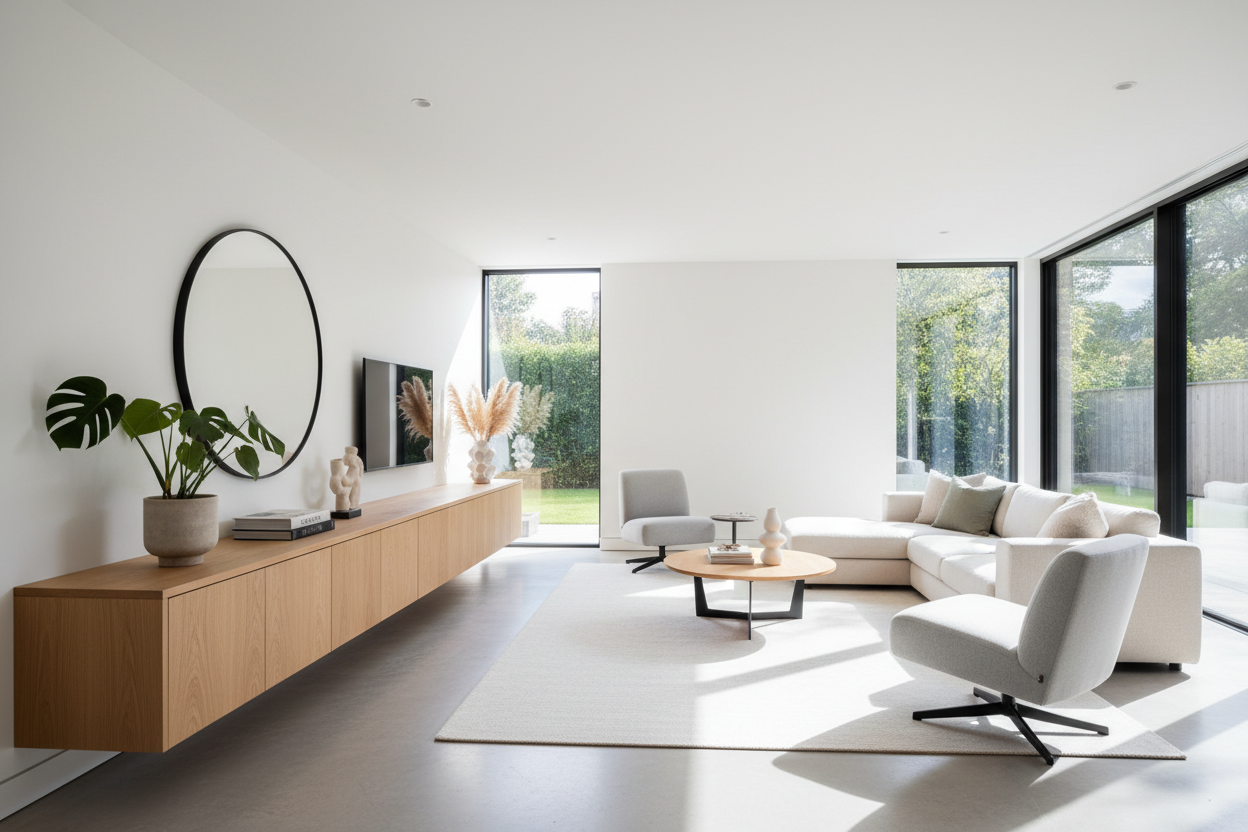
We often underestimate how much visual weight our furniture carries. When you walk into a living area, your eyes naturally scan the horizon line. If that line is constantly broken by tall bookshelves, armoires, or stacked storage units, the room can feel smaller and more chaotic than it actually is. This is where the living room low cabinet shines. It offers a way to hide the clutter of daily life—cables, board games, paperwork—while keeping the upper volume of the room open and airy. By keeping storage below eye level, you trick the brain into perceiving higher ceilings and more square footage.
I learned this lesson the hard way in my first apartment. It was a charming but incredibly cramped pre-war studio. In a misguided attempt to maximize storage, I bought two tall, towering bookcases. Once assembled, they felt like walls closing in on me. The room went from cozy to claustrophobic instantly. I eventually swapped them out for a long, low height cabinet that ran the length of the main wall. The difference was immediate. The light from the window could finally reach the back of the room, and I suddenly had a surface to display art rather than just a wall of spines. That experience completely changed how I approach layout and flow.
Defining the Low Cabinet Aesthetic
A low cabinet for living room spaces generally sits somewhere between 20 to 36 inches high. Unlike a sideboard you might find in a dining room, which is often taller to match table height, living room variations are designed to align with seating. The goal is to create a seamless look where the furniture feels grounded.
These pieces serve a dual purpose. Inside, they are workhorses. They swallow up the items you need but don't want to see. On top, they become a canvas. This is one of the few pieces of furniture that invites you to curate a vignette. You aren't just buying storage; you are buying a display surface for lamps, leaning artwork, or a collection of ceramics. The horizontal lines elongate the wall, making a narrow room feel wider.
Choosing the Right Materials and Style
Selecting the right finish dictates the mood of the entire space. If you want a warm, organic feel, natural wood grains like walnut or white oak are timeless. A mid-century modern low height cabinet with tapered legs adds a sense of lightness because you can see the floor underneath the unit. Seeing the floor continues the visual plane, which is another trick for making small spaces feel larger.
The Industrial and Modern Approach
For a more contemporary or industrial edge, metal cabinets or those with fluted glass doors are excellent options. Metal, particularly in matte black or powder-coated colors, offers a stark, clean contrast to soft sofas and rugs. Fluted or reed glass is particularly effective because it obscures the contents inside—meaning your organization doesn't have to be perfect—while still reflecting light and adding texture.
Solid Bases vs. Legs
Consider how the cabinet meets the floor. A piece sitting on a plinth base (flush with the floor) looks substantial and architectural. It feels built-in. However, it can look heavy. A cabinet raised on legs feels airier but requires you to clean underneath it. If you have a robot vacuum, measuring the leg height is a practical step you shouldn't skip.
Functionality Beyond Storage
While we call it a cabinet, in many homes, this piece serves as the media center. A living room low cabinet is often the ideal height for a television. Placing a TV on a unit that is too high is a common ergonomic mistake that leads to neck strain. The center of your screen should be at eye level when you are seated. Low cabinets usually hit this sweet spot perfectly.
If you plan to use it for media, look for units with cable management ports in the back. If you fall in love with a vintage piece that lacks them, it is easy enough to drill a hole in the back panel, but you have to be willing to modify the furniture. Ventilation is another factor. Gaming consoles and receivers generate heat. A cabinet with slat doors or a mesh front allows infrared signals from remotes to pass through and keeps air circulating, preventing your electronics from overheating.
Styling the Surface
Once the low cabinet for living room storage is in place, the fun part begins. The surface styling should balance the visual weight of the television if you have one, or stand alone as a design feature if you don't. A common pitfall is lining up small knick-knacks in a row, which looks like a soldier formation and adds clutter.
Instead, think in groupings. Try a large table lamp on one side to add height. Balance it on the other side with a stack of coffee table books or a substantial plant. Layering is your friend here. Lean a framed print against the wall, and place a smaller object slightly in front of it. This creates depth. Because the cabinet is low, you have plenty of vertical wall space above it. This is the perfect zone for a gallery wall or a large, statement mirror to bounce light around the room.
The Traffic Flow Factor
One logistical aspect people forget is the swing of the doors. If you are placing a low height cabinet in a narrow walkway or directly in front of a coffee table, standard swinging doors might be a nuisance. Sliding doors or tambour doors (which roll back into the unit) are incredible space savers. They allow you to access the contents without blocking the flow of traffic. Drawers are another alternative, offering easy access to smaller items like remotes, coasters, and batteries without the need to dig into the back of a deep shelf.
Making the Investment Last
Quality construction matters more with low cabinets than with taller units because you interact with them differently. You might sit on the edge of it during a party, or your kids might use it as a track for toy cars. Look for solid joinery. If it is made of particle board, ensure the veneer is high quality and thick enough to withstand scratches. The hinges should be adjustable so that if the doors start to sag over time—a natural occurrence with frequent use—you can tighten them back into alignment.
Ultimately, this piece of furniture is a grounding element. It anchors your seating area and provides a boundary without building a wall. Whether you use it to hide a chaotic collection of toys or to display a prized vinyl collection, the low profile ensures that your living space remains open, inviting, and functionally sound.
Frequently Asked Questions
What is the ideal height for a low cabinet if I am using it for a TV?
For the best viewing experience, the center of your TV screen should be at eye level when seated. This usually means your cabinet should be between 20 to 24 inches tall, depending on the size of your television and the height of your sofa.
Can I use a low cabinet as a bench for extra seating?
It depends entirely on the construction of the piece. While some solid wood low cabinets are sturdy enough to hold weight, many media consoles are not designed to support a person. Always check the manufacturer's weight limit specifications before sitting on it or placing heavy objects like large sculptures on top.
How do I mix wood tones if my floor is also wood?
Contrast is key to preventing the furniture from getting lost visually. If you have dark floors, opt for a lighter wood like oak or a painted finish for the cabinet. If you want to use a wood tone similar to your floor, place a rug underneath the cabinet to create a visual buffer and separate the two surfaces.

Leave a comment
This site is protected by hCaptcha and the hCaptcha Privacy Policy and Terms of Service apply.