










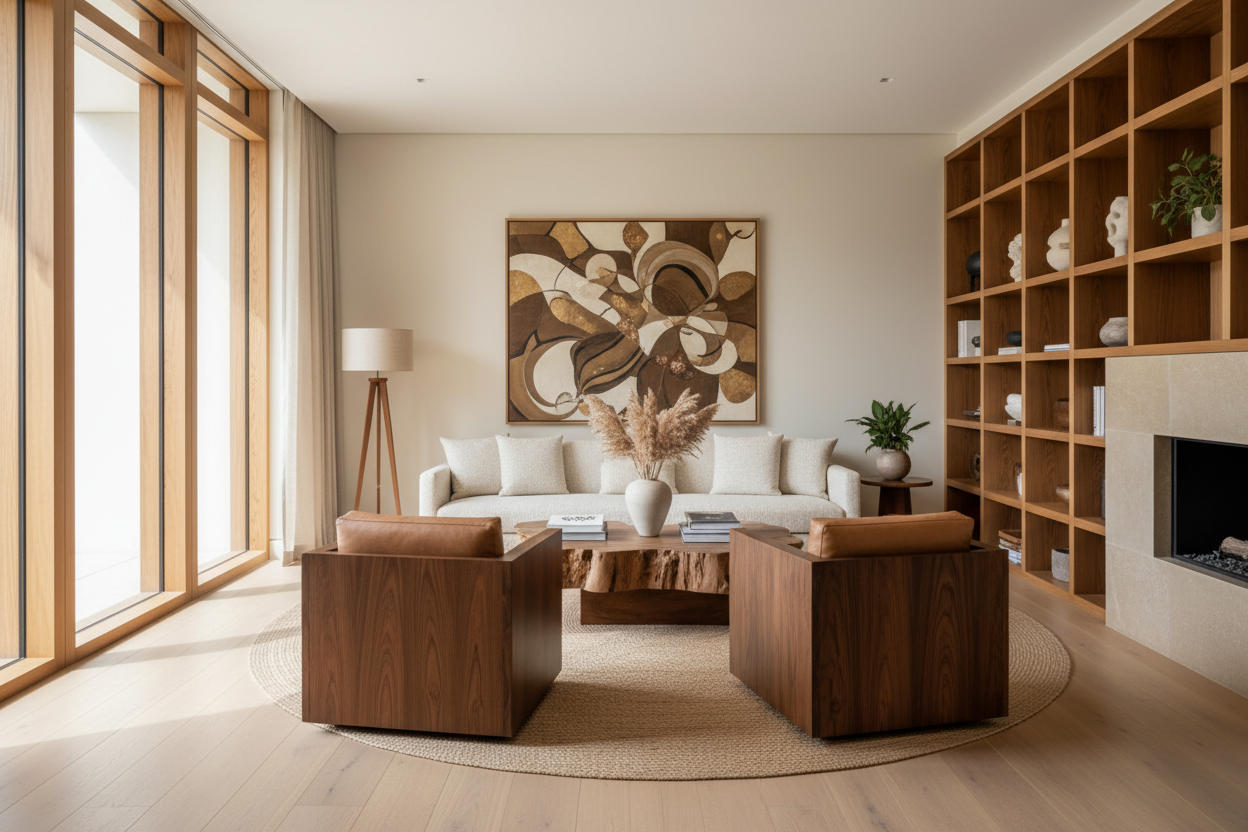
There is a specific sterility that plagues contemporary homes—a coldness that comes from too much glass, chrome, and high-gloss lacquer. As a designer, my immediate solution to ground a floating, impersonal space is introducing natural textures. Specifically, furniture design living room wooden elements are the most effective way to introduce warmth, history, and organic complexity into a layout.
Key Features to Look For
Before committing to a purchase, evaluate these structural and aesthetic indicators to ensure longevity and style:
- Joinery Techniques: Look for dovetail or mortise-and-tenon joints rather than staples and glue, which indicate superior craftsmanship.
- Wood Hardness (Janka Scale): For high-traffic areas, prioritize hardwood living room furniture like Oak, Maple, or Walnut over softer woods like Pine.
- Finish Type: Oil finishes allow the wood to breathe and develop a patina, while polyurethane offers a harder, protective shield against spills.
- Grain Orientation: Consistent grain patterns often signal higher quality solid wood or premium veneer work.
Selecting the Right Timber for Your Aesthetic
The species of wood you select dictates the room's atmosphere. A modern living room wooden furniture scheme often relies on Walnut or Teak. These darker, tighter grains suggest mid-century sophistication and pair beautifully with brass accents and velvet upholstery. Conversely, White Oak or Ash offers a Scandi-adjacent, airy feel that works best in smaller footprints where you want to reflect light.
It is a common misconception that all wood tones must match. In a curated wood style living room, we aim for tonal harmony rather than uniformity. You can mix a dark espresso coffee table with honey-oak flooring, provided they share the same warm or cool undertone. This layering creates a collected, high-end look rather than a generic showroom appearance.
Balancing Silhouette and Visual Weight
When incorporating wooden furniture design for living room layouts, pay close attention to "visual weight." Solid wood pieces can feel heavy and imposing. To counter this, look for designs with negative space. A credenza with slender, tapered legs feels significantly lighter than a blocky chest that sits flush against the floor.
The Role of Mixed Materials
To avoid the "sauna effect"—where a room looks like a box of timber—contrast is essential. If you have a heavy wooden living rooms aesthetic with wood floors and paneled walls, your furniture needs to break that texture. Pair a raw-edge wooden console with a glass coffee table or a boucle sofa. The interplay between the rough, organic wood grain and soft, woven textiles creates the tactile richness associated with luxury design.
Ergonomics and Functionality
Beyond aesthetics, living room wooden furniture design must be livable. Hardwood creates a rigid surface. For seating, ensure the pitch of the wooden frame is angled correctly for back support, or that the cushioning density is high enough to prevent you from feeling the frame underneath. For coffee tables, consider the edge profile; a sharp, 90-degree corner on a solid wood table is a hazard in a family home, whereas a bullnose or chamfered edge softens the impact both visually and physically.
Lessons from My Own Projects
I learned the hard way about the reality of "living finishes" early in my career. I specified a stunning, raw-finish white oak coffee table for a client who loved to entertain. It looked sculptural and pristine in the portfolio photos.
Three months later, I visited the site and saw the ghost of a red wine ring and oil spots from hors d'oeuvres that had seeped deep into the grain. The client was afraid to use it. Now, when I recommend wooden furniture designs for drawing room areas, I am brutally honest about maintenance. If you aren't the type to use coasters religiously, I will steer you toward a matte conversion varnish finish. It looks like natural oil, but it seals the pore completely. Real luxury is furniture you don't have to tiptoe around.
Conclusion
Investing in high-quality wood pieces is rarely a regret. Whether you choose a statement live-edge table or a sleek mid-century armchair, wood brings an irreplaceable soulful quality to a home. Focus on the joinery, respect the undertones, and choose a finish that matches your lifestyle, and your living room will age beautifully.
Frequently Asked Questions
How do I mix different wood tones in one room?
The secret is to keep the undertones consistent. Mix warm woods (cherry, mahogany, warm walnut) together, or cool woods (ash, maple, weathered oak) together. Use a neutral rug to break up the space between a wood floor and wood furniture to prevent clashing.
Is solid wood always better than veneer?
Not necessarily. While solid wood can be refinished, high-quality veneer over a stable substrate (like plywood) is often more resistant to warping and cracking in climates with fluctuating humidity. It also allows for intricate grain patterns that are impossible with solid planks.
What is the best wood for a durable coffee table?
White Oak and Hard Maple are excellent choices for hardwood living room furniture because they score high on the Janka hardness scale, making them resistant to dents and scratches compared to softer woods like Pine or Cedar.


Leave a comment
This site is protected by hCaptcha and the hCaptcha Privacy Policy and Terms of Service apply.