










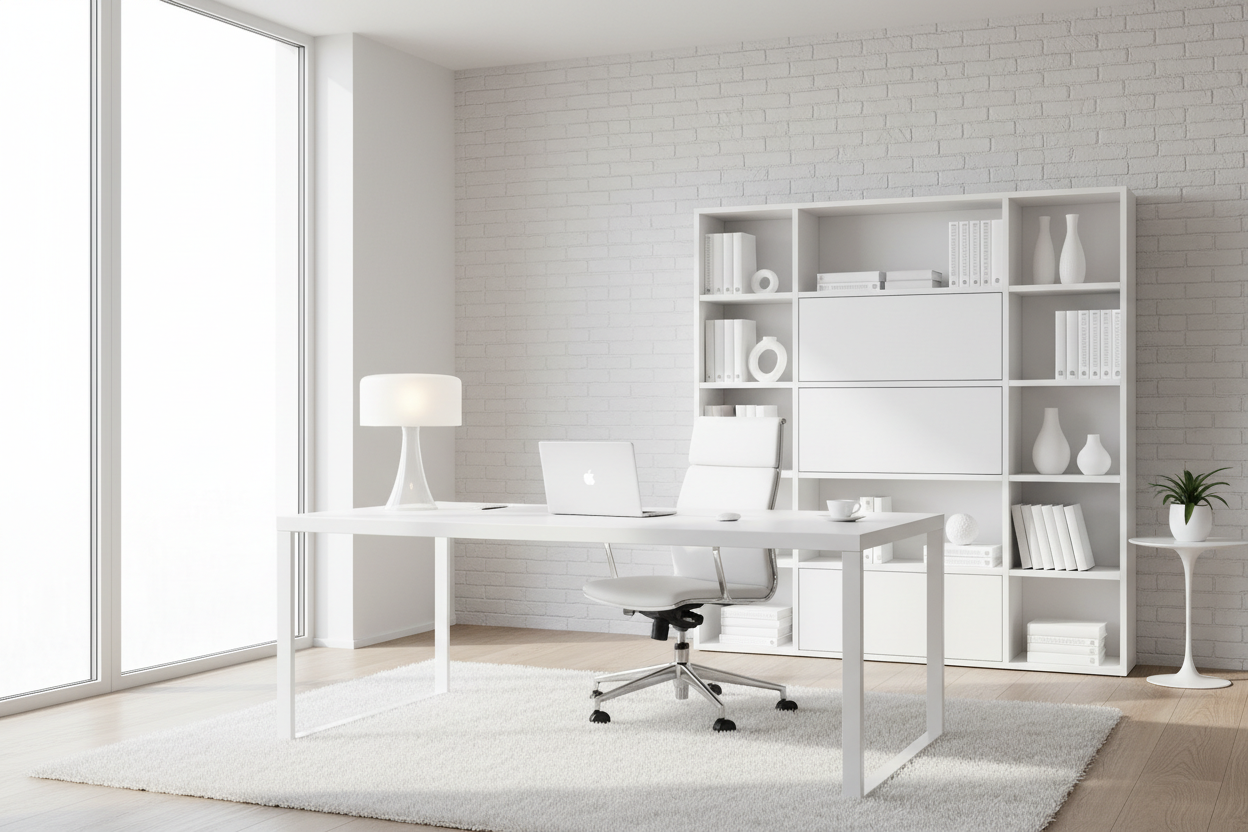
There is a pervasive myth in interior design that a monochromatic workspace must feel sterile or clinical. Clients often hesitate, fearing that a bright palette will turn their sanctuary into something resembling a hospital ward. However, when curated with intention, office furniture in white serves as the ultimate canvas for clarity and sophistication. It reflects light, expands the perception of space, and offers a timeless aesthetic that outlasts fleeting trends. The secret lies not in the color itself, but in the mastery of texture, tone, and material quality.
Quick Decision Guide: Selecting White Furniture
- Undertones Matter: White is rarely just "white." Match cool (blue-based) furniture with cool lighting, and warm (cream-based) pieces with warmer ambient light to avoid clashing.
- Surface Durability: For high-traffic desktops, opt for High-Pressure Laminate (HPL) or thermal-fused melamine over soft lacquers, which chip easily.
- Texture Variance: To prevent a flat look, mix materials. Pair a glossy white desk with a matte white chair or a textured linen task chair.
- Edge Banding: Check the edges of desks. Laser edge banding (seamless) prevents the "dark line" accumulation of dirt common in cheaper manufacturing.
Navigating Materiality and Finishes
When sourcing white office furniture, the distinction between high-end and budget often comes down to the finish. In a showroom setting, a high-gloss lacquer might look stunning under spotlights, but in a working environment, it acts as a magnet for fingerprints and micro-scratches. For a functional yet elegant white office, I often recommend a satin or matte finish. These surfaces diffuse light rather than reflecting it, reducing eye strain during long work sessions and hiding dust more effectively.
Solid Wood vs. Engineered Surfaces
While purists love solid wood, painted solid wood expands and contracts with humidity, which can lead to hairline cracks in the white paint over time. For white home office furniture, high-quality engineered wood or metal with a powder-coated finish often provides better longevity and color stability. If you desire a natural element, consider a whitewashed oak desk where the grain remains visible, adding depth to the piece.
Orchestrating Visual Balance in White Interiors
An all white office requires careful calibration of visual weight. If every piece of furniture—from the filing cabinet to the bookshelf—is a solid, opaque white block, the room will feel heavy and imposing. To counter this, incorporate white modern office furniture with slender silhouettes or open-frame metal legs. This allows light to pass through the furniture, maintaining an airy atmosphere.
Furthermore, consider the hardware. A white desk with brushed brass or matte black pulls instantly elevates the piece from basic to bespoke. These small metallic accents break up the visual continuity and act as jewelry for the room, anchoring the white office interiors.
Integrating Sets into the Home
Purchasing white home office furniture sets is a convenient way to ensure consistency, but proceed with caution. A matching desk, hutch, and bookshelf can quickly look like a "catalogue room" devoid of personality. To make a pre-bundled set work, break up the uniformity. Place a vintage rug under the desk, or use a task chair in a contrasting neutral like dove gray or tan leather. This layering technique softens the rigidity of the set and integrates the workspace seamlessly into the broader home aesthetic.
My Personal Take on Office Furniture in White
I learned a hard lesson about white furniture early in my career during a project for a graphic design studio in Chicago. We specified a stunning, pure white laminate desk for the lead designer. It looked incredible on installation day. Three weeks later, I got a frantic call. The client wore raw denim jeans almost daily, and the dye had transferred onto the edge of the white chair and the underside of the desk lip. It turned a bespoke installation into a blue-tinted mess.
Since then, I never specify a porous matte white finish for seating or high-friction desk edges without testing it first. I also realized that "white" changes drastically based on exposure. In that same project, a "Cool White" cabinet looked distinctly blue next to a "Warm White" wall paint. Now, I always bring a physical sample of the furniture finish to the site to see how it reads against the flooring and wall color before ordering. It’s these unpolished realities—dye transfer and undertone clashes—that you have to anticipate to keep a white space looking pristine.
Conclusion
Designing with white is an exercise in restraint and precision. By focusing on durable materials, paying attention to undertones, and breaking up uniformity with texture, you can create a workspace that feels expansive and serene. Don't be afraid of the maintenance; with the right finishes, a white office is as practical as it is beautiful.
Frequently Asked Questions
How do I prevent my white office furniture from yellowing?
Yellowing is typically caused by UV exposure affecting the polymers in plastics or lacquers. To prevent this, ensure your furniture is UV-resistant (often found in high-quality commercial laminates) or position the furniture out of direct, harsh sunlight. Window treatments that filter UV rays are also essential for longevity.
Is white furniture practical for a small home office?
Absolutely. White office furniture for the home is actually the best choice for small footprints. Because white reflects light, it blurs the boundaries of the piece, making it appear less bulky than dark wood alternatives. This visual trick makes a cramped room feel significantly more open.
How do I keep a white desk clean without damaging the finish?
Avoid abrasive scrubbers or harsh chemicals like bleach, which can strip the protective topcoat and actually attract more dirt over time. Use a soft microfiber cloth with warm water and a mild dish soap for daily cleaning. For tougher ink stains, a specialized melamine foam sponge can work, but use it gently.


Leave a comment
This site is protected by hCaptcha and the hCaptcha Privacy Policy and Terms of Service apply.