










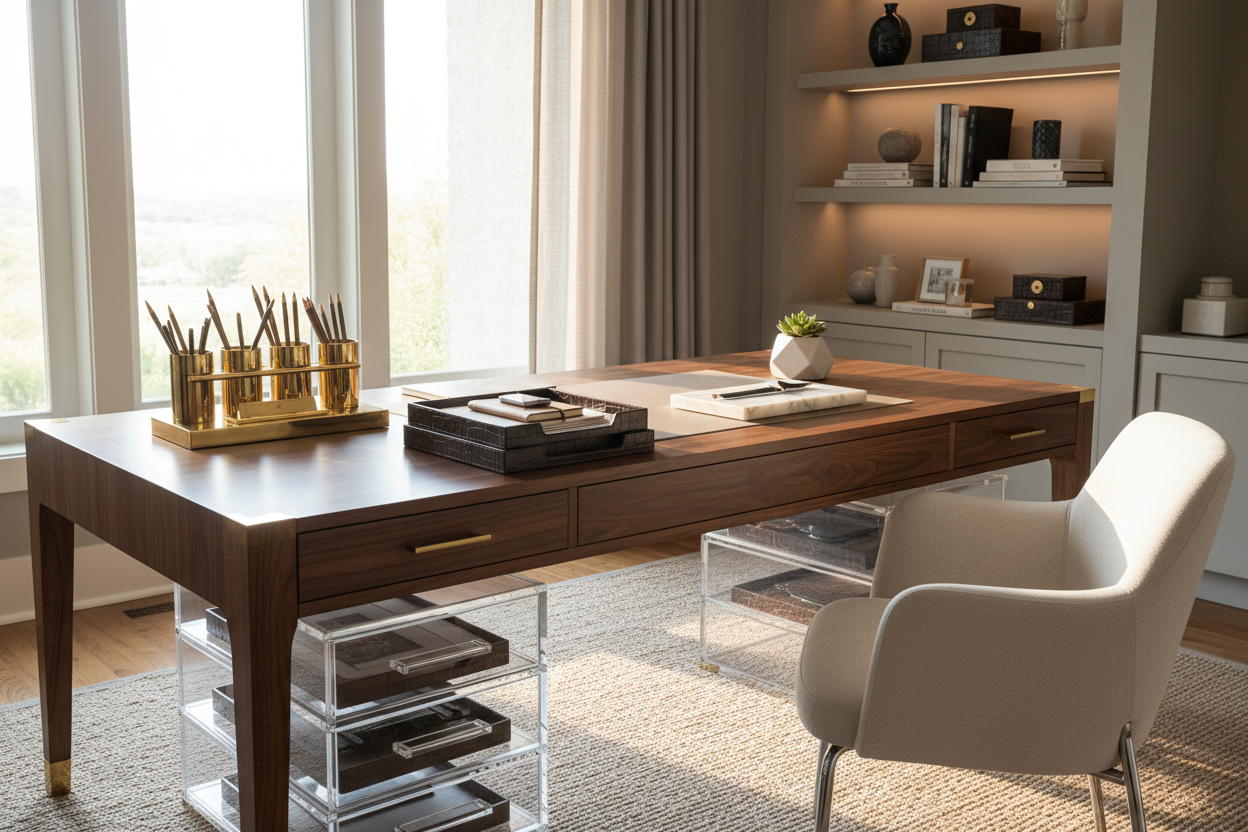
There is a distinct difference between a workspace that is simply 'clean' and one that is curated. As a designer, I frequently walk into home offices where the furniture is exquisite—perhaps a walnut mid-century modern desk or a sleek glass executive table—but the visual impact is ruined by clutter or, worse, cheap plastic bins. Visual noise creates cognitive load. If you are seeking the best desk organization, you are not just looking for storage; you are looking for a system that enhances your workflow while respecting the aesthetics of your interior design.
Key Features to Look For
- Material Integrity: Avoid wire mesh. Opt for solid wood, full-grain leather, or high-grade acrylic that complements your desk's finish.
- Modular Scalability: The best desk organizer systems allow you to add or subtract components as your workflow changes without breaking the visual line.
- Tactile Experience: Consider how the item sounds and feels. High-end organizers often feature felt backing or velvet lining to dampen sound and protect surfaces.
- Visual Weight: Ensure the scale of the organizer balances with your monitor and lamp; it should anchor the space, not clutter it.
Choosing the Right Material Palette
When selecting the best desktop organization, materiality is paramount. In high-end design, we treat desk accessories as jewelry for the room. If you have a heavy timber desk, introducing the best office organization supplies made of cold, industrial wire mesh creates a jarring contrast that cheapens the look.
Instead, look for materials that age well. Leather catch-alls develop a patina over time, adding character. For a more modern, architectural look, heavy-gauge acrylic offers a 'ghost' effect, reducing visual clutter while providing the best desk storage for smaller items. The goal is cohesion; your organizers should look like they were born from the desk, not added as an afterthought.
Zoning: The Secret to Functional Layouts
The most common mistake I see is placing the best office desk organizer right in the center of the workspace. This impedes your primary work zone. Effective space planning requires dividing the surface into active and passive zones.
The Active Zone
This is the immediate reach of your arms. Here, you should only place the absolute essentials. The best office organization products for this zone are low-profile—think slim trays or a singular pen rest. Keep this area breathable to maintain focus.
The Passive Zone
Push the bulkier items, such as vertical file sorters or the best top of desk organizers for paper management, to the perimeter or the secondary side of your L-shaped desk. This creates a visual frame around your monitor without encroaching on your writing surface.
Ergonomics and Visual Balance
Functionality must align with ergonomics. The best office organizer is one that minimizes repetitive reaching strain. If you are constantly reaching over a tall stack of drawers to get a stapler, the design has failed. Furthermore, consider the silhouette. We want to avoid the 'skyline effect' where every object is a different height. Aim for the best office desk organizers that share a consistent profile height to create a soothing, horizontal visual line.
My Personal Take on Best Desk Organization
I learned a hard lesson early in my career while styling a home office for a client who was a graphic designer. We selected a stunning, high-gloss lacquered parson's desk—absolutely beautiful, but delicate. I recommended a set of metal organizers that looked sleek online.
Two weeks later, the client called. The metal organizers didn't have protective feet. Every time she slid the tray to grab a marker, it created microscopic, spiderweb scratches on the lacquer. Furthermore, the sound—the metallic clatter every time she dropped a pen—was driving her crazy. It ruined the serenity of the room. Since then, I only recommend the best desk organization products that feature felt-lined bottoms and soft-touch interiors. It’s a detail you can't see in a photo, but you feel it (and hear it) every single day. That tactile softness is the true mark of luxury.
Conclusion
Transforming your office isn't just about buying bins; it's about curating a space that invites productivity. By selecting the best desktop organizer materials that honor your furniture and arranging them with intentional zoning, you elevate a utility space into a sanctuary of focus. Clear the surface, and you clear the mind.
Frequently Asked Questions
What is the best desk organization for a small writing desk?
For smaller surfaces, verticality is key. Look for the best office supplies for organization that stack upwards rather than spreading outwards. A monitor riser with integrated drawers is often a perfect solution to reclaim footprint.
How do I maintain leather or wood desk organizers?
Treat them exactly as you would fine furniture. Dust regularly with a microfiber cloth. For leather, a conditioner once a year keeps it from cracking. Avoid using harsh chemical cleaners on the best desk organizers, as this can strip the finish.
Should all my organizers match?
Not necessarily, but they should converse. If you are mixing the best desk organization products, stick to a strict color palette (e.g., walnut wood mixed with matte black metal). Mixing too many textures or colors creates the visual chaos we are trying to eliminate.

Leave a comment
This site is protected by hCaptcha and the hCaptcha Privacy Policy and Terms of Service apply.