










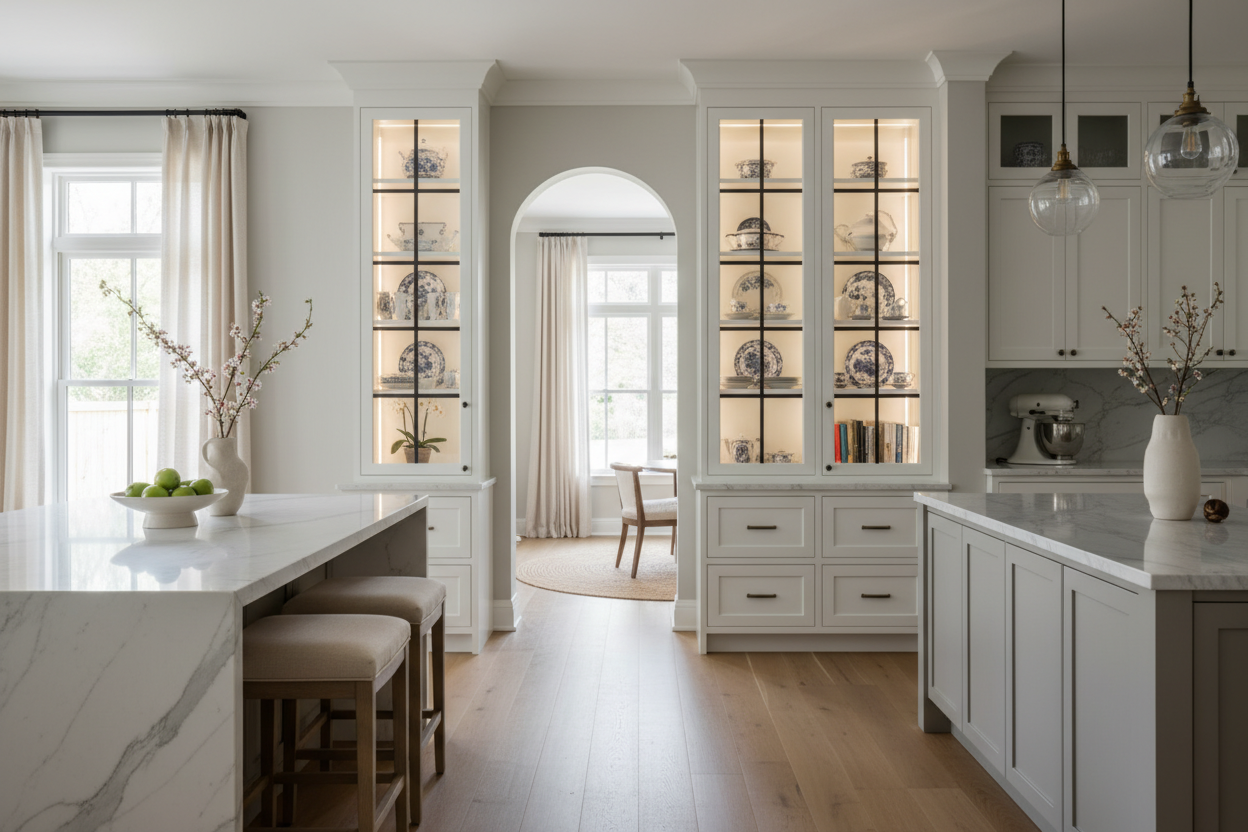
I remember walking into a client's newly renovated kitchen last year. It was all sleek lines and minimalist cabinets, but something felt off. 'Where's your personality?' I asked. She gestured to a box of her grandmother's china in the corner. 'I love these pieces, but I don't know where to put them.' That's when we talked about china cabinets for kitchen spaces. Many homeowners think they're outdated or too formal, but when chosen right, they become the heart of a kitchen—a place for both your daily mugs and your cherished heirlooms.
Quick Takeaways
- Measure your space carefully: standard china cabinets are 60-84 inches wide, but you need 30-36 inches of clearance in front for comfortable access.
- Look for solid wood frames (like kiln-dried maple or oak) over particleboard for longevity in a kitchen's humid environment.
- Consider glass-front doors with UV-protective coating to prevent sun fading on your dishes.
- Mix closed and open storage—I recommend 70% closed, 30% display for a balanced, practical look.
Why a China Cabinet Belongs in Your Kitchen
Let's clear up the biggest misconception first: china cabinets aren't just for formal dining rooms. In over 200 homes I've worked on, I've found kitchens benefit most from this piece. Why? Kitchens are where we gather daily. Placing your beautiful dishes there means you actually use them instead of letting them collect dust in a separate room. Functionally, a well-chosen cabinet adds crucial storage without the cost of custom built-ins. Aesthetically, it breaks up the monotony of uniform upper cabinets. I recently placed a 72-inch wide, glass-front china cabinet in a client's open-concept kitchen. It became a focal point that tied together their farmhouse table and stainless appliances perfectly.
From a practical standpoint, think about your daily routine. If your good dishes are in the dining room, you're constantly walking back and forth during meals. In the kitchen, everything's within reach. Plus, modern china cabinets kitchen designs often include features like adjustable shelves (I recommend at least 4 adjustable positions), soft-close drawers, and even integrated lighting. One client told me her new cabinet finally gave her a designated spot for her collection of artisan mugs—no more digging through crowded upper cabinets.
Key Considerations Before Choosing Your Kitchen China Cabinet
Before you fall in love with a piece online, grab your tape measure. The most common mistake I see is buying a cabinet that's too large for the space. Here's my rule: measure your available wall space, then subtract 12 inches on each side for visual breathing room. For example, if you have a 96-inch wall, look for cabinets around 72 inches wide. Depth matters too—standard china cabinets are 16-20 inches deep, but make sure you maintain at least 36 inches of walkway in front.
Material choice is crucial in kitchens. Solid wood frames (kiln-dried hardwood) withstand humidity better than engineered wood or MDF. For the interior, look for smooth, finished surfaces that won't snag delicate china. Glass doors should be tempered for safety and ideally have low-E coating to protect against UV rays. I recently helped a client choose a cabinet with a combination of glass and solid wood doors—the glass shows off her colorful Fiestaware collection, while the solid sections hide less-attractive storage items.
Style compatibility is where many homeowners struggle. If you have a modern kitchen with flat-panel cabinets, a heavily carved Victorian china cabinet will look out of place. Instead, look for clean lines, simple hardware, and finishes that complement your existing elements. For compact kitchens, consider small china cabinets for kitchens that provide display space without overwhelming the room.
Styling Your New China Cabinet for a Cohesive Look
Once your cabinet is in place, the real fun begins. Start by grouping items by color or type. I often recommend arranging plates vertically with plate stands rather than stacking them—it's easier to access individual pieces and creates visual interest. Leave some negative space; overcrowding makes even beautiful dishes look cluttered. A good rule is to fill only 70% of each shelf.
Lighting transforms a display. If your cabinet doesn't have built-in lights, battery-operated LED puck lights are an easy retrofit. Place them at the top front of each shelf, angled slightly downward. For a warmer glow, choose lights with a color temperature around 2700K. I recently styled a client's cabinet with her grandmother's blue transferware on the top shelves, everyday white dishes in the middle, and colorful glassware below. The graduated color story made the entire piece feel intentional.
Don't limit yourself to just dishes. Mix in cookbooks, a small plant, or decorative bowls. The key is creating layers of height and texture. For multi-functional pieces that can serve similar purposes, some clients prefer versatile storage cabinets with a combination of drawers and display space.
Maintenance and Care for Kitchen China Cabinets
Kitchens present unique challenges—grease, humidity, and frequent use. For wood cabinets, dust weekly with a microfiber cloth, then use a wood-specific cleaner monthly. Avoid silicone-based polishes; they can build up and dull the finish over time. For glass doors, a solution of vinegar and water works well, but test it on a small area first if your glass has any special coatings.
Protect the interior by using shelf liners (felt or cork work well) to prevent scratches. If you store frequently used items, consider adding non-slip mats to keep plates from shifting. One client learned this the hard way when her everyday plates gradually scratched the beautiful cherry wood shelves. Now she uses thin felt liners that are nearly invisible but provide perfect protection.
Seasonal maintenance matters too. In dry winter months, consider a small humidifier in the kitchen to prevent wood from cracking. In humid summers, ensure good air circulation around the cabinet. I recommend checking door hinges and drawer slides every six months—tighten any loose screws before they cause bigger problems.
Creative Alternatives and Repurposing Ideas
Not every kitchen needs a traditional china cabinet. For clients with open shelving elsewhere, I sometimes recommend a closed cabinet with glass doors only on the upper portion. This provides display space while keeping lower shelves practical for less-attractive items. Another favorite approach: using a series of matching cabinets rather than one large piece. Three 24-inch wide cabinets arranged together can be more flexible than a single 72-inch unit.
If you love vintage pieces but need kitchen functionality, consider repurposing vintage china hutches. I recently helped a client update her grandmother's hutch by replacing the glass with seeded glass for a more modern look, adding interior lighting, and painting the exterior to match her kitchen palette. The result was a unique piece with sentimental value that worked perfectly in her contemporary space.
For kitchens where floor space is limited, think vertically. A tall, narrow cabinet (18-24 inches wide) can provide surprising storage without eating up precious square footage. Some clients even use the top of their china cabinet for additional display or storage baskets. And remember, china cabinets don't have to stand alone—they often work beautifully paired with kitchen island collections to create a balanced layout.
Personal Experience: When It Doesn't Work
Early in my career, I insisted a client needed a large china cabinet in her small galley kitchen. The piece was beautiful—solid cherry, glass doors, perfect craftsmanship. But once installed, it made the kitchen feel cramped. The 24-inch depth (standard for that style) protruded into the walkway, creating a bottleneck. We ended up moving it to the dining area and replacing it with a shallower, wall-mounted display shelf. The lesson: no matter how beautiful the piece, if it disrupts function, it's wrong for the space. Now I always consider traffic flow as carefully as aesthetics.
Frequently Asked Questions
How deep should a kitchen china cabinet be?
For most kitchens, 16-18 inches is ideal. This provides enough storage for standard dinner plates (which are typically 10-11 inches) while maintaining good traffic flow. Deeper cabinets (20+ inches) work better in larger kitchens with ample clearance.
Can I put a china cabinet next to my refrigerator?
Yes, but leave at least 4 inches of space between them for air circulation. The refrigerator generates heat and humidity that could affect the cabinet over time. I also recommend checking that the cabinet door won't hit the refrigerator handle when opened.
What's the best lighting for displaying china?
LED strip lights installed at the front of each shelf provide even illumination without hotspots. Choose warm white (2700-3000K) for a cozy feel. Make sure the lights are cool to the touch and properly wired if hardwired.
How do I protect my dishes from sunlight?
Use UV-protective window film on nearby windows, or choose cabinet glass with built-in UV protection. Rotate displayed items every few months if they're in direct sunlight. For valuable pieces, consider keeping them in closed cabinets and displaying replicas or less-sensitive items.


Leave a comment
This site is protected by hCaptcha and the hCaptcha Privacy Policy and Terms of Service apply.