










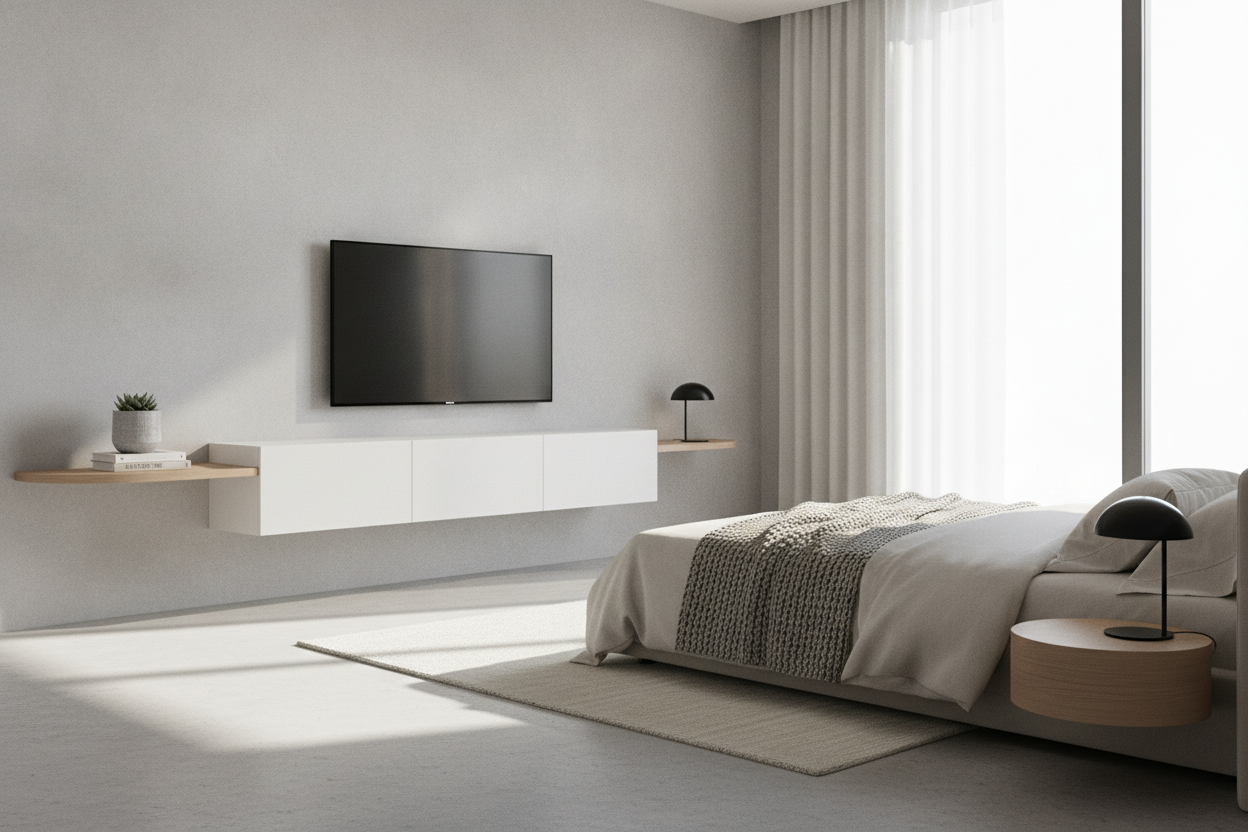
I spent three weeks side-stepping a massive oak dresser that had no business being in my 10x10 bedroom. Every time I walked to the window to open the blinds, I caught my shin on a sharp wooden corner. It was a classic small-apartment mistake: trying to force standard-sized furniture into a space that was clearly gasping for air. I finally realized that if I wanted to keep my sanity (and my shins), I had to get everything off the floor. That is when I pivoted to a 40 inch floating tv stand.
Quick Takeaways
- Floating units trick your brain into thinking the room is bigger by exposing more floor space.
- The 40-inch width is the 'Goldilocks' size for 32-to-43-inch screens.
- Cable management is built-in, hiding the 'spaghetti' mess of wires.
- Mounting height is the most critical factor for comfort—don't wing it.
The Floor Space Dilemma (Why I Ditched My Bulky Cabinet)
My initial search for Tv Stands was honestly depressing. Most of the options I found were 60 inches wide or sat on chunky, tapered legs that ate up precious rug real estate. In a tiny studio or a bedroom where the bed already takes up 70% of the room, every square inch of floor is at a premium. When you can see the floor extend all the way to the baseboards, the room feels significantly less claustrophobic.
I eventually ripped out the old cabinet and realized that vertical space was my only way out. By mounting a compact unit, I gained back about four square feet of floor. It doesn't sound like much until you're trying to vacuum or walk past the bed in the middle of the night. The shift from a heavy floor unit to a wall-mounted piece changed the entire vibe from 'cluttered storage' to an intentional design choice.
Why a 40 Inch Floating TV Stand Actually Works
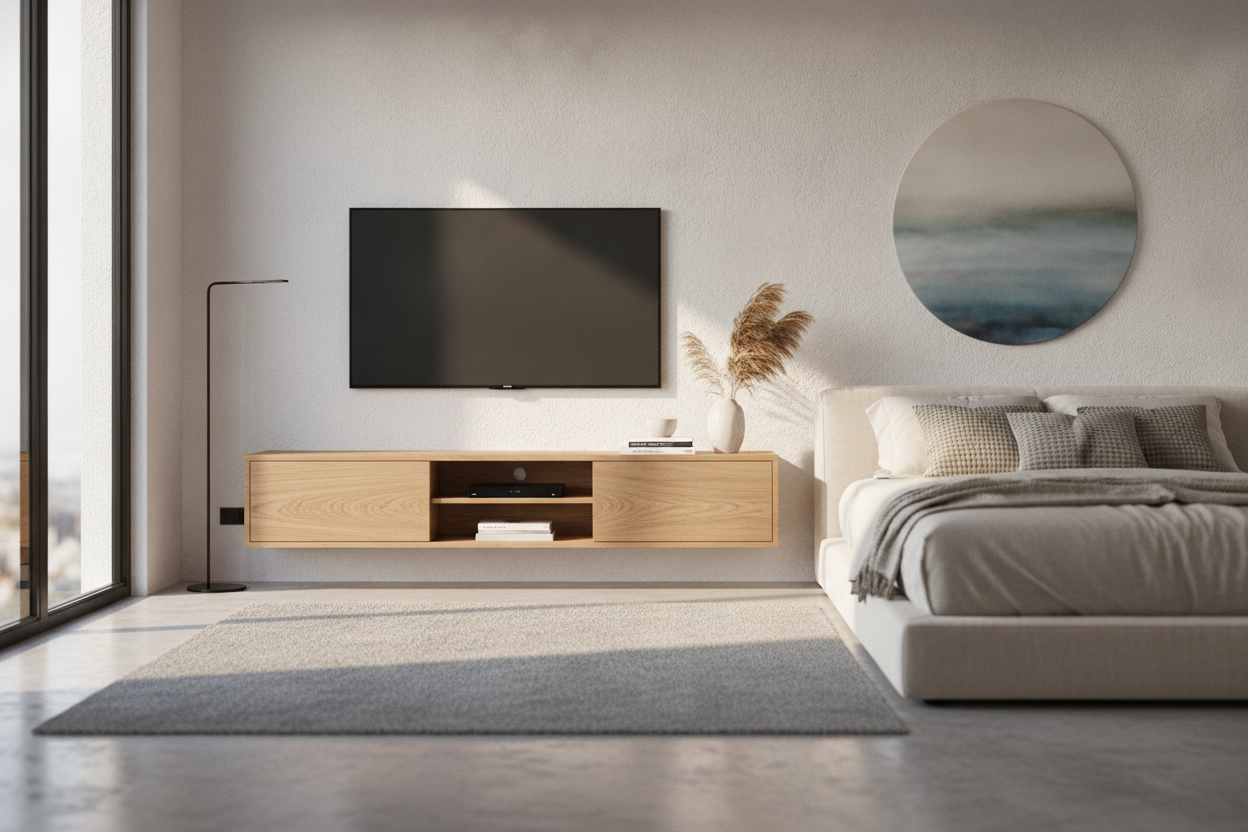
Proportions are everything in interior design. If you put a 32-inch TV on a 70-inch console, the screen looks like a lonely postage stamp. But a floating tv stand 40 inch model frames a standard bedroom TV perfectly. It provides just enough 'shoulder room' on either side of the screen to look balanced without swallowing the entire wall. It is the surgical tool of furniture—precise and efficient.
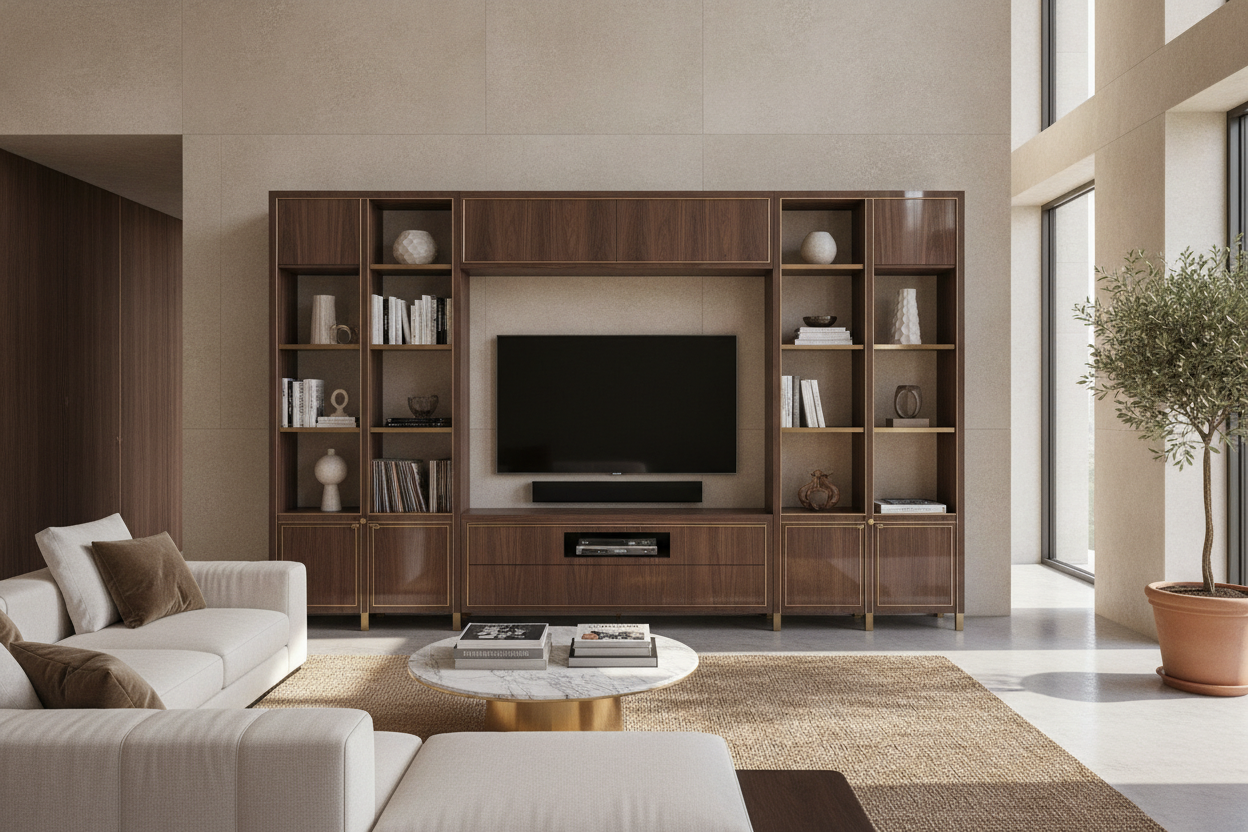
I did not need a massive 110 Floating High Gloss Tv Stand With Led Light designed for a suburban basement or a sprawling open-concept living room. I needed something that didn't scream for attention. The 40-inch footprint is just wide enough to feel like a real piece of furniture rather than a flimsy floating shelf, yet it stays out of the way of door frames and closet swings.
Wait, Does a Floating Tv Stand 40 Inch Unit Hold Anything?
You might worry that a smaller unit won't hold your gear. Let’s be real: you aren't storing a 1990s DVD collection here. I managed to fit my Apple TV, a PS5 controller, and a messy nest of HDMI cables inside mine. Most 40-inch units feature a flip-down door or a slim cubby that is exactly enough for the essentials. If you have more gear than that, you probably need a dedicated media room, not a bedroom setup.
The 3 Places a Tiny Console Makes Perfect Sense
While I put mine in the bedroom, this specific size is a hero in three distinct spots. First, the foot of the bed in a cramped primary suite where a standard dresser would block the walkway. Second, the 'media nook' in a studio apartment—those weird 4-foot alcoves that aren't big enough for a sofa but are too big to leave empty.
Third, I’ve found these are perfect for secondary guest rooms. In a guest space, the stand doubles as a narrow vanity or a spot for a visitor to drop their keys and phone. It keeps the room feeling airy and 'hotel-like' rather than stuffed with heavy, hand-me-down furniture that makes guests feel cramped.
Don't Mount It Too High (My Biggest Warning)
Here is where I messed up during my first installation. I mounted my unit way too high because I was standing up while measuring. I thought 'eye level' meant standing height. I was wrong. My neck was killing me after just one episode of a show. For a bedroom, you want the unit much lower because you are usually propped up on pillows, looking slightly downward or straight ahead.
If the idea of drilling four to six holes into your drywall makes you sweat, I actually looked into how I Faked A Floating Screen With A 50 Inch Tv Mount Stand before I committed to the permanent wall-mount life. It is a solid backup plan if your landlord is a stickler for security deposits or if you're just not confident in finding a stud. But if you can mount it, do it—the floating look is worth the twenty minutes of measuring.
FAQ
Will a 40-inch stand hold a 50-inch TV?
Technically, the TV will overhang the edges by about 2-3 inches on each side. It works, but it can look a bit 'top-heavy.' For the best visual balance, stick to a 43-inch TV or smaller.
How do I hide the wires?
Most floating stands have a pre-drilled hole in the top and bottom. You can also use a cheap plastic cord racer painted the same color as your wall to make the wires 'disappear' between the stand and the TV.
Is it hard to install alone?
It's a two-person job. One person needs to hold the level and the unit against the wall while the other marks the studs. Don't try to be a hero; you'll end up with a crooked stand and a bruised toe.

Leave a comment
This site is protected by hCaptcha and the hCaptcha Privacy Policy and Terms of Service apply.