










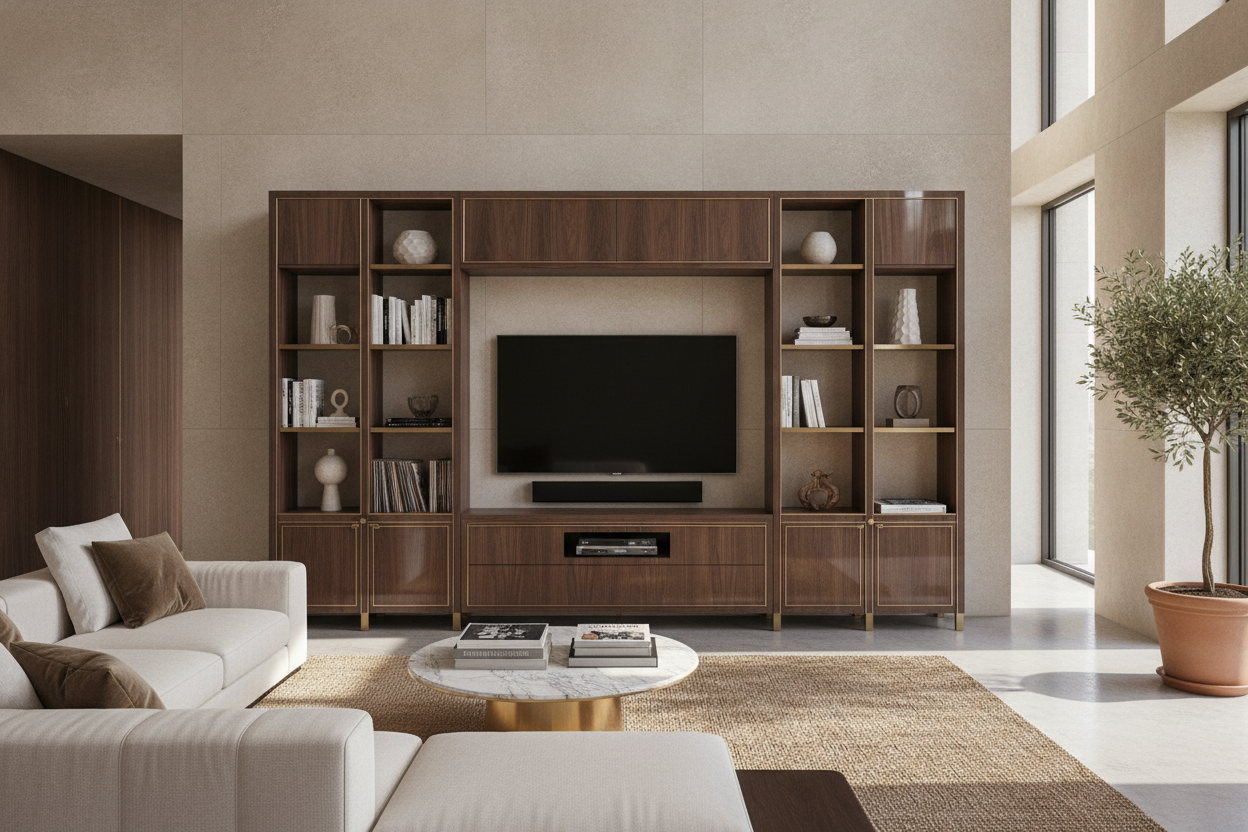
I spent three years working in a high-end furniture showroom where people would drop fifteen grand on a velvet sofa and then try to save money by putting their 75-inch TV on a wobbly unit they bought from a big-box store. It never looked right. After years of watching cheap MDF sag under the weight of a soundbar, I realized that a quality italian entertainment center isn't just a status symbol—it is a structural necessity for anyone who takes their living room seriously.
Quick Takeaways
- Check the hinges: True Italian units use soft-close BLUM or Salice hardware, not noisy friction hinges.
- Verify the origin: 'Italian Design' usually means it was made in a mass-production factory elsewhere; 'Made in Italy' is the legal gold standard.
- Measure your receiver: European units are often shallower than American electronics require.
- Matte over Gloss: High-gloss lacquer is a fingerprint magnet that requires daily dusting.
The 'Made in Italy' Label: What Does It Actually Mean?
In the furniture industry, the phrase 'Italian style' is thrown around like confetti. You will see it on every cheap, boxy italian tv stand modern enough to have a minimalist silhouette. But there is a massive gulf between a piece that looks Italian and a tv stand made in italy. The latter is governed by strict EU labor and material standards. When you buy authentic, you are paying for 45mm thick panels and multi-layered lacquer that won't yellow after two years of sunlight.
I have seen the knockoffs. They use paper-thin veneers that peel at the corners the moment the humidity drops. A real italian media console uses real wood veneers or high-pressure laminates that feel substantial. If the unit weighs less than 100 pounds, it probably isn't the heirloom piece you think it is. Look for brands that name their designers—that is usually your first clue that the quality is legit.
Why You Might Prefer Freestanding Over Custom Built-Ins
Everyone thinks they want custom built-ins until they get the $12,000 quote from a local carpenter. The beauty of italian wall units and entertainment centers is that they offer a modular, high-end look without the permanent commitment. If you move, you take your $5,000 investment with you. If you rearrange the room, the furniture moves too.
For those with a massive wall to fill, a modern 3 piece entertainment center can provide that floor-to-ceiling architectural feel. It creates a focal point that anchors the room, whereas a tiny italian tv console can often look like it is floating in a sea of drywall. Modular units allow you to scale up or down based on your floor plan, which is a lifesaver in modern apartments.
Decoding the Finishes: High-Gloss Lacquer vs. Matte Wood
There is a fine line between 'Milanese Chic' and '1982 Nightclub.' High-gloss white lacquer was the default for a modern italian tv unit for a decade, but it is incredibly high-maintenance. Every smudge of a thumb and every speck of dust is magnified. If you have kids or pets, you will spend your life with a microfiber cloth in hand.
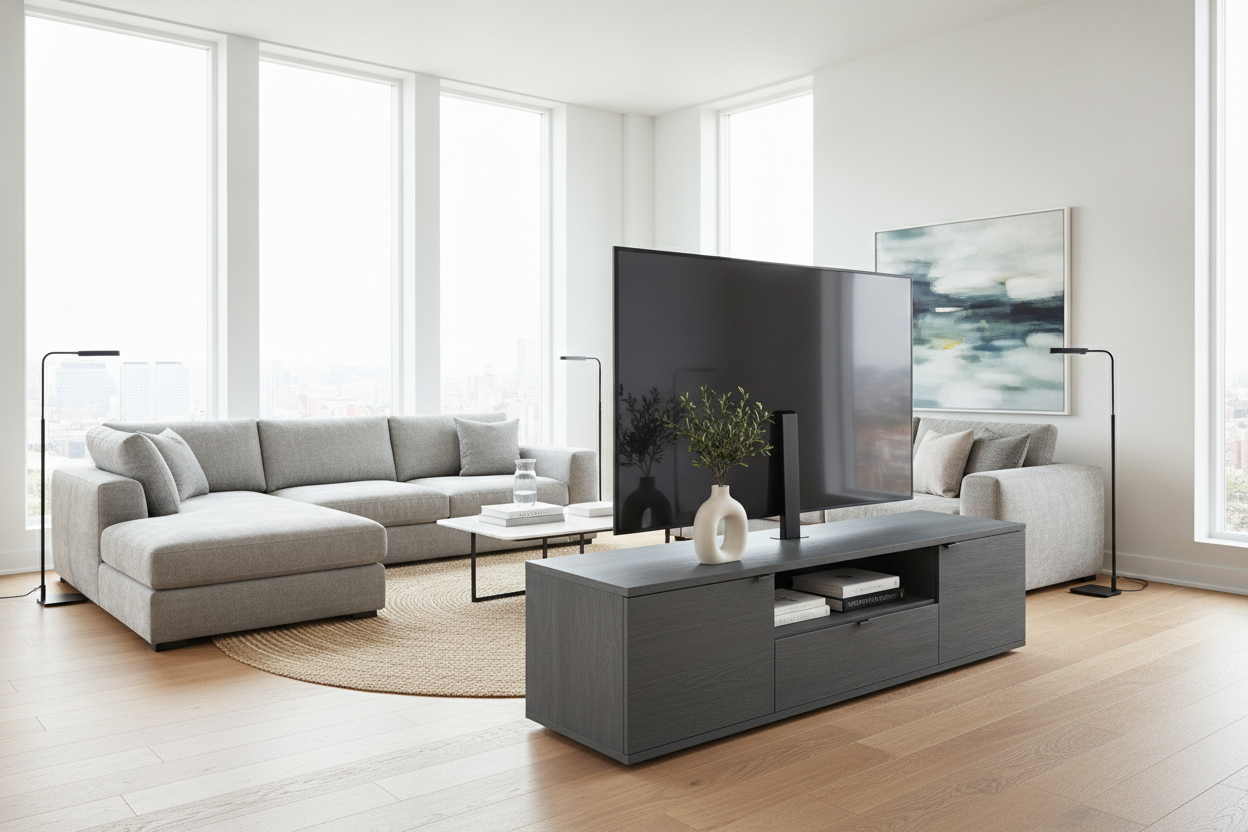
Lately, I am seeing a shift toward darker, more textured finishes. A stylish black TV stand in a matte oak or a slate finish offers a much more grounded, sophisticated look. It absorbs light rather than reflecting it, which is actually better for your TV viewing experience. It makes the screen pop rather than competing with it for attention.
The Cable Management Reality Check
Here is the dirty secret about tv stand italian design: Italian designers seem to think we don't use wires. They design these incredibly sleek, thin-profile units, and then you realize there is nowhere to put your bulky surge protector or your chunky HDMI cables. I once helped a client install a $4,000 modern italian tv stand only to realize we had to drill our own holes in the back panel because the factory 'forgot' that electronics need power.
Before you buy, look at a collection of TV stands that specifically highlights integrated wire routing. You want internal channels and ventilated back panels. High-end electronics generate heat, and if you trap your gaming console inside a gorgeous, air-tight Italian cabinet, you are basically slow-cooking your motherboard. Always check for 'passive ventilation' in the specs.
How to Style It So Your Living Room Doesn't Look Like a Showroom
The biggest risk with tv stand italian furniture is that it can feel a bit cold and sterile. These units are often all hard angles and smooth surfaces. To stop your home from looking like a waiting room, you have to break up those lines. I like to layer in organic shapes—think a round ceramic vase, a stack of linen-bound books, or a small trailing plant like a Pothos.
If the ultra-sharp edges of italian style tv stands feel too aggressive for your vibe, you might want to pivot. Sometimes a mid-century modern entertainment center provides a better balance of warmth and clean lines for a cozy home. The goal is to make the furniture look like it belongs to a human, not a catalog. Don't be afraid to put a piece of art next to the TV to distract from the 'big black box' effect.
Personal Experience: The Delivery Disaster
I once ordered a 90-inch Italian console for a client's penthouse. It arrived in a crate that looked like it could hold a small car. We didn't account for the elevator size. We ended up having to hire a crane crew to hoist it over the balcony. The lesson? Italian furniture is often built as a single, rigid carcass to ensure structural integrity. It doesn't always come 'flat-pack.' Measure your doorways, your hallways, and your elevators before you pull the trigger on a large unit.
Frequently Asked Questions
Are Italian TV stands worth the extra money?
Yes, if you value longevity and finish quality. You are paying for hardware that won't fail and finishes that won't fade. If you change your furniture every two years, it is overkill. If you want a 10-year piece, it is worth it.
How do I know if it is real wood?
Check the weight and the grain pattern. If the pattern repeats perfectly every six inches, it is a print. Real Italian veneers will have natural variations. Also, look at the edges; cheap units show a seam where the 'tape' meets the face.
Will my American soundbar fit?
Always check the internal shelf depth. Many European units are designed for 14-inch depths, while some high-end American receivers and soundbars need 16 to 18 inches to breathe and accommodate plugs.

Leave a comment
This site is protected by hCaptcha and the hCaptcha Privacy Policy and Terms of Service apply.