










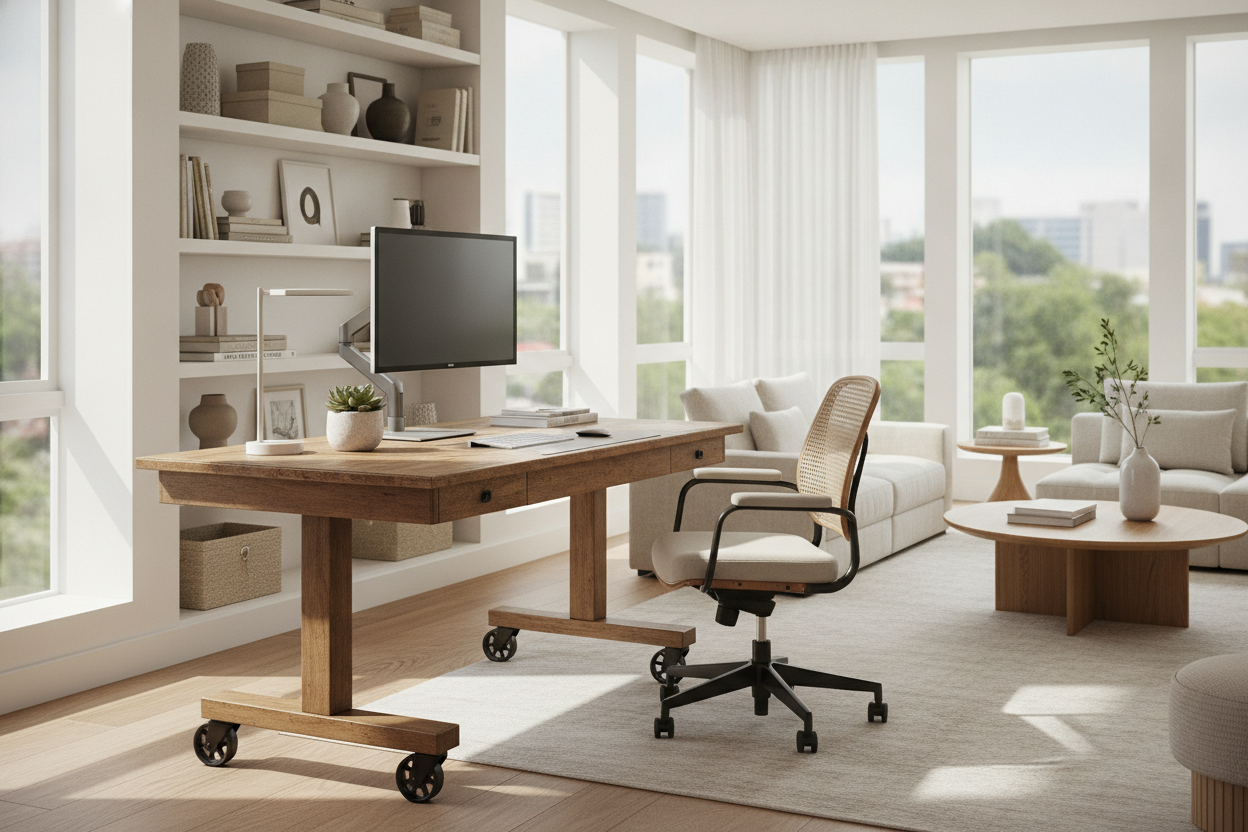
I spent three years staring at the same beige wall in my spare bedroom. By 2:00 PM every Tuesday, I felt like the walls were closing in, and no amount of 'productivity hacks' or fancy desk lamps could fix the cabin fever. I didn't need a new career; I just needed to see a different window.
My 150-pound solid wood workstation was basically a permanent fixture until I decided to turn it into a desk on casters. I wanted the freedom to follow the afternoon sun into the living room or roll my entire setup into the kitchen for a change of pace without herniating a disk or scratching my floors. Here is the reality of living with a mobile office.
Quick Takeaways
- Polyurethane wheels are non-negotiable if you have hardwood floors.
- A single power strip mounted under the desk is the only way to avoid a cable catastrophe.
- Locking casters are mandatory, or your desk will drift away while you type.
- Expect a slight increase in monitor wobble when the desk is at full standing height.
I Was Going Crazy Staring at the Same Corner
Working from home is a privilege, but it’s also a sensory vacuum. When your 'office' is just a 4x4 foot square in a corner, your brain starts to rot. I found myself researching casters desk options at 2:00 AM because I was desperate to simply turn my desk 90 degrees to look at the garden during Zoom calls.
I realized I didn't need a new desk; I just needed to add wheels to desk legs that were never meant to move. The goal was simple: make a heavy, static piece of furniture as mobile as a shopping cart, but without the annoying squeak. It’s about psychological survival in a remote-work world.
The Reality of Rolling a Computer Desk With Casters Over Carpet
If you think you can use those cheap, hard plastic wheels that come on budget office chairs, prepare for disappointment. A computer desk with casters needs high-quality polyurethane desk caster wheels. These look like miniature rollerblade wheels and they are the only things that won't shred your rugs or leave permanent divots in your floor.
Rolling a fully loaded standing desk on casters across a medium-pile rug is a legitimate workout. It’s not a effortless glide; it’s a strategic maneuver. You have to push from the base to avoid tipping the whole thing over. If you're using wheels for desk legs on a thick carpet, go for at least a 3-inch diameter wheel to handle the resistance.
Wait, What About the Power Cords?
The biggest lie about a wheel standing desk is that it's truly 'mobile.' You are still tethered to the wall by a copper umbilical cord. The first time I tried to move my sit to stand desk on wheels, I nearly ripped my PC tower off the mount because I forgot the ethernet cable was still plugged in.
The solution is a 'one-plug' system. I mounted a massive 12-outlet power strip to the underside of the desk frame. Every monitor, the laptop dock, and the speakers plug into that strip. Now, when I want to move, I only have to unplug one single cord from the wall. I also had to get creative with cable snakes so I hid the cords on my electric standing desk to prevent them from getting tangled in the office desk wheels as I roll.
Does It Make Your Setup Dangerously Wobbly?
Stability is the enemy of mobility. When you install casters for standing desk setups, you’re adding about 3 to 4 inches of height and a new failure point for vibrations. If you have an adjustable height standing desk with electric lift, you’ll notice the 'monitor shake' is more pronounced when the desk is raised.
This is why you cannot cheap out on uplift desk casters or similar heavy-duty versions. You need wheels that lock both the rotation and the swivel. If only the wheel stops spinning but the caster can still pivot, your desk will feel like it’s on ice. I learned this the hard way when my standing desk wheels caused my coffee to splash every time I typed a particularly aggressive email.
The Verdict: Is a Roaming Workspace Actually Worth It?
Is it a hassle to unlock four brakes and coil a power cord every time I want to move? Yes. But the first time I rolled my standing desk with casters onto the balcony for a 10:00 AM call, I knew I could never go back to a static setup. It breaks the monotony of the 9-to-5 grind in a way that a new ergonomic chair never could.
I’m still not sure if a standing desk on wheels actually replace a dedicated, built-in home office for everyone, but for the restless among us, it’s a necessary escape valve. Being able to add wheels to desk legs turned my room from a cage into a flexible studio.
FAQ
Will desk casters scratch my hardwood floors?
Only if you buy cheap plastic ones. Look for 'non-marring' polyurethane wheels. They feel slightly rubbery to the touch and are designed to grip the floor without scratching the finish.
Do I need to buy a specific desk or can I add wheels to any desk?
Most standing desk wheels use a standard M8 or M10 threaded stem. If your desk has screw-in leveling feet, you can likely swap them for caster wheels for desk use. Just check the thread size before ordering.
Are locking wheels really necessary?
Absolutely. If you don't have casters for desk legs that lock, the force of your hands typing will slowly push the desk away from you. It’s incredibly annoying and bad for your ergonomics.



Leave a comment
This site is protected by hCaptcha and the hCaptcha Privacy Policy and Terms of Service apply.