










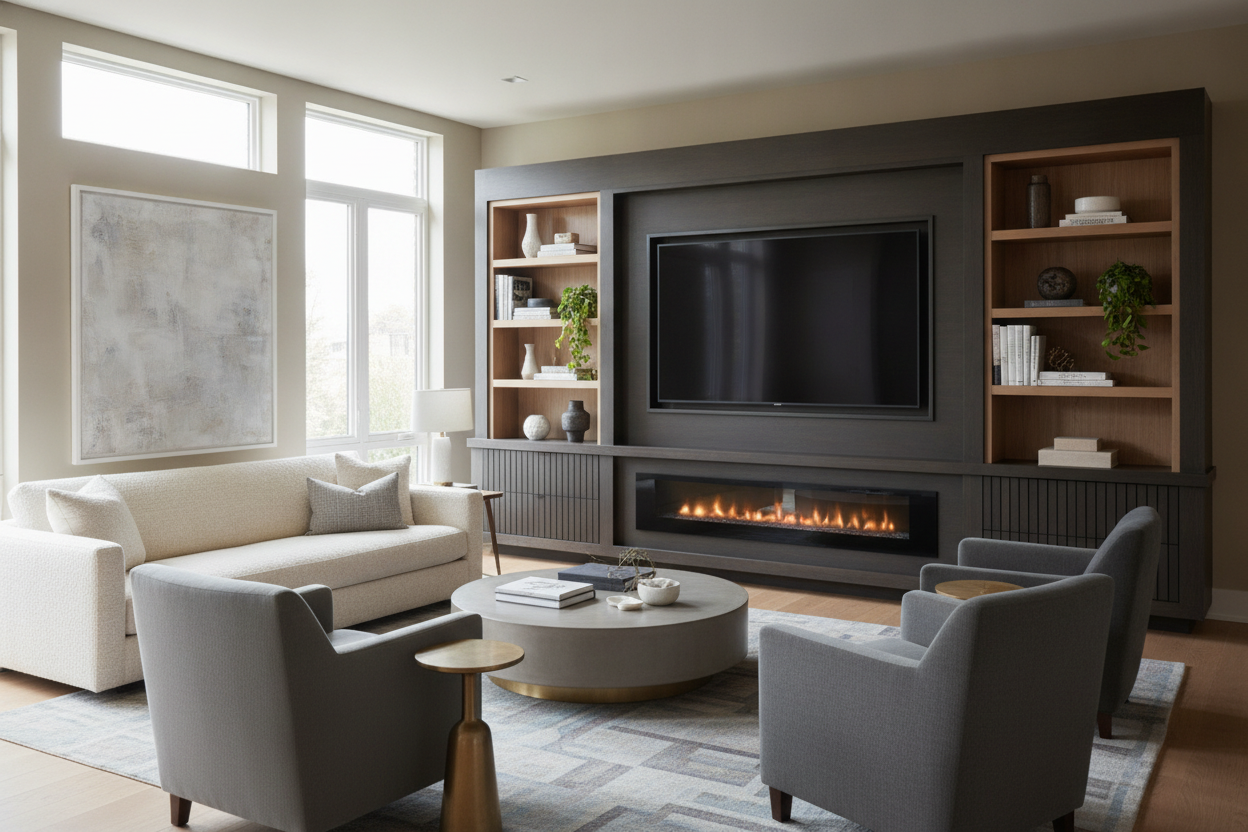
You just dropped a small fortune on a screen that is basically a cinema wall. You get it home, unbox it, and realize your current media console is screaming for mercy. It looks like a toothpick holding up a boulder. Finding a proper 86 inch tv stand is harder than it should be because most furniture manufacturers haven't quite caught up to the fact that we are all turning our living rooms into IMAX theaters.
I have spent years testing consoles that claim to be 'heavy duty' only to watch them sag under the weight of a high-end OLED. It is a frustrating cycle of buying, assembling, and eventually returning because the scale is just wrong. If your screen is wider than your furniture, your room will never feel balanced.
Quick Takeaways
- Your stand should be at least 15-20% wider than the actual width of the TV.
- Solid wood or reinforced steel frames are mandatory for screens over 100 pounds.
- Low-profile designs (under 24 inches tall) prevent neck strain with massive screens.
- Cable management is non-negotiable when dealing with this much hardware.
The Visual Weight Problem of Giant Screens
An 86-inch television instantly dominates any living space. It is not just a piece of tech; it is a massive black void that sucks the light out of the room when it is off. Picking the right tv stand for 86 inch tv isn't just about utility—it’s about saving your room's aesthetic from looking completely top-heavy. If the base is too small, the TV looks like it is about to tip over and crush your coffee table.
I always warn my clients against settling for a generic, flimsy Best Buy 86 inch TV stand just because it was available at checkout. Those units are often made of thin particle board with a wood-look sticker. They lack the visual 'heft' needed to anchor a gargantuan screen, making your home look more like a temporary dorm room than a curated living space.
The 'Wider Than the Screen' Golden Rule
Here is the most common mistake: people assume an 86-inch TV needs an 86-inch stand. It doesn't. An 86-inch TV (measured diagonally) is usually about 75 inches wide. If you put it on a 75-inch console, the edges of the TV will align perfectly with the edges of the furniture. This creates a 'T-shape' that is visually jarring and makes the screen look even more bloated.
What size tv stand for 86 inch tv do you actually need? To create optical balance, you should aim for a surface width of at least 90 to 95 inches. This leaves a few inches of 'breathing room' on either side of the screen. When browsing for proportionate TV stands, look for extra-wide lowboys that keep the center of the screen at eye level while providing a wide enough base to ground the display.
Structural Integrity: Why Flimsy Won't Cut It
We need to talk about the sheer physical weight. These massive screens often weigh between 90 and 120 pounds. A cheap 86 inch tv console made of low-density fiberboard will inevitably bow in the middle. I’ve seen it happen within weeks—the doors start sticking because the frame is warping under the load.
Materials are non-negotiable here. You want kiln-dried hardwood or a heavy-duty steel frame. If you go the wood route, check the center support legs. A stand this wide needs at least one, if not two, middle legs to distribute the weight. If the manufacturer doesn't list a weight capacity of at least 150 pounds, keep scrolling.
Mount It, Stand It, or Hide It? The Great Setup Debate
How you display the screen changes the entire vibe of the room. Resting the screen directly on an 86 inch tv table is the easiest route, but it takes up valuable surface real estate. Using a tv stand with mount for 86 inch tv gives you that 'floating' look without having to drill massive holes in your drywall—a lifesaver if you are renting.
For those who hate the 'tech-first' look, a hidden TV mechanism is the ultimate power move. It allows you to tuck the screen away when guests come over. Conversely, if you want a modern, airy feel, an 86 inch floating TV stand can work beautifully, provided you have the structural studs to support the weight of both the console and the screen. It keeps the floor clear, which makes the room feel significantly larger.
Styling Tricks for Massive Media Centers
Once the 86 inch entertainment center is in place, you have to deal with the 'black hole' effect. Use asymmetrical decor to break up the straight lines. I like placing a tall, textured vase on one side and a stack of low-profile coffee table books on the other. This prevents the setup from looking too symmetrical and clinical.
Textured baskets underneath or to the side can hide the inevitable mountain of controllers and cables. The goal is to draw the eye away from the plastic and glass and toward the textures of your home. If you have the space, a pair of oversized table lamps on the ends of a 100-inch console can actually make the TV feel like a deliberate part of the design rather than an intruder.
FAQ
What is the minimum width for an 86 inch TV stand?
Since the TV itself is roughly 75 inches wide, your stand should be at least 80 inches wide, but 90+ inches is the sweet spot for a balanced, high-end look.
Can I use a 75 inch stand for an 86 inch TV?
Technically yes, if the weight limit allows, but it will look cramped. The edges of the TV will hang right over the edges of the stand, which is a major design faux pas.
How high should my TV stand be?
For a screen this size, lower is better. Aim for a height between 18 and 24 inches. If the stand is too high, you'll be tilting your head back like you're in the front row of a movie theater.

Leave a comment
This site is protected by hCaptcha and the hCaptcha Privacy Policy and Terms of Service apply.