










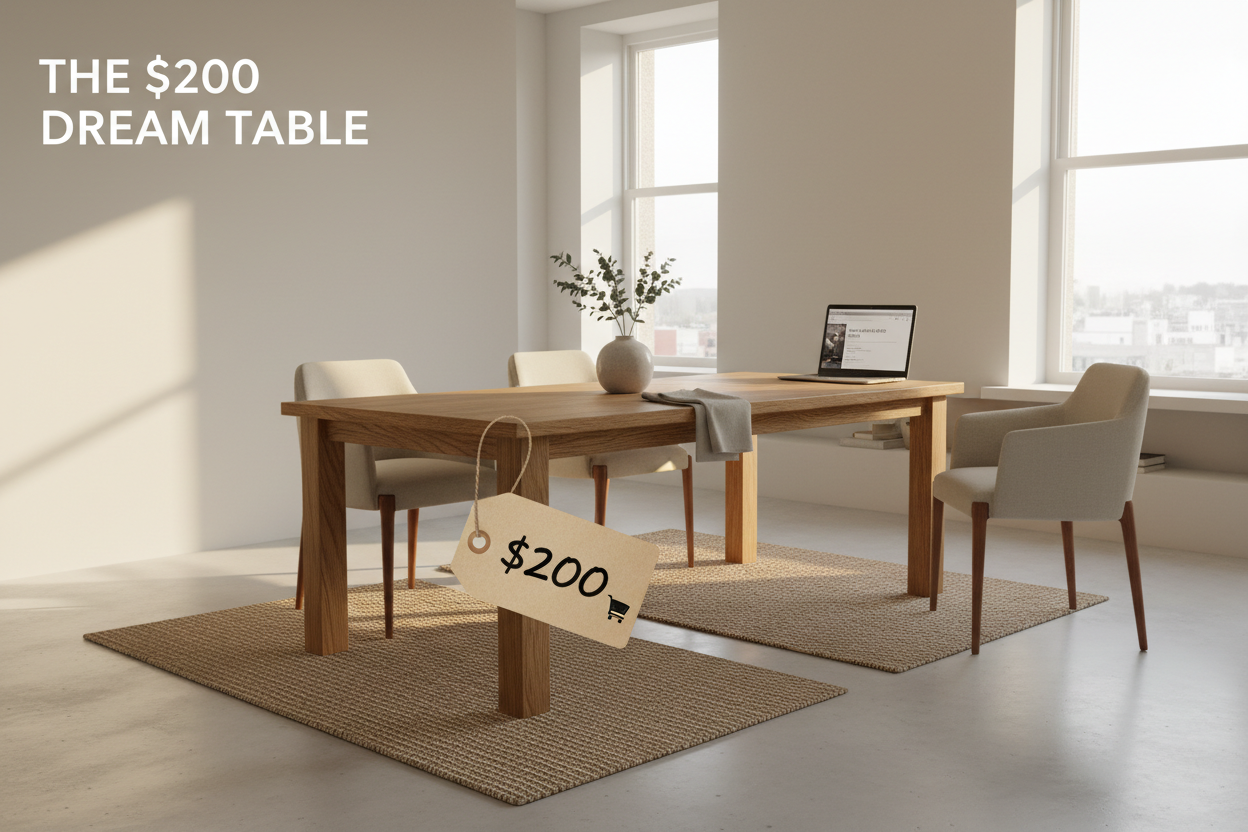
Shopping for a wooden table doesn't have to drain your wallet. After furnishing three different apartments over the past five years, I've discovered that finding quality table wood for sale at reasonable prices is entirely possible—you just need to know where to look and what to avoid.
The reality is that a wooden table can range anywhere from $50 at a thrift store to several thousand dollars for handcrafted pieces. Understanding what drives these price differences will save you from overpaying while ensuring you don't end up with furniture that falls apart in six months.
What Actually Determines the Cost of Wooden Table
The price of wood table varies dramatically based on several factors. Solid wood construction naturally costs more than veneer or particle board alternatives. Oak, maple, and walnut command higher prices than pine or rubberwood. A dining table measuring 72 inches will cost significantly more than a 48-inch breakfast table simply due to material requirements.
Manufacturing location plays a huge role too. Domestic craftsmen typically charge more than mass-produced imports, though the quality difference often justifies the premium. I learned this the hard way when my first cheap wooden table from a big-box store started wobbling after just three months of use.
Where to Find Cheap Wood Tables for Sale
The best deals hide in unexpected places. Estate sales consistently offer solid wood furniture at fraction of retail prices—I once scored a beautiful maple table for $75 that would've cost $400 new. The finish needed some work, but the bones were perfect.
Online marketplaces like Facebook Marketplace and Craigslist overflow with people selling quality furniture during moves. You'll find everything from vintage pieces to barely-used modern designs. The key is acting fast and being ready to pick up immediately when something good appears.
Discount furniture outlets and clearance sections at major retailers stock overstock and discontinued models. These aren't damaged goods—they're simply last season's styles or overstocked items that stores need to move. I've seen wood table price tags slashed by 40-60% simply because a new collection arrived.
Evaluating Quality Before You Buy
Knowing how to assess a wooden table prevents expensive mistakes. Check the joinery first—dovetail or mortise-and-tenon joints indicate superior construction compared to simple screws or staples. Run your hand across the surface to feel for smoothness and consistent finish.
Examine the underside and legs carefully. Solid wood tables should show consistent grain patterns, while veneer pieces reveal a different material underneath. Neither is inherently bad, but you should pay veneer prices for veneer, not solid wood prices.
Stability matters more than appearance. Gently shake the table—excessive wobbling signals weak joints or poor construction. Even cheap wooden table options should feel sturdy under normal pressure.
New vs. Used: The Real Cost Comparison
Buying used can save 50-80% compared to retail, but requires more effort and patience. A $600 solid oak table might sell for $150-200 used if the seller needs quick cash. You'll need transportation and possibly refinishing supplies, but the total cost still beats buying new.
New furniture offers warranties, delivery, and the satisfaction of unwrapping something pristine. Entry-level options start around $150-200 for small tables, while mid-range solid wood pieces run $400-800. Premium handcrafted tables easily exceed $1,500.
Material Choices That Affect Your Budget
Pine represents the most budget-friendly solid wood option, typically 30-40% cheaper than hardwoods. It dents more easily but works perfectly for casual dining areas or craft rooms. Rubberwood offers similar affordability with slightly better durability.
Oak, maple, and birch occupy the middle ground—durable enough for daily family use without premium pricing. These woods accept stains beautifully and age gracefully with proper care.
Walnut, cherry, and mahogany command top dollar but deliver stunning aesthetics and exceptional longevity. If your budget allows, these materials transform a functional table into a genuine furniture investment.
Size Considerations and Pricing
Table dimensions directly impact cost. A compact 36-inch round table requires far less material than a 96-inch rectangular dining table. Calculate your actual space needs before shopping—buying bigger than necessary wastes money, while too small creates functional problems.
Extendable tables cost 20-40% more than fixed-size equivalents but offer flexibility for entertaining. This premium might prove worthwhile if you regularly host gatherings but need space-efficient furniture daily.
My Personal Experience Finding the Right Balance
Last year, I needed a wooden table for my home office. My budget was tight at $250, but I refused to buy particle board after previous disappointments. I spent two weeks monitoring local listings, visited four estate sales, and checked three furniture outlets.
The winning find came from a family downsizing their home. Their solid maple table with minor scratches cost just $180. I spent another $30 on sandpaper and wood oil, invested a Saturday afternoon refinishing, and ended up with a piece that looks custom-made. That table now anchors my workspace and receives compliments from every video call participant.
Timing Your Purchase for Maximum Savings
Furniture retailers follow predictable discount cycles. January and July bring the deepest clearance sales as stores make room for new collections. Holiday weekends—Memorial Day, Labor Day, Black Friday—typically feature 20-30% discounts.
End-of-month shopping can yield unexpected deals as salespeople rush to meet quotas. Don't hesitate to negotiate, especially at smaller retailers or when buying multiple pieces.
Red Flags to Avoid
Extremely low prices on supposedly solid wood tables often indicate veneer over particle board. Sellers sometimes misrepresent materials, so always inspect personally before buying. If a deal seems too good to be true, it probably is.
Avoid tables with significant structural damage—wobbly legs, cracked tops, or separated joints. Cosmetic issues like scratches or fading are easily fixed, but structural problems rarely are worth the headache.
Be cautious with unfinished or raw wood tables unless you're prepared for the finishing process. What seems like a bargain becomes expensive once you factor in staining, sealing, and the time investment required.
Making Your Wooden Table Last
Proper care extends your investment regardless of what you paid. Use coasters and placemats to prevent water rings and heat damage. Clean spills immediately—moisture is wood's enemy. Apply furniture polish or oil every few months to maintain the finish and prevent drying.
Avoid placing wooden tables in direct sunlight, which causes fading and cracking over time. Maintain consistent humidity levels in your home, as extreme fluctuations cause wood to expand and contract, potentially loosening joints.
Frequently Asked Questions
How much should I expect to pay for a decent wooden table?
A quality solid wood dining table typically costs between $300-800 for mid-range options, though you can find good deals for $150-250 if you shop used or catch sales. Budget $200-400 for smaller tables like desks or side tables. Remember that paying slightly more for solid construction saves money long-term compared to replacing cheap furniture every few years.
Is it worth buying a cheap wooden table or should I save for something better?
This depends on your situation. If you're furnishing a temporary space or need something immediately on a strict budget, affordable options work fine. However, if you're settling into a long-term home, investing in quality pays off through durability and aesthetics. A middle-ground approach works well—buy used solid wood furniture at budget prices rather than new particle board pieces.
What's the difference between solid wood and wood veneer tables?
Solid wood tables are constructed entirely from real wood throughout, making them heavier, more durable, and more expensive. Veneer tables feature a thin layer of real wood over particle board or plywood, offering the appearance of solid wood at lower cost. Both can be quality products if well-made, but solid wood lasts longer and can be refinished multiple times, while veneer cannot be sanded down significantly without exposing the core material.

Leave a comment
This site is protected by hCaptcha and the hCaptcha Privacy Policy and Terms of Service apply.