










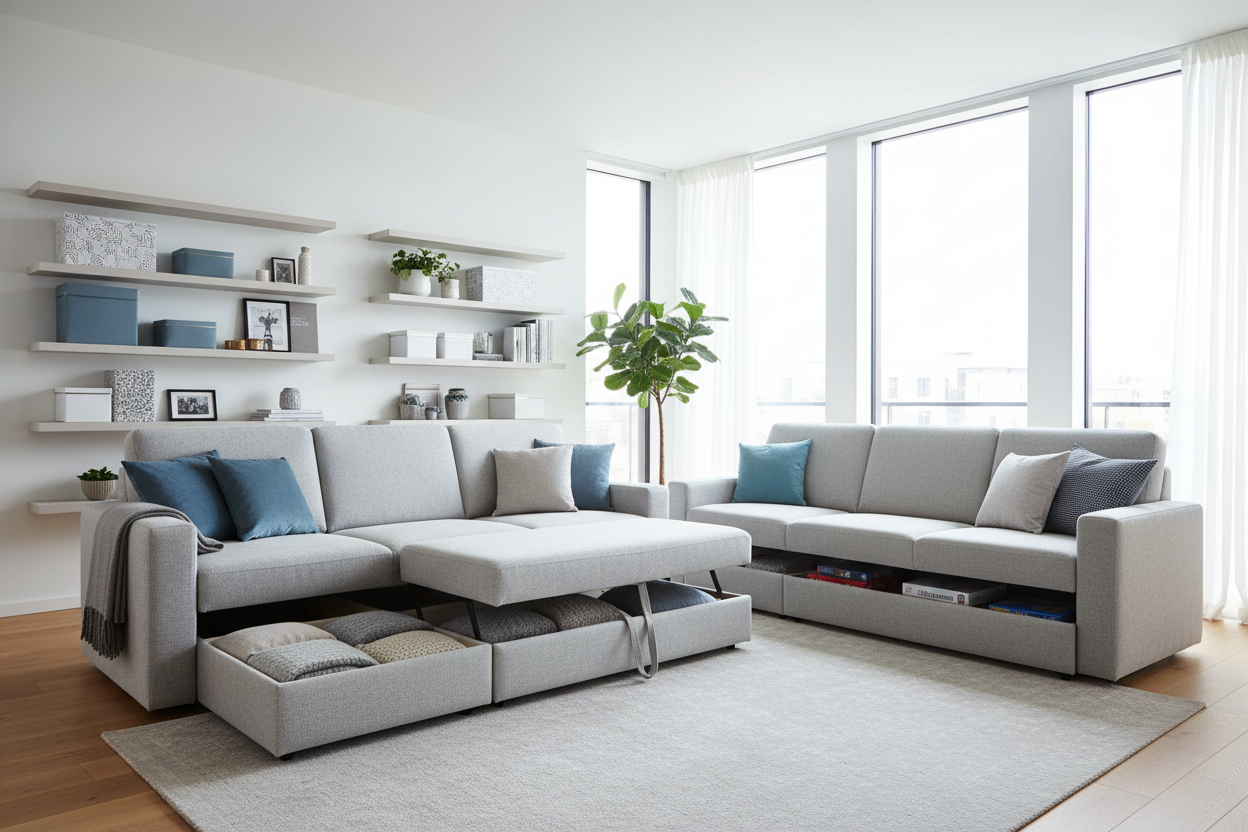
One of the most frequent dilemmas I encounter when consulting on urban apartments or multipurpose guest rooms is the tension between aesthetic minimalism and the desperate need for utility. You want a clean, sophisticated visual line, but you also need a place to stash winter linens or board games. This is where couches with storage ikea has developed a specific niche, bridging the gap between accessible design and clever engineering.
Quick Decision Guide
If you are rushing to make a purchase, consider these four non-negotiable factors before heading to the checkout:
- Mechanism Type: Determine if you need a gas-lift chaise (easier for daily access) or a pull-out drawer (better for occasional use).
- Modular Flexibility: Prioritize series like VIMLE or JÄTTEBO if you anticipate your floor plan changing; these allow you to add storage modules later.
- Fabric Durability: Look for covers with a rub count of 30,000+ cycles if this is your primary living room seating.
- Visual Weight: Ensure the sofa doesn't look "boxy." Legs that lift the frame off the floor create a sense of space, whereas floor-flush storage maximizes volume but feels heavier.
Balancing Silhouette with Volume
In interior design, we talk a lot about "visual weight." Storage furniture often suffers from looking bulky because the manufacturer needs to utilize every cubic inch of the base. When selecting a piece, examine the profile. A couch with pull-out ottoman ikea often strikes the best balance. The ottoman serves as a storage vessel and a chaise, but because it is a separate visual element, it breaks up the mass of the sofa, keeping the room from feeling overcrowded.
For tighter layouts, avoid high-contrast colors. Matching the sofa color closely to your wall paint can make a substantial storage piece recede into the background, maintaining an airy atmosphere.
Materiality and Tactile Experience
The difference between a showroom look and a lived-in home often comes down to textiles. IKEA’s range varies significantly in quality. For a high-traffic family room, I generally advise clients to look toward the coarser weaves, like the Gunnared or Tallmyra finishes. These synthetic blends offer texture that hides minor stains and resists pilling better than the smoother cotton options.
Furthermore, if you are eyeing an ikea modular sleeper sofa, pay close attention to the seam quality on the storage lids. Since you will be lifting these sections by handles or straps, the stitching at these stress points is critical. A solid wood or plywood frame is preferable to particleboard for long-term durability, especially if you plan to access the storage compartment daily.
Ergonomics and Functionality
Storage is useless if it is a hassle to access. When testing these pieces, I look for gas-lift mechanisms that hold the lid open independently. Trying to retrieve a heavy duvet while balancing a heavy seat cushion on your head is a frustration no homeowner should endure. The ergonomics of the "sit" are equally important. Storage sofas often have a firmer seat deck because the cushions sit on top of a wooden box rather than a sprung base. Ensure you test the sit duration—what feels supportive for five minutes might feel rigid after a two-hour movie.
Lessons from My Own Projects
I want to share a specific observation from a project I completed in a downtown loft last year. We installed a popular L-shaped sleeper with storage. Visually, it was perfect. However, here is the "unpolished" truth I learned: the foam density on the storage chaise section was slightly different from the main seating section.
Over six months of heavy use, the main seats softened significantly, while the storage lid (which has a rigid board underneath) stayed much firmer. It created an uneven lounging experience. My advice? Rotate where you sit. Don't always favor the corner spot. Also, a specific annoyance with the pull-out models is that the fabric loop used to pull the bed out often gets tucked deep inside the mechanism. I now advise clients to tie a small, tasteful ribbon extension to it so it’s always retrievable without digging your hand into the machinery.
Conclusion
Integrating storage into your seating is a smart move for maximizing square footage, but it requires a discerning eye to ensure you aren't sacrificing comfort for capacity. By focusing on the mechanism quality and fabric durability, you can secure a piece that serves your home efficiently for years to come.
Frequently Asked Questions
Can I wash the covers of IKEA storage couches?
Most IKEA fabric sofas feature removable, machine-washable covers. However, the upholstered sections attached directly to storage lids or pull-out mechanisms are often fixed. Always check the care tag; for fixed upholstery, I recommend professional steam cleaning annually.
How much weight can the storage compartments hold?
While specific limits vary by model, the bottoms of storage chaises are typically made of fiberboard or Masonite. They are designed for bedding, pillows, and clothing. Avoid storing heavy items like books or weights, which can cause the bottom panel to bow or detach.
Is the sleeper mattress comfortable for everyday use?
Most storage sleeper sofas use high-resilience foam rather than a traditional mattress. While excellent for guests, for everyday sleeping, I highly recommend investing in a separate mattress topper to improve pressure relief and protect the sofa fabric.


Leave a comment
This site is protected by hCaptcha and the hCaptcha Privacy Policy and Terms of Service apply.