










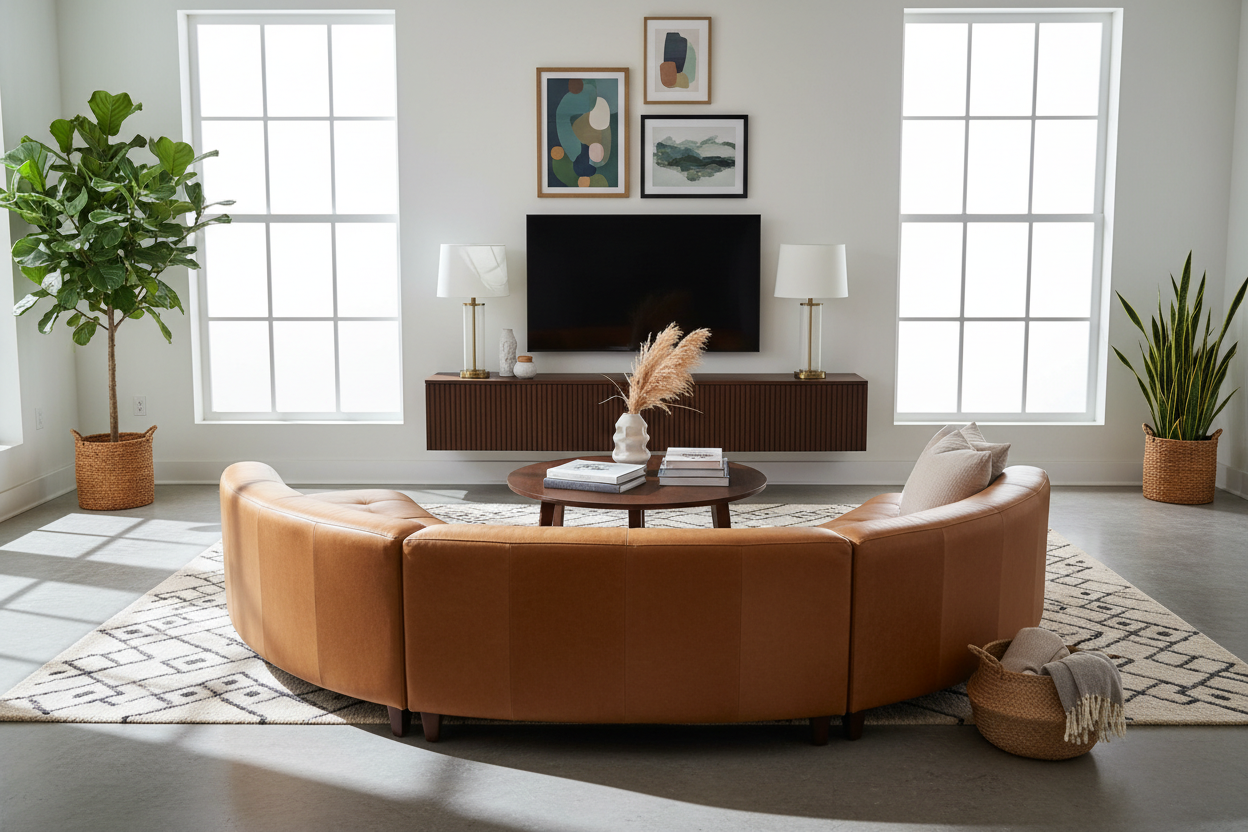
Few furniture pieces command a room quite like a c shaped leather sectional. It is the architectural anchor of a living space, promising a revival of the classic "conversation pit" without the need for renovation. However, clients often come to me with a common dilemma: they love the aesthetic of these expansive sofas but fear they will overwhelm the room or obstruct traffic flow. The line between a cozy, luxurious gathering spot and a cluttered, heavy space is surprisingly thin.
Quick Decision Guide: Key Features to Look For
- Leather Grade: Opt for Top Grain or Full Grain for durability; avoid Bonded leather as it peels over time.
- Scale & Dimensions: Ensure a minimum of 36 inches of walking path around the perimeter of the curve.
- Modular vs. Fixed: Modular units offer flexibility to separate pieces if you move to a new home.
- Seat Depth: Deep seating (24"+) encourages lounging but requires a larger footprint than standard depth.
Mastering Space Planning and Flow
The allure of the C-shape is its ability to create a "room within a room." In open-concept floor plans, this silhouette acts as a psychological divider, separating the lounge area from the dining space or kitchen without building walls. However, placement is critical.
Because this furniture creates a semi-enclosed circle, you must consider the entry and exit points. A common error I see is placing the opening of the "C" facing away from the room’s focal point (like a fireplace or TV). The opening should invite people in, not turn its back on the rest of the home. If you are working with tighter dimensions, consider a small c shaped couch. These scaled-down versions often use tighter back cushions and narrower arms to provide the conversational setup without dominating the square footage.
Choosing the Right Leather for Your Lifestyle
As a designer, I categorize leather sectionals into two camps: the "pristine" and the "lived-in." Your choice depends entirely on your household dynamics.
Full-Grain and Aniline Leathers
This is the highest quality. It is soft, breathable, and warm to the touch. However, it has no protective coating. It will absorb oils, spills, and scratches. If you want a sofa that develops a rich patina and tells a story over ten years, this is the choice. It adds immense visual warmth and texture to a room.
Pigmented or Semi-Aniline Leathers
For high-traffic homes with pets or children, I almost always recommend semi-aniline. It retains the natural look but includes a light protective finish that resists staining and fading. It ensures the sectional maintains a consistent color and finish, preventing that "worn out" look in specific spots where people sit most often.
Visual Weight and Balance
Leather is visually "heavy." A large, dark C-shaped sectional can easily make a room feel dark or bottom-heavy. To counteract this, pay attention to the legs. A sofa with exposed legs (stiletto or tapered wood) allows light to pass underneath, making the piece feel lighter and airier. Conversely, a skirted or block-base sectional will feel more grounded and substantial.
Balance the visual weight by pairing the leather with contrasting textures. I often style these with boucle throw pillows, a high-pile wool rug, or a glass coffee table to break up the solidity of the hide.
Lessons from My Own Projects
I want to share a specific realization I had while installing a custom C-shaped sectional for a client in a downtown loft. On paper, the dimensions were perfect. However, once we got it into the room, we realized we had created a "coffee table trap."
Because the C-shape surrounds the center on three sides, using a standard rectangular coffee table made it nearly impossible for the person sitting in the middle seat to get out without awkwardly shuffling sideways or climbing over the table. I learned the hard way that round nesting tables are the superior choice for this layout. They allow for better knee clearance and can be moved easily when someone needs to exit the "pit."
Another unpolished truth: leather is slippery. If you plan on napping on this sectional, standard silk or satin throw pillows will slide right off the moment you sit down. I now exclusively use pillows with textured backs (like velvet or suede) or heavy inserts to ensure they actually stay in place against the smooth leather surface.
Conclusion
Investing in a C-shaped leather sectional is a commitment to a specific lifestyle—one that values connection and shared experiences. When chosen correctly, it becomes more than just seating; it becomes the heart of the home. Measure your walkways, respect the visual weight of the material, and you will create a sanctuary that balances luxury with profound comfort.
Frequently Asked Questions
How much space do I need for a C-shaped sectional?
Ideally, you need a room that is at least 12x12 feet to accommodate a standard C-shaped sectional without it touching the walls. For a standard size, ensure you have at least 30 to 36 inches of walking space around the exterior of the sofa to prevent the room from feeling cramped.
Can I separate the pieces of a sectional later?
It depends on the design. Modular sectionals are finished on all sides and can be broken apart to be used as separate seating. However, many traditional sectionals have "connector" hardware and unfinished sides where the pieces join. Always check if the unit is "fully finished" if you plan to reconfigure it later.
How do I maintain the leather to prevent cracking?
Leather requires hydration. I recommend dusting it weekly with a microfiber cloth to prevent abrasive particles from settling in the grain. Apply a high-quality leather conditioner every 6 to 12 months. Avoid placing the sectional in direct sunlight or right next to a heat source, as this accelerates drying and cracking.


Leave a comment
This site is protected by hCaptcha and the hCaptcha Privacy Policy and Terms of Service apply.