










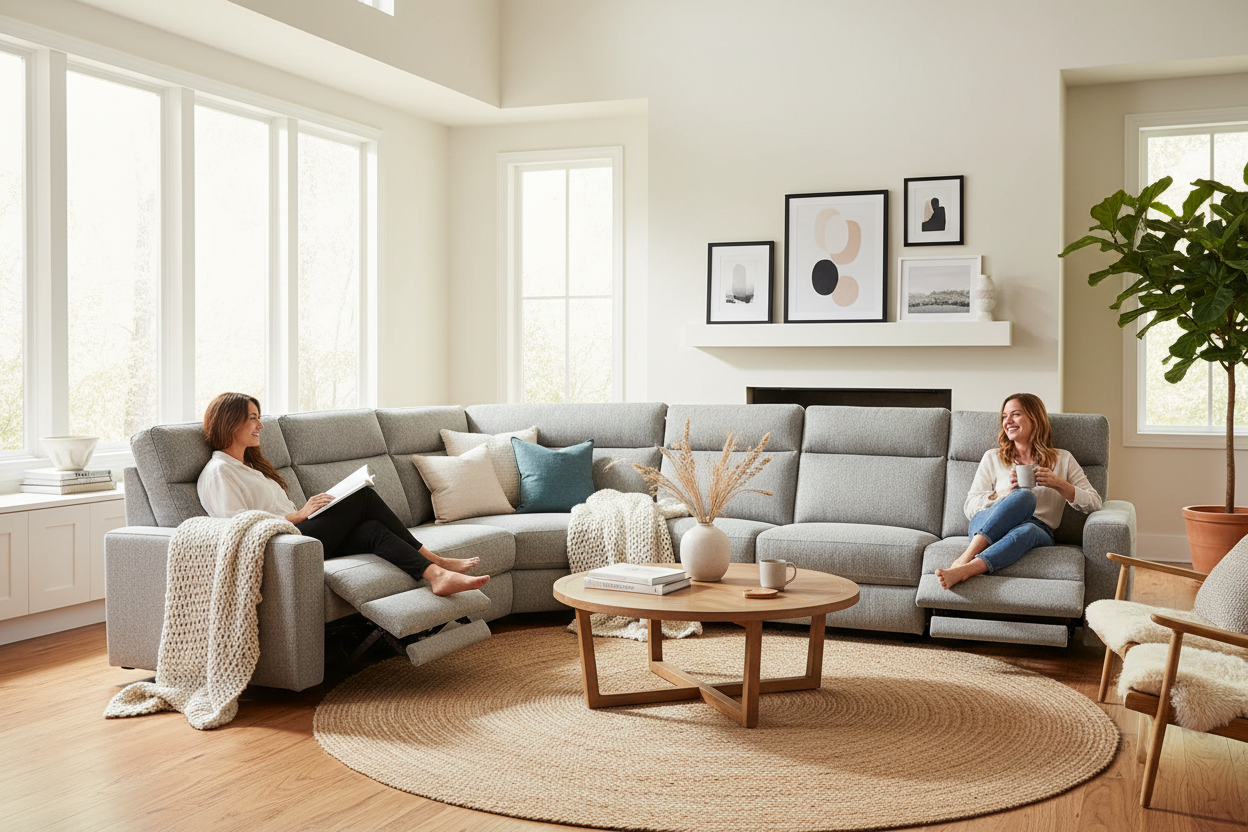
For years, interior designers faced a difficult choice: prioritize the sleek silhouette of a stationary sofa or succumb to the bulky comfort of motion furniture. Fortunately, the industry has evolved. The modern cloth reclining sectional is no longer the overstuffed behemoth of the past; it is a sophisticated blend of ergonomics and textile engineering. If you are balancing the need for a high-traffic family zone with the desire for a curated aesthetic, this piece might be your solution. However, selecting the right one requires looking past the first impression and understanding the mechanics beneath the fabric.
Quick Decision Guide: What to Check Before You Buy
- Fabric Performance: Look for high "double rub" counts (over 30,000) or Crypton treatments if you have pets. A cloth sectional with recliner sees more friction than stationary pieces.
- Mechanism Type: Wall-hugger mechanisms are essential for tight spaces, requiring only inches of clearance behind the frame.
- Power vs. Manual: A power reclining fabric sectional offers infinite positions but requires a floor outlet or battery pack. Manual is simpler but limits adjustability.
- Suspension System: Sinuous springs offer firm support, while 8-way hand-tied springs provide the gold standard for longevity.
Elevating the Aesthetic: Material Matters
The primary advantage of a fabric sectional with recliners over leather is the tactile warmth and acoustic dampening it adds to a room. However, not all textiles behave the same when in motion. Avoid loose weaves like heavy bouclé on moving parts, as the constant friction of reclining can cause premature pilling.
I often steer clients toward tightly woven chenille or performance linen blends for a reclining fabric sectional. These materials maintain their shape even after the footrest has been extended and retracted a thousand times. The goal is to ensure the fabric doesn't "puddle" on the seat when the recliner is closed, a common issue with lower-quality fabric recliner sectionals.
The Mechanics of Comfort: Power vs. Manual
When specifying a fabric sectional sofa with power recliner, you are paying for the luxury of micro-adjustments. High-end models now include articulating headrests and lumbar support, which are game-changers for ergonomics. From a design perspective, power buttons are often hidden inside the arm or on a sleek side panel, maintaining a cleaner visual profile than the protruding handle of a manual lever.
If you opt for a fabric power sectional, remember that motors add weight. Ensure your flooring is protected, as these pieces are significantly heavier than standard upholstery.
Configuration and Space Planning
The layout is where most homeowners make mistakes. A cloth reclining sectional sofa has a heavier visual weight than a standard couch. To keep the room feeling airy, ensure you have at least 30 inches of walking path around the perimeter, even when the footrests are fully extended.
The Chaise Dilemma
A popular hybrid configuration is the fabric sectional with chaise and recliner. This offers the best of both worlds: a fixed lounging area for quick relaxation and a mechanical recliner for customized support. This setup works exceptionally well in open-concept living rooms where you want to define the space without building a wall of furniture.
Lessons from My Own Projects
I recently installed a large fabric power reclining sectional sofa for a client in a downtown loft. We chose a beautiful greige performance velvet that looked stunning in the showroom. However, once we got it into the space, we realized a critical oversight: the unit was "floating" in the center of the room, not against a wall.
Because it was a power unit, we had ugly black cords trailing across the rug to the nearest outlet. It ruined the clean lines we were aiming for. I had to retroactively order rechargeable lithium-ion battery packs that tuck underneath the frame. It was a $300 fix that saved the design. Also, a specific detail regarding the fabric: on the reclining seats, the velvet nap started to look "crushed" faster than the stationary seats because of the leg friction. We ended up having to steam those specific spots monthly to keep the sheen consistent. These are the tactile realities you don't see in a catalog.
Conclusion
Investing in a sectional sofa recliner fabric piece is a commitment to comfort without sacrificing style. By focusing on performance textiles and planning for the mechanical clearance, you can create a living space that invites relaxation while satisfying your design sensibilities. Measure twice, check the motor warranty, and choose a fabric that feels as good as it looks.
Frequently Asked Questions
How much wall clearance does a reclining fabric sectional need?
Standard recliners need 8 to 12 inches. However, "wall-hugger" or "zero-wall" designs allow you to place the fabric sectional couch with recliner just 2 to 4 inches from the wall, as the mechanism slides forward rather than tipping back.
Are power reclining sectionals durable?
Yes, provided you choose a reputable manufacturer. The motors in a high-quality fabric sectional sofa with power recliner are tested for thousands of cycles. The most common failure point is actually the switch or the power transformer, both of which are easily replaceable parts.
Can I mix a recliner module with a stationary chaise?
Absolutely. Most modular systems allow you to customize the configuration. A fabric sectional with chaise and recliner is a standard request, allowing you to place the recliner near the TV for viewing and the chaise near a window for reading.

Leave a comment
This site is protected by hCaptcha and the hCaptcha Privacy Policy and Terms of Service apply.