










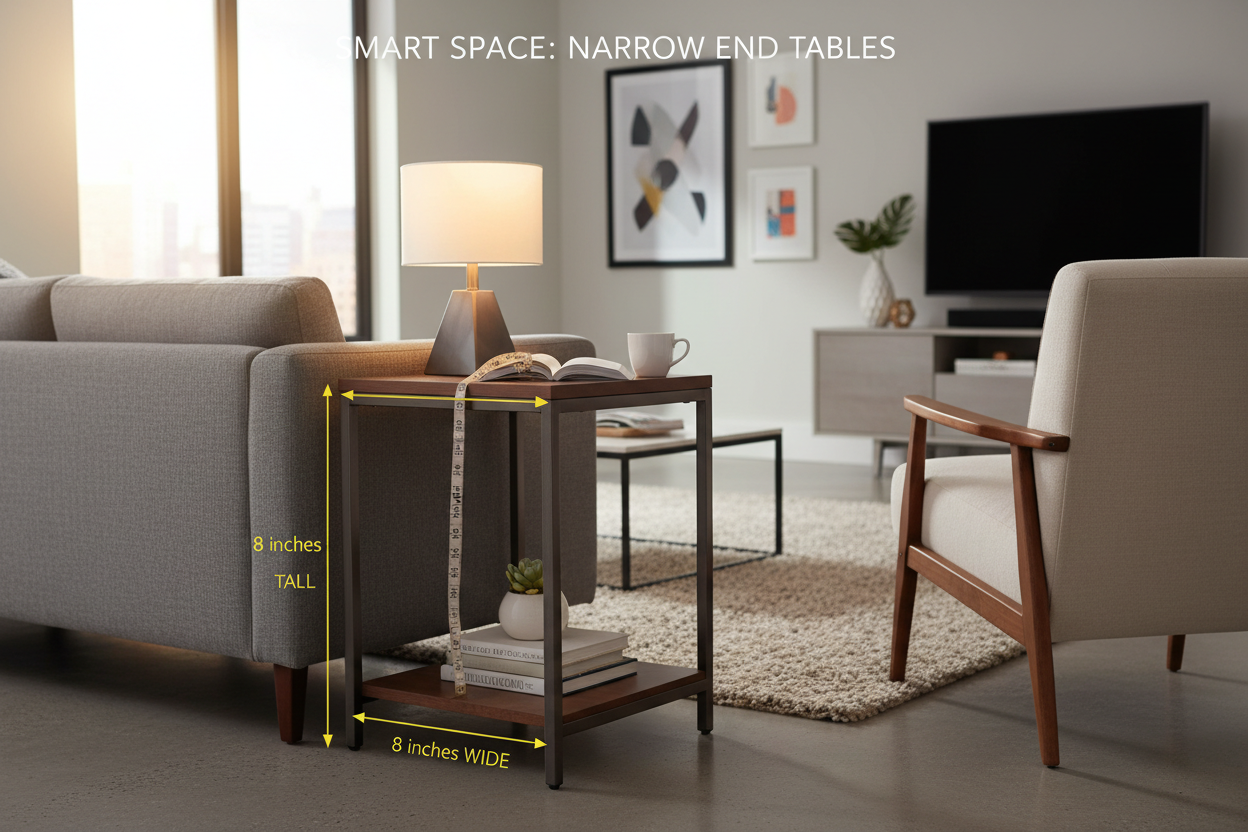
Living in a home where every square inch counts taught me something valuable: the right furniture isn't always the biggest piece in the showroom. After squeezing a standard end table between my sofa and wall only to realize I could barely walk past it, I discovered the world of narrow end tables. These space-saving pieces have become essential for anyone dealing with compact living rooms, tight hallways, or furniture arrangements that leave little breathing room.
A narrow end table typically measures between 10 to 15 inches in depth, compared to standard tables that often exceed 18 inches. This difference might seem minor on paper, but in real-world application, those few inches can mean the difference between a cluttered walkway and a functional living space. The beauty of a slim end table lies in its ability to provide surface area for lamps, drinks, and remote controls without overwhelming your room's footprint.
Understanding Your Space Requirements
Before shopping for narrow end tables for living room use, measure the actual space you're working with. I learned this the hard way when I fell in love with a table online, only to have it arrive and still feel too bulky for my specific corner. Grab a tape measure and note not just the width of the gap between your furniture, but also consider traffic flow. You'll want at least 24 inches of walking space in high-traffic areas.
The depth of your sofa matters too. A narrow couch end table should complement your seating proportions rather than fight against them. If you have a particularly deep sectional, even a skinny end table can work beautifully when positioned at the arm rather than behind the furniture. For apartment dwellers or those with smaller homes, narrow side tables for living room arrangements often work better than traditional options because they maintain visual openness while still serving their purpose.
Material Choices That Make a Difference
Wood remains the most popular choice for narrow wood end table designs, and for good reason. A solid wood narrow end table brings warmth and durability that synthetic materials struggle to match. Oak, walnut, and acacia provide different aesthetic options while maintaining structural integrity despite the slimmer profile. The grain patterns in natural wood also add visual interest that helps these pieces feel intentional rather than like an afterthought.
Metal and glass combinations work exceptionally well for narrow accent table designs in modern or industrial spaces. The transparency of glass creates an illusion of more space, while metal frames can be incredibly thin without sacrificing stability. I've seen stunning examples of skinny accent tables with brass or black metal legs supporting marble or tempered glass tops that look far more expensive than their price tags suggest.
Design Features That Add Functionality
A narrow side table with shelves transforms a simple surface into a storage solution. Lower shelves provide homes for books, baskets, or decorative items without requiring additional floor space. This vertical thinking proves especially valuable in studio apartments or rooms where every piece of furniture needs to multitask.
Long narrow end table designs excel in specific situations. Positioned behind a sofa that floats in the room rather than sitting against a wall, these extended pieces create a visual anchor while offering substantial surface area. A long skinny end table measuring 40 to 60 inches in length but only 10 inches deep can hold multiple lamps, plants, or decorative objects without protruding awkwardly into the room.
Height Considerations
The standard end table height ranges from 22 to 30 inches, typically matching or sitting slightly below your sofa arm height. However, narrow chairside table options often run taller, designed to tuck beside accent chairs or recliners where you might want easier access to items without leaning over. A narrow side chair table at 26 to 28 inches high puts drinks, reading glasses, and phones within comfortable reach.
Style Options for Every Aesthetic
Unique narrow end tables come in countless styles. Mid-century modern designs feature tapered legs and clean lines that naturally lend themselves to slim profiles. Scandinavian-inspired pieces embrace minimalism with light woods and simple construction. Industrial styles incorporate metal frames with reclaimed wood surfaces, creating character-rich options for loft-style spaces.
For traditional homes, you'll find thin end tables for living room use that incorporate classic details like turned legs, carved accents, or antique finishes. These pieces prove that space-saving doesn't mean sacrificing style or settling for contemporary aesthetics if that's not your preference.
Practical Shopping Tips
When searching for narrow end tables for small spaces, consider purchasing a narrow end tables set of 2. Matching pairs create visual cohesion in your room while ensuring symmetry if you're flanking a sofa or placing tables beside matching chairs. Many retailers offer sets at a better value than buying individually.
A very narrow end table measuring under 10 inches deep requires careful selection. At this extreme slim profile, stability becomes crucial. Look for designs with wide bases or lower shelves that add weight distribution. I've found that small narrow end table options with drawer storage tend to be sturdier than purely decorative pieces because the drawer box adds internal structure.
Where to Position Your Narrow Tables
Narrow sofa end tables work beautifully at either end of your seating, but don't limit yourself to traditional placements. A slender end table can define the end of a hallway, sit beside an entryway bench, or create a landing spot in a bedroom. The narrow side table for small space applications extends far beyond living rooms.
In open floor plans, skinny side tables for living room use can help define zones without blocking sightlines. A small skinny end table positioned strategically can mark where the living area transitions to the dining space while maintaining the open, airy feeling that makes these layouts appealing.
Quality Indicators to Look For
A shallow end table shouldn't mean shallow construction. Check joinery methods—dovetail joints and mortise-and-tenon connections indicate quality craftsmanship that will last. For wood narrow end tables for living room use, solid wood construction beats veneer over particleboard, especially in high-use areas where wear and tear accumulate.
Weight capacity matters even for decorative pieces. A quality thin side tables for living room should comfortably support at least 30 to 50 pounds. This ensures your table won't wobble under a table lamp, stack of books, or that oversized coffee mug you definitely shouldn't set down without a coaster.
Making the Most of Your Purchase
Once you've selected your narrow living room end tables, styling them properly maximizes their impact. Keep the surface relatively uncluttered—the point of choosing a slim profile was to save space, not to create a new dumping ground. A lamp, small plant, and perhaps a coaster for your drink creates a functional, attractive arrangement.
The narrow long end table format invites creative styling with items of varying heights. Tall candlesticks, medium-height picture frames, and low decorative bowls create visual interest through layering. Just remember that narrow doesn't mean fragile—these pieces can handle everyday use when you choose quality construction.
Ultimately, the best narrow accent table for your home balances aesthetics, functionality, and spatial constraints. Take your time measuring, comparing options, and envisioning how each piece will work in your specific layout. The right choice will feel like it was custom-made for that exact spot, proving that sometimes the smallest changes make the biggest difference in how a room functions and feels.
Frequently Asked Questions
What's the ideal depth for a narrow end table in a small living room?
For most small living rooms, an end table between 10 to 12 inches deep provides the best balance of functionality and space-saving. This depth accommodates a standard table lamp base and leaves room for a drink or small decorative item without protruding too far into walkways. If your space is extremely tight, tables as narrow as 8 inches can work, though you'll be more limited in what you can place on them.
Can narrow end tables be sturdy enough for everyday use?
Absolutely, when constructed properly. Look for tables with solid wood or metal frames, wide bases for stability, and quality joinery. Many narrow tables include lower shelves or stretchers between the legs that add structural support. A well-made slim table will easily handle the weight of lamps, books, and daily items without wobbling or tipping.
Should I match my narrow end tables to my coffee table?
Matching isn't necessary and can sometimes make a small room feel too coordinated or furniture-showroom-like. Instead, aim for complementary styles, finishes, or materials that create cohesion without being identical. For example, if your coffee table is dark wood, your narrow end tables could be the same wood tone but in a different style, or a lighter wood with similar design elements. This approach adds visual interest while maintaining a pulled-together look.


Leave a comment
This site is protected by hCaptcha and the hCaptcha Privacy Policy and Terms of Service apply.