











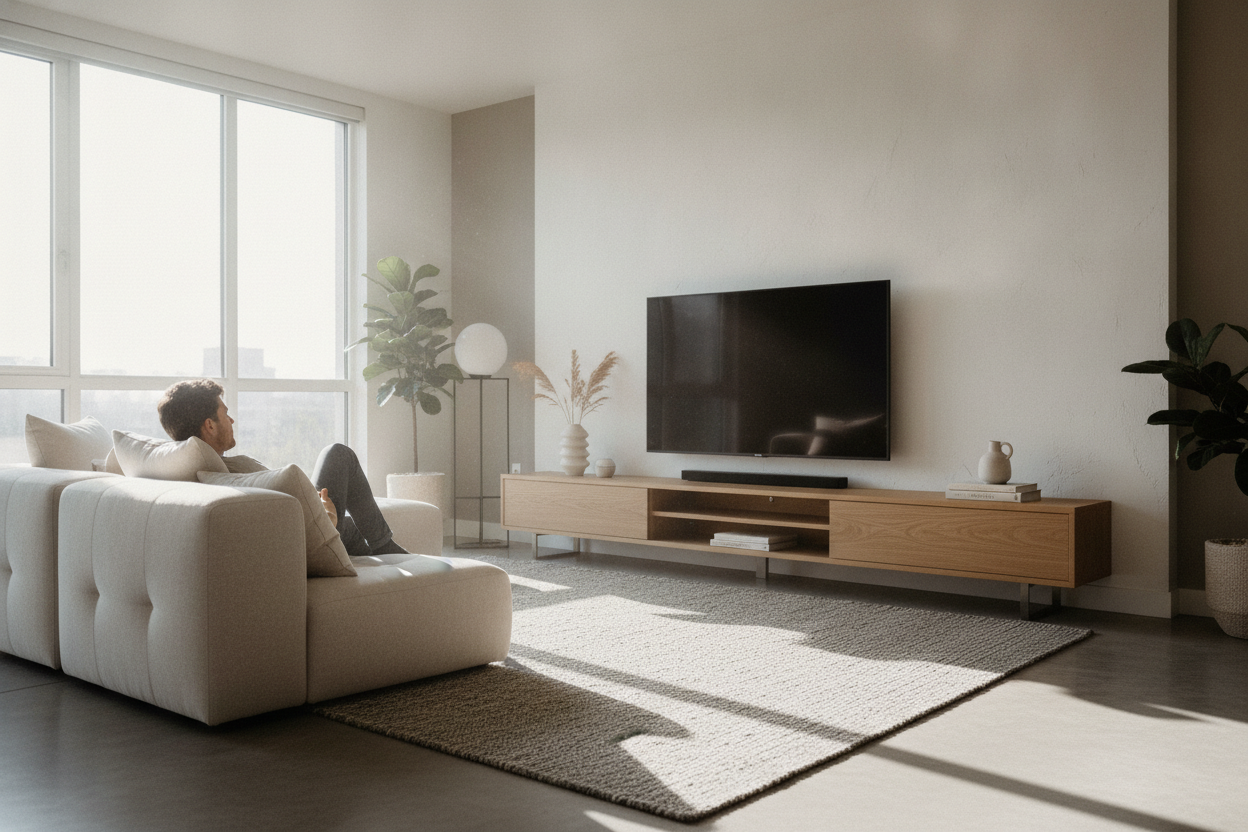
I spent three weeks staring at my 65-inch TV sitting on a cardboard box because I couldn't decide if a 12-inch high unit was chic or a chiropractor's dream. We’ve all been there—scrolling through Pinterest where every living room looks like a minimalist art gallery, wondering if we can actually live like that. The culprit behind those airy, open spaces is usually a low tv console that sits so close to the floor it is practically a baseboard.
- Low units make small rooms feel double the size by exposing more wall.
- Your sofa seat height is the ultimate dealbreaker for ergonomics.
- Closed storage is mandatory when the unit sits below your eye level.
- If you have toddlers or large dogs, your screen is at a higher risk of impact.
The Undeniable Visual Magic of the Floor-Hugging Trend
The low and wide tv stand is a cheat code for apartment living. Most standard rentals have 8-foot ceilings, which can feel suffocating if you fill the room with tall, heavy furniture. By dropping the visual weight of your media center, you are creating a massive amount of 'negative space' above the TV. It is an optical illusion that tricks your brain into thinking the walls are taller than they are.
A low tv stand modern aesthetic isn't just about being trendy; it is about keeping your sightlines clear. When your furniture stays below the mid-point of the wall, the whole room breathes. I have seen 400-square-foot studios look like airy lofts just by swapping a bulky armoire for a sleek, low tv shelf that runs nearly the length of the wall.
The Ergonomics Test: Will It Ruin Your Neck?
Here is the cold, hard math. If you are sitting on a deep, slouchy modular sofa with a 15-inch seat height, a low to ground tv stand is a dream. Your eye line hits the center of the screen naturally. You are reclining, your neck is supported, and life is good. But if you are a fan of mid-century vintage chairs or upright sofas with 20-inch seat heights, a short tv table will have you looking down at a sharp angle.
That 'tech neck' is a real concern. I once tried watching a three-hour epic on a 10-inch bench while sitting in a high-back wing chair—it was a recipe for a heating pad by midnight. If your knees are higher than your hips when you sit, your TV needs to be higher, too. Don't sacrifice your cervical spine for a Pinterest aesthetic.
Storage Realities When You Lose Vertical Space
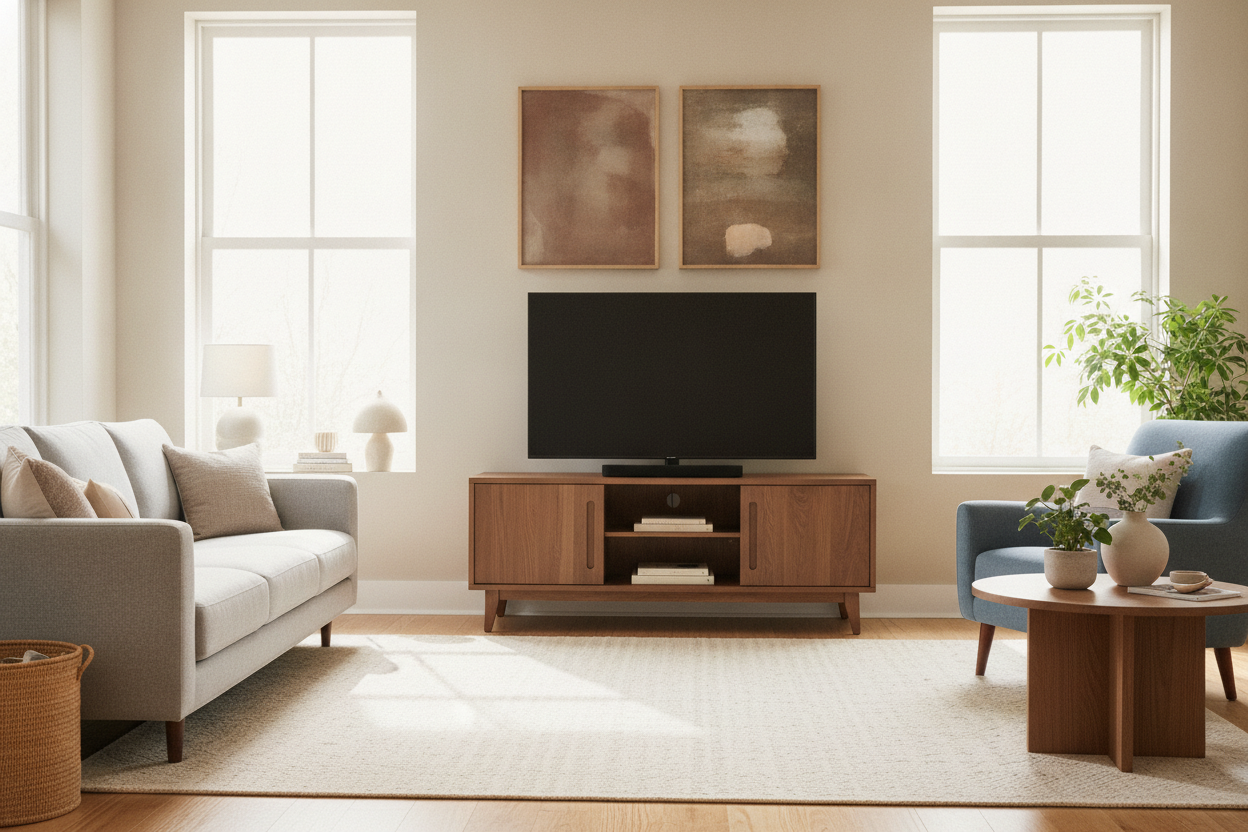
When you go low, you lose vertical storage real estate. You have to get smart about what you're actually shoving in there. A low tv stand with drawers is the only way to go in my opinion. Open low stands might look cool in a catalog, but in real life, you are looking down onto the tops of your dusty routers and tangled HDMI cables every time you walk past.
A solid low tv bench hides the mess. Since the top of the unit is so visible from a standing position, you want that surface clear for a single candle or a nice coffee table book, not a pile of remotes and controllers. Choose a unit with a cable management cut-out in the back, or you'll see a 'waterfall' of black cords spilling out from behind the short frame.
When to Walk Away From the Ultra-Low Look
If you have a 20-foot vaulted ceiling, a small low tv stand looks like a postage stamp in a ballroom. It gets swallowed by the scale of the room. Also, let’s talk about kids. A low to ground unit puts an expensive OLED screen right at 'toddler with a plastic hammer' height. It is a disaster waiting to happen.
If your home feels more like a high-traffic playground than a gallery, or if you simply need more room for a massive book collection, you might want to consider bookshelf TV stand ideas I actually love instead. Sometimes height is your best friend for both safety and storage.
Oops, I Bought One and Hate the Height (Now What?)
Maybe you bought the floor-hugger and realized your neck hates it. You don't have to put it on Facebook Marketplace just yet. You can 'cheat' the height by wall-mounting the TV about 6 to 10 inches above the console. This creates a gallery look while bringing the screen up to a comfortable eye level.
If wall mounting isn't an option, look into how wooden TV stand legs fix it. Swapping out 1-inch plastic glides for 6-inch tapered oak legs can save your posture without losing the vibe. It is an easy Saturday afternoon DIY that changes the entire ergonomic profile of the piece.
What is the ideal height for a low TV stand?
Aim for 12 to 18 inches if you have low, modern seating. If your sofa is traditional and tall, look for something closer to 22 inches.
Can I put a 75-inch TV on a short stand?
Yes, but make sure the stand is at least 10 to 15 inches wider than the TV. A huge screen on a tiny, short stand looks top-heavy and unstable.
Do low stands make a room look bigger?
Absolutely. By keeping the furniture below the halfway point of the wall, you create a sense of openness and higher ceilings.

Leave a comment
This site is protected by hCaptcha and the hCaptcha Privacy Policy and Terms of Service apply.