










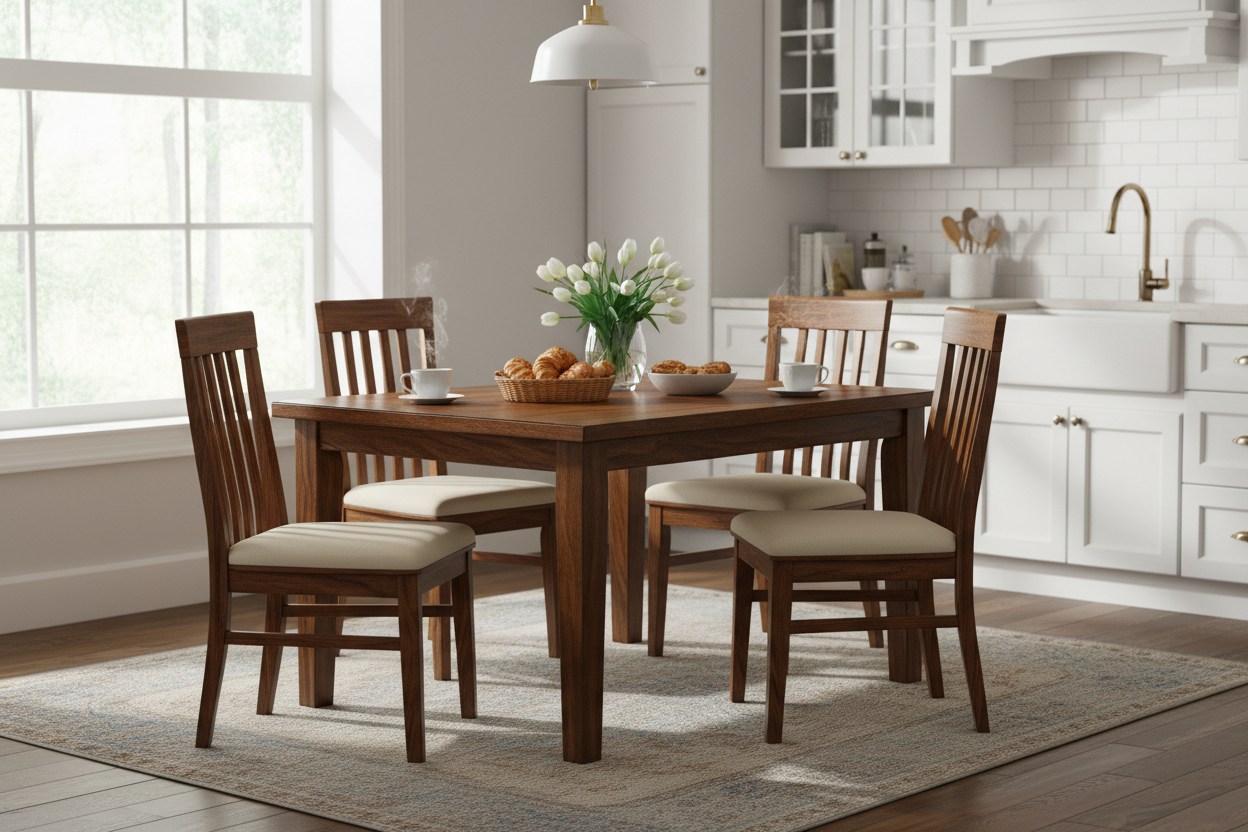
There is a specific warmth that comes from starting your day at a sturdy surface. While glass looks modern and metal feels industrial, nothing quite grounds a morning routine like a wooden breakfast table and chairs. It is the silent participant in your coffee rituals, homework sessions, and late-night snack raids. If you are wondering if wood is the right material for your kitchen nook, the short answer is yes. Wood offers a blend of durability, repairability, and aesthetic versatility that synthetic materials simply cannot match, especially in high-traffic areas like the kitchen.
Choosing the right furniture for your morning meals goes beyond just picking a color. It is about understanding how the material interacts with your lifestyle. A solid timber surface absorbs the clatter of silverware rather than amplifying it, and unlike veneers that can peel, solid wood develops a patina over time that tells the story of your home.
The Enduring Appeal of Natural Materials
Kitchens are often full of cold, hard surfaces. You have granite countertops, stainless steel appliances, and tiled backsplashes. Introducing a wood breakfast table set softens the room instantly. It acts as a visual and tactile counterbalance to the sleek, sterile elements typical of modern kitchen design. But beyond aesthetics, wood is forgiving. If you bump your knee against a wooden leg, it hurts less than metal. If a toddler bangs a spoon on the surface, it dents rather than shatters.
I learned this lesson the hard way a few years ago. I opted for a trendy, painted MDF table for my breakfast nook because it was cheap and looked good in photos. Within six months, the edges were chipping, and a spilled glass of water caused the surface to bubble near the seam. I replaced it with a second-hand maple table I found at an estate sale. It had scratches and a few ink stains, but after a weekend of sanding and sealing, it looked incredible. That table has now survived two moves and a teething puppy. The difference in quality wasn't just visual; it was structural. Real wood has a weight and presence that anchors a room.
Maximizing Space with Smart Designs
Not everyone has a sprawling dining room, and often the breakfast area needs to fit into a tight corner or an eat-in kitchen. This is where shape and functionality become paramount. Round tables are generally better for flow in tight spaces because there are no sharp corners to navigate around. Pedestal bases are also a smart move, as they allow you to squeeze in an extra chair without anyone straddling a table leg.
However, the ultimate space-saver is a wood dining table set with leaf extensions. Many people assume extension tables are only for formal dining rooms, but they are incredibly practical for breakfast nooks. You might keep the table small and round for your daily coffee and toast, keeping the walkway clear. Then, when you decide to host a brunch or need extra surface area for a holiday baking marathon, you pop in the leaf and suddenly you have a full-service station. The mechanism matters here; look for butterfly leafs that store inside the table so you aren't trying to find closet space for a heavy piece of wood.
Understanding Wood Hardness and Durability
When shopping for a kitchen dining table wooden construction varies significantly based on the species of the tree. This is often where price discrepancies occur. You might see two tables that look identical, but one costs three times as much. Usually, the difference lies in the Janka hardness scale.
Pine, for example, is a softwood. It is affordable and has a lovely rustic look, but it scratches if you look at it wrong. If you love the "distressed" farmhouse look where every dent adds character, pine is great. However, if you want a pristine surface, you need to look at hardwoods like oak, maple, or walnut. Rubberwood is another common option found in many affordable sets today. It is technically a hardwood and is quite durable, making it a sustainable and budget-friendly middle ground, though it often lacks the intricate grain patterns of oak or ash.
Styling Your Nook
Once you have the table, the chairs define the comfort level. A wooden chair is easy to clean—a massive plus if you have kids—but it can be hard on the back during long Sunday mornings. Adding tie-on cushions is a practical compromise, offering comfort while remaining washable. Alternatively, mixing a wooden table with upholstered chairs or a built-in bench can create a cozy, eclectic vibe.
Lighting plays a massive role here as well. Because wood absorbs light, a dark walnut table in a dim corner can make the space feel small. If your nook lacks natural light, consider lighter woods like ash or white oak, or ensure you have a pendant light hanging directly over the center of the table to highlight the grain and warm up the timber tones.
Maintenance Realities
Owning wood furniture does require a level of awareness. You cannot leave a wet ring from a cold brew glass on the surface for hours without risking a mark, especially with oil finishes. Lacquer and polyurethane finishes offer more protection but can be harder to spot-repair if they get scratched deep enough.
The beauty of a solid wood piece, however, is that it is rarely ruined. Most surface damage can be fixed. A quick rub with walnuts can hide minor scratches, and a mixture of vinegar and olive oil can revitalize dried-out legs. Unlike particle board, which is destined for the landfill once damaged, a solid wood table can be sanded down and refinished multiple times, potentially lasting for generations.
Frequently Asked Questions
How do I stop my wooden chairs from scratching the kitchen floor?
The most effective solution is using felt pads with a nail-on or screw-on design rather than the stick-on variety, which tend to slide off over time. For tile floors with grout lines that catch felt, silicone caps that slip over the chair legs offer better protection and stay in place longer.
Can I mix different wood tones in the kitchen?
Yes, mixing wood tones adds depth to a room, but try to keep the undertones consistent. For example, if your floor has warm, red undertones, a table with similar warm notes (like cherry or stained oak) will look better than a cool, grey-washed wood.
Is a round or rectangular table better for a breakfast nook?
Round tables generally work best in smaller, square-shaped nooks as they improve traffic flow and allow for flexible seating. Rectangular tables are better suited for larger, narrow spaces or if you frequently need to push one side of the table against a wall to save space.

Leave a comment
This site is protected by hCaptcha and the hCaptcha Privacy Policy and Terms of Service apply.