










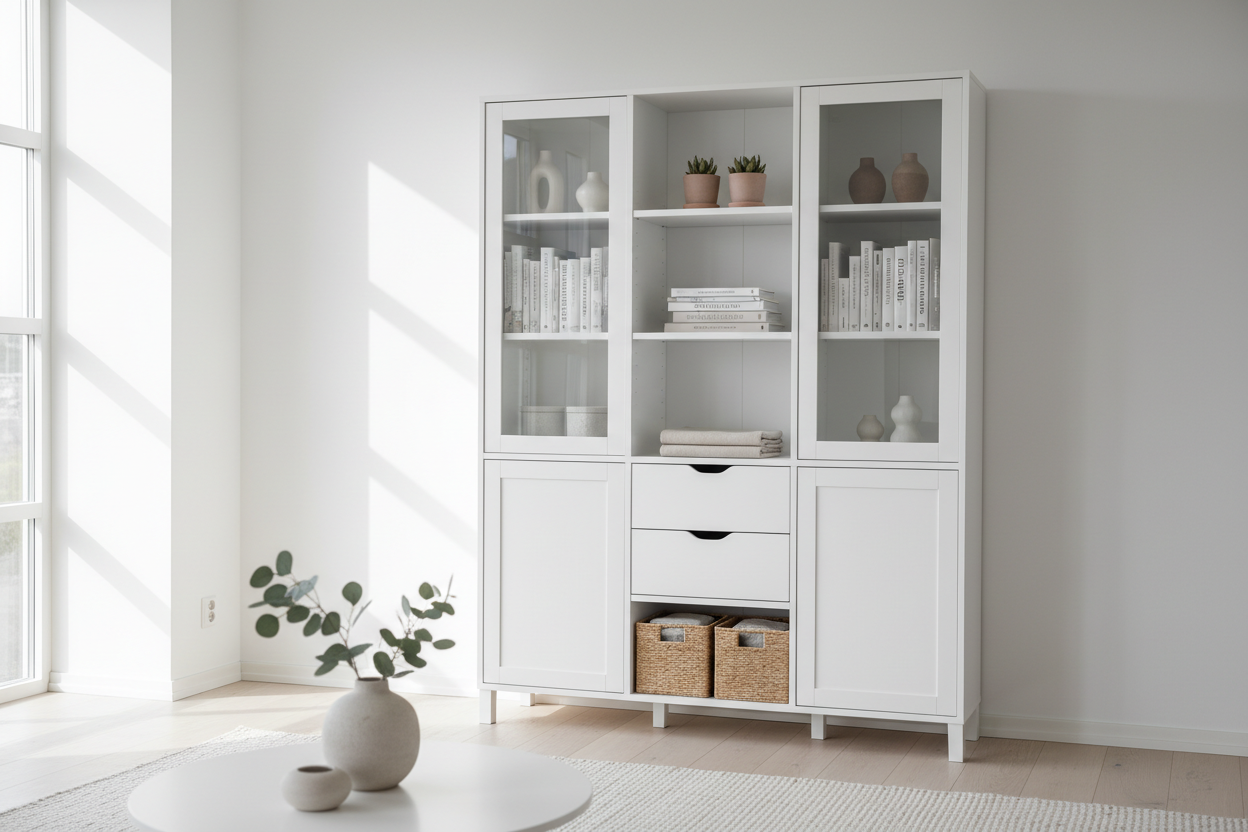
Finding a single box labeled "hutch" at IKEA is almost impossible. If you walk into the warehouse looking for that specific term, you might leave empty-handed. Most shoppers don't realize that creating that classic white hutch ikea look requires combining two separate components: a base cabinet (often a sideboard or desk) and a top shelving add-on. Whether you are outfitting a dining room, a craft corner, or a home office, the secret lies in knowing which series pair together to create that seamless vertical storage.
The Best Options for Dining and Living Rooms
For a traditional dining room aesthetic, the HAVSTA series is the heavy hitter. It is robust, made largely of solid pine, and offers a distinct advantage over cheaper lines: depth. A HAVSTA combination usually involves a solid base cabinet with sliding or hinged doors, topped with a glass-door cabinet. The result is a substantial piece of furniture that looks built-in rather than temporary.
The finish on these units is particularly nice if you want something that feels premium. Unlike the flat, paper-foil finish of lower-tier items, the HAVSTA often features a brushed surface where you can feel a bit of texture. This adds character to the room and prevents the furniture from looking too sterile or plastic-like.
Another strong contender is the HEMNES series. This line has been a staple for over a decade for a reason. To build an ikea hutch white enthusiasts will love using HEMNES, you typically buy the sideboard and the matching glass-door top unit. A warning for the perfectionists: pay close attention to the specific shade of white. IKEA often sells HEMNES in "white stain" (which allows the wood grain to show through and has a warmer, yellowish tint) and standard "white" (which is an opaque, acrylic lacquer). Mixing these two finishes in the same room can look accidental, so check the box labels carefully.
My Experience Building the HEMNES Desk Hutch
A few years ago, I needed to overhaul a small home office that had zero floor space left for filing cabinets. I decided to go vertical. I bought the HEMNES desk along with the matching add-on unit, effectively turning the desk into a tall hutch. The utility it added was instant. I suddenly had shelves for books and a middle section that was perfect for a monitor.
However, the assembly process taught me a few things the manual didn't emphasize. The back panel of the hutch section is crucial for stability. It is a thin sheet of fiberboard that you nail into place. If you rush this step and don't align the panel perfectly square, the entire hutch will wobble, and the shelves won't sit level. I spent an extra twenty minutes measuring diagonals to ensure the frame was perfectly square before hammering in those tiny nails. It made the difference between a rickety shelf and a solid piece of furniture. Also, secure it to the wall. Once you load that top section with books, the center of gravity shifts dangerously high.
The BILLY Hack: The Faux Hutch
Sometimes the pre-designed combinations don't fit your specific wall width. This is where the BILLY bookcase system comes into play as a chameleon. While technically a bookcase, adding OXBERG panel/glass doors transforms the humble BILLY into a convincing display hutch. By placing two wide units side-by-side and installing doors that are solid on the bottom and glass on top, you mimic the exact layout of a high-end china cabinet for a fraction of the cost.
This approach works exceptionally well in narrow hallways or smaller dining nooks because the BILLY is significantly shallower than the HAVSTA or HEMNES bases. You lose some depth for storing large serving platters, but you gain floor space, making the room feel larger.
Kitchen and Pantry Storage
If your search for a white hutch ikea offers is intended for the kitchen, you might need something more utilitarian. The IVAR system consists of untreated pine that you can paint white yourself, but for a pre-finished look, the LOMMARP series is a stunning, albeit distinct, choice. LOMMARP has a more decorative, traditional carpentry feel with unique trim details.
For a more modern, sleek kitchen pantry, the SEKTION kitchen cabinet system allows you to build a custom hutch. You can stack a shallow wall cabinet on top of a deeper base cabinet on a countertop. This is more involved than buying a flat-pack furniture piece, as it requires rail suspension and countertop installation, but it looks like a custom renovation rather than a furniture purchase.
Styling Your Hutch to Look High-End
Regardless of which series you choose, a white hutch can sometimes look a bit plain against a white wall. Customizing the piece helps it blend into your decor. Swapping out the standard black or silver knobs for brass or ceramic hardware is the easiest upgrade. It takes five minutes and completely changes the personality of the piece.
Lighting is the second critical factor. The glass-door top sections of these hutches are begging for illumination. IKEA sells simple LED strip lights (like the MYRVARV) that integrate well. Running these lights inside the upper cabinet highlights your dishware or books and creates a warm ambient light in the room that is much softer than overhead ceiling fixtures. If you are renting and cannot drill holes for wires, battery-operated puck lights stuck to the underside of the shelves work almost as well.
Maintenance and Care for White Finishes
White furniture requires a specific cleaning regimen to stay looking crisp. The acrylic lacquers and foils used by IKEA are generally durable, but they are susceptible to yellowing if exposed to direct, harsh sunlight for years. Positioning your hutch away from a south-facing window can extend the life of the finish.
For cleaning, avoid abrasive scrubbers. A magic eraser might seem like a good idea for scuffs, but it essentially sands down the finish, leaving a dull spot that attracts more dirt later. A damp cloth with a mild detergent is usually sufficient. If you have the "white stain" pine version, be careful with water; while sealed, the wood grain texture can trap moisture if you soak it, potentially causing the wood to swell over time.
Finding the Right Fit
Measure your ceiling height before you buy. Many of these add-on units are surprisingly tall. You want to ensure you have at least a few inches of clearance at the top for assembly purposes—you often need to lift the top unit up and over the dowels of the base unit. If your ceiling is too low, you might get the pieces into the room and realize you physically cannot stack them.
Ultimately, the perfect ikea hutch white setup depends on what you need to hide versus what you want to display. Use the solid bottom cabinets for the clutter—admin paperwork, table linens, or ugly appliances—and reserve the glass upper sections for your favorite decor. With the right assembly and a few personal touches, these flat-pack boxes transform into the focal point of the room.
Frequently Asked Questions
Can I paint an IKEA hutch if I want a different shade of white?
Yes, but preparation is key. If the furniture is made of laminate or smooth veneer, you must use a shellac-based primer (like BIN) to ensure the paint adheres. Without this specific primer, latex paint will scratch off easily.
What is the difference between white stain and white acrylic at IKEA?
White stain is semi-transparent, allowing the texture and grain of the wood to show through, which gives a rustic look. White acrylic (or standard white) is a solid, opaque finish that looks modern and covers the material underneath completely.
Are IKEA hutches attached to the wall?
Yes, they absolutely should be. Because hutches are tall and top-heavy, especially when doors are open or shelves are loaded, using the included tip-over restraint kit to anchor the unit to the wall is a necessary safety step.

Leave a comment
This site is protected by hCaptcha and the hCaptcha Privacy Policy and Terms of Service apply.