











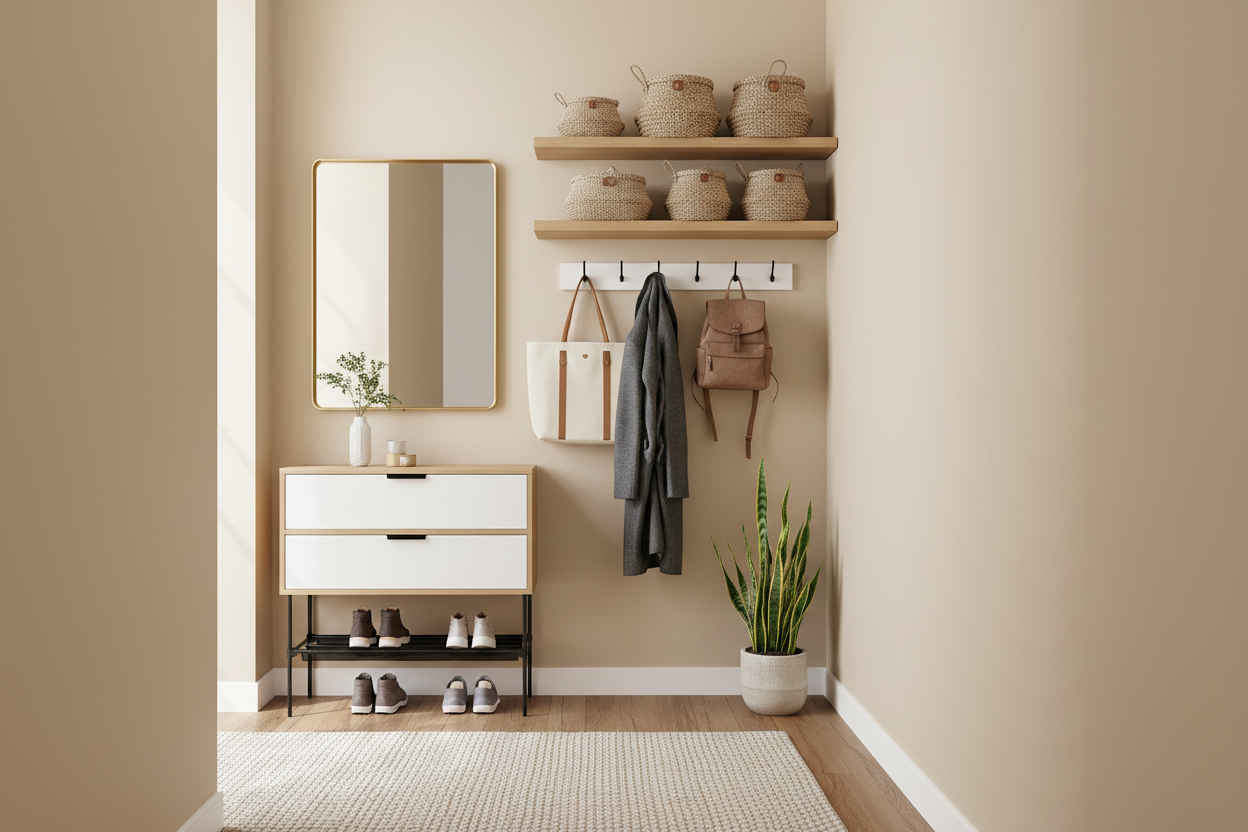
The foyer is the handshake of the home; it sets the tone for the rest of your interior while enduring the highest traffic. Yet, it is often the most neglected zone, becoming a chaotic drop-ground for keys, mail, and shoes. As a designer, I see clients struggle to balance the need for utility with the desire for a curated aesthetic. The secret lies in selecting storage in entryway solutions that respect the architectural limitations of the space without sacrificing style.
Quick Decision Guide: Key Features to Look For
Before purchasing furniture, evaluate these critical factors to ensure your entryway remains functional and visually balanced:
- Depth Constraints: For a narrow hallway, seek "slim" or "shallow" units with a depth of 10-13 inches to preserve traffic flow.
- Verticality: In small spaces, utilize height over width. Look for tall, narrow shelving or wall-mounted units to draw the eye upward.
- Material Durability: Hardwoods (Oak, Walnut) or high-pressure laminates withstand moisture from wet coats and shoes better than standard veneers.
- Closed vs. Open: Aim for a 70/30 split. 70% closed storage (drawers/doors) to hide clutter, and 30% open shelving for decor.
Mastering the Layout: Solutions for Narrow Spaces
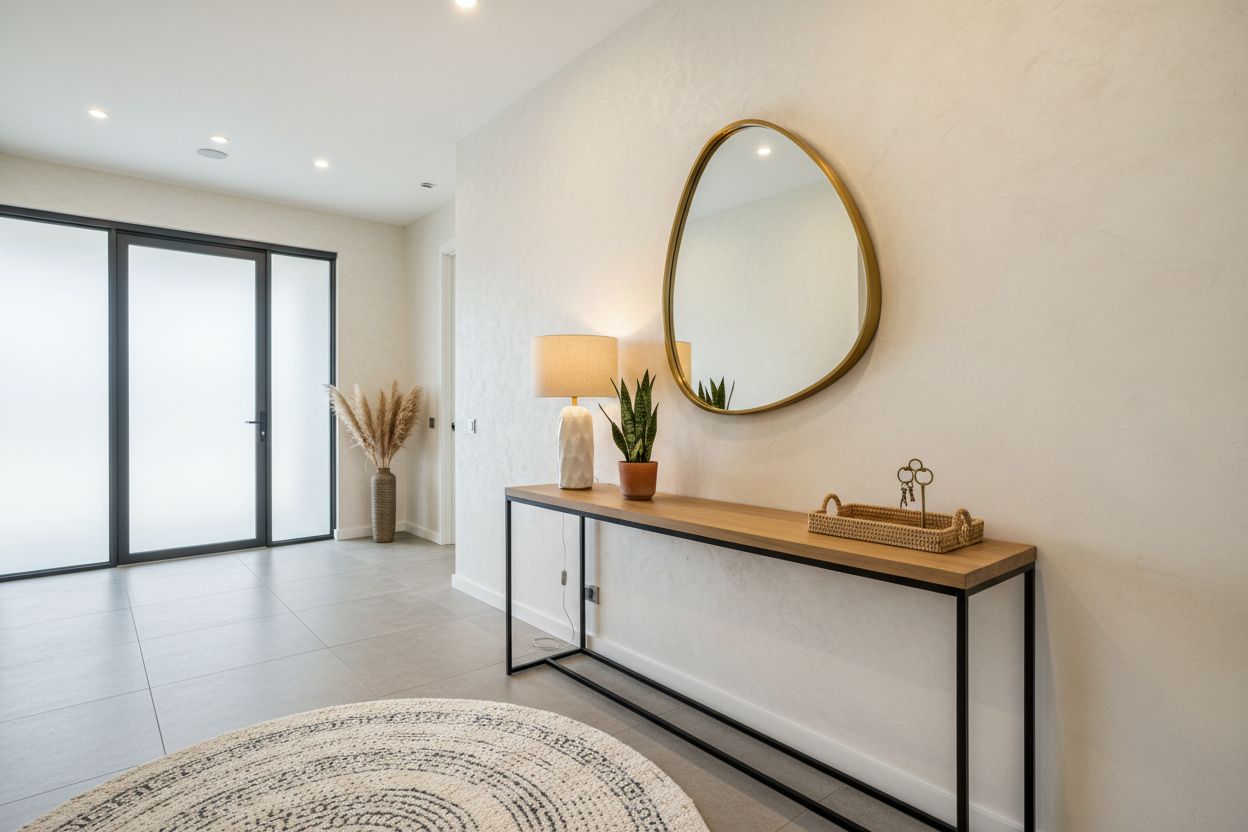
The biggest challenge in foyer organization is usually a lack of square footage. When dealing with narrow entryway storage, the standard 18-inch deep console table is often the enemy of ergonomics. It encroaches on the walkway, making the space feel claustrophobic.
The "Floating" Approach
For skinny entryway storage, I almost always recommend wall-mounted consoles. By keeping the floor visible beneath the unit, you create an optical illusion of more space. This is one of the most effective small entryway storage ideas because it reduces visual weight. Look for a floating drawer unit that can house keys and mail, leaving the floor clear for a boot tray or baskets.
Vertical Shoe Integration
Shoe storage for small entryway layouts requires vertical thinking. Tipping shoe cabinets are a staple in modern entryway storage ideas. They have an incredibly slim profile (often just 7-9 inches deep) but can hold a surprising volume of footwear. This keeps the front door organization tidy without blocking the door swing.
Choosing Materials: Durability Meets Aesthetics
When curating entrance way storage solutions, material selection is paramount. Your entryway furniture takes a beating. Avoid low-density particle board if you live in a climate with rain or snow; it swells upon contact with moisture.
Instead, opt for solid wood or metal for your primary entryway organization pieces. If you are looking at entryway shelf ideas, consider powder-coated steel or sealed reclaimed wood. These materials add texture and character while offering the resilience needed for high-traffic zones.
Styling and Function: The Finishing Touches
Organizing an entryway goes beyond just buying a cabinet. It requires a system. For entryway purse storage, consider heavy-duty hooks installed at varying heights—lower for kids' backpacks, higher for handbags. This utilizes vertical wall space effectively.
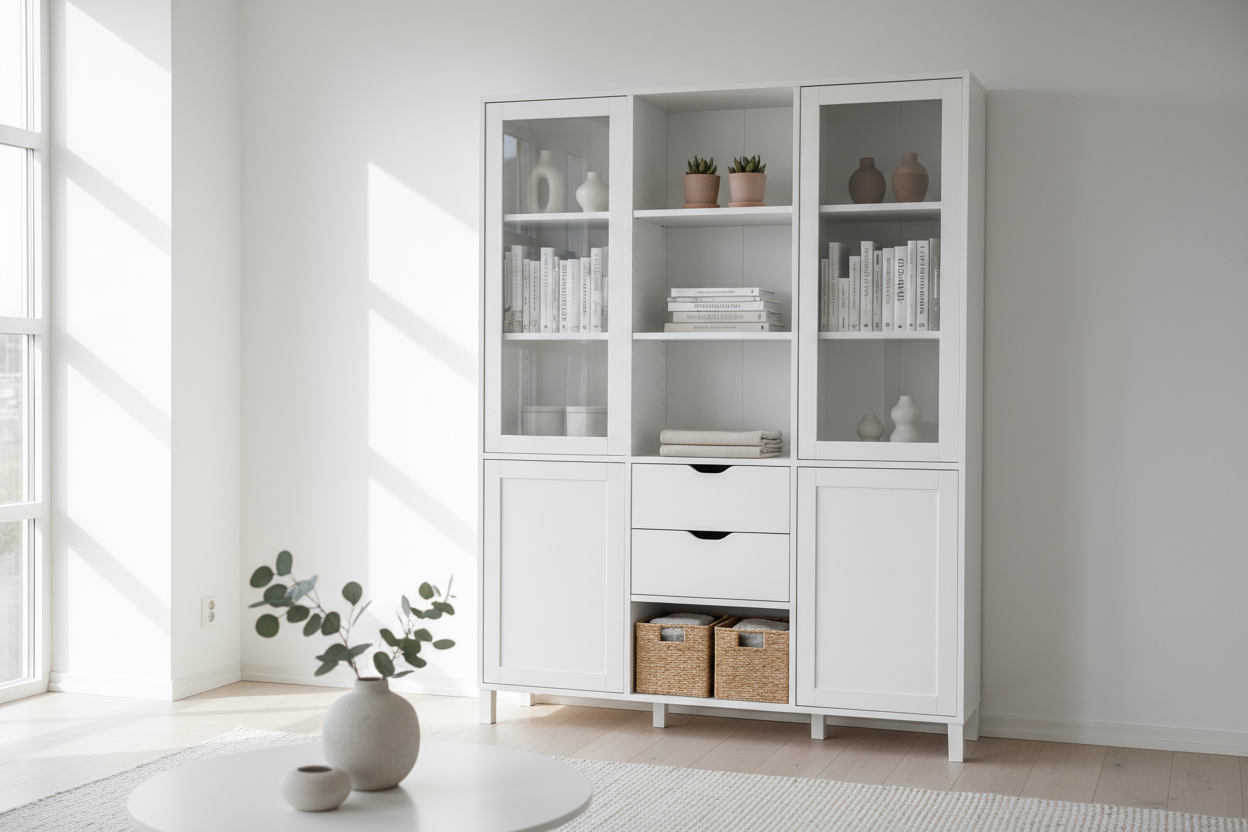
If you prefer entryway cubby ideas, ensure they don't look like a kindergarten classroom. Opt for cubbies with integrated baskets (wicker, felt, or wire) to conceal the contents. This provides a clean, hallway organization aesthetic while keeping the "visual noise" of unmatched gloves and scarves hidden.
My Personal Take on storage in entryway
Years ago, I designed a foyer for a client in a historic row house with a painfully narrow corridor. I made the mistake of ordering a stunning, vintage credenza that was 19 inches deep. On paper, it fit. In reality, it was a disaster.
Every time someone walked in with groceries, they had to turn sideways to shimmy past it. We called it the "hip bruiser." I had to swap it out for a custom shallow entryway storage piece that was only 11 inches deep. The lesson? Flow dictates function. Never sacrifice the walkway for storage capacity. If you have to turn sideways to get past your furniture, it’s too big, no matter how beautiful it is. Also, I learned that matte finishes are far better than high-gloss in entryways; high-gloss lacquer highlights every single fingerprint from the kids coming in the door.
Conclusion
Creating a functional foyer doesn't require a grand mudroom. By prioritizing shallow profiles, vertical utilization, and durable materials, you can implement entryway storage solutions that are as elegant as they are practical. Assess your traffic flow, choose the right silhouette, and reclaim your entrance.
Frequently Asked Questions
What is the best depth for narrow entryway storage?
For tight spaces, look for slim entryway storage units that are between 10 to 13 inches deep. Anything deeper than 15 inches can obstruct traffic flow in a standard hallway or apartment entrance.
How can I add storage without drilling holes (rental friendly)?
DIY entryway storage for renters often relies on tension poles or freestanding coat racks with weighted bases. A heavy, narrow console table that leans against the wall (ladder style) is also a great front door organizer that requires no installation.
How do I organize a small entryway with no closet?
Use a combination of wall hooks for coats and a slim tipping cabinet for shoes. Incorporate a bench with internal storage or a small entryway organizer with drawers to act as a catch-all for keys and wallets, effectively replacing the need for a closet.

Leave a comment
This site is protected by hCaptcha and the hCaptcha Privacy Policy and Terms of Service apply.