










Staring at beige walls under harsh fluorescent lights isn't just boring; it is a silent killer of productivity and employee morale. You likely know your workspace needs an overhaul, but balancing brand identity, ergonomic function, and budget is a complex tightrope walk. This is where a professional interior decorator for office spaces becomes not just a luxury, but a strategic asset.
Key Features to Look For in a Pro
- Portfolio Relevance: Do they specialize in residential or do they have a track record as corporate office interior designers? Commercial codes differ vastly from home decor.
- Sourcing Network: Access to trade-only, commercial-grade furniture that withstands 40+ hours of weekly use.
- Space Planning Expertise: Ability to optimize interior designers for office space layouts to reduce noise and improve traffic flow.
- Project Management: Handling procurement, delivery logistics, and installation without disrupting your business operations.
Decoding the Role: Decorator vs. Designer
Before you sign a contract, understand the distinction. While often used interchangeably, interior design offices generally focus on structural changes, building codes, and spatial planning. A decorator focuses on the aesthetic layer—furniture, textiles, lighting, and accessories. However, the best interior design office specialists blend both skills, ensuring the structural layout supports the decorative vision.
Space Planning & Layout Strategy
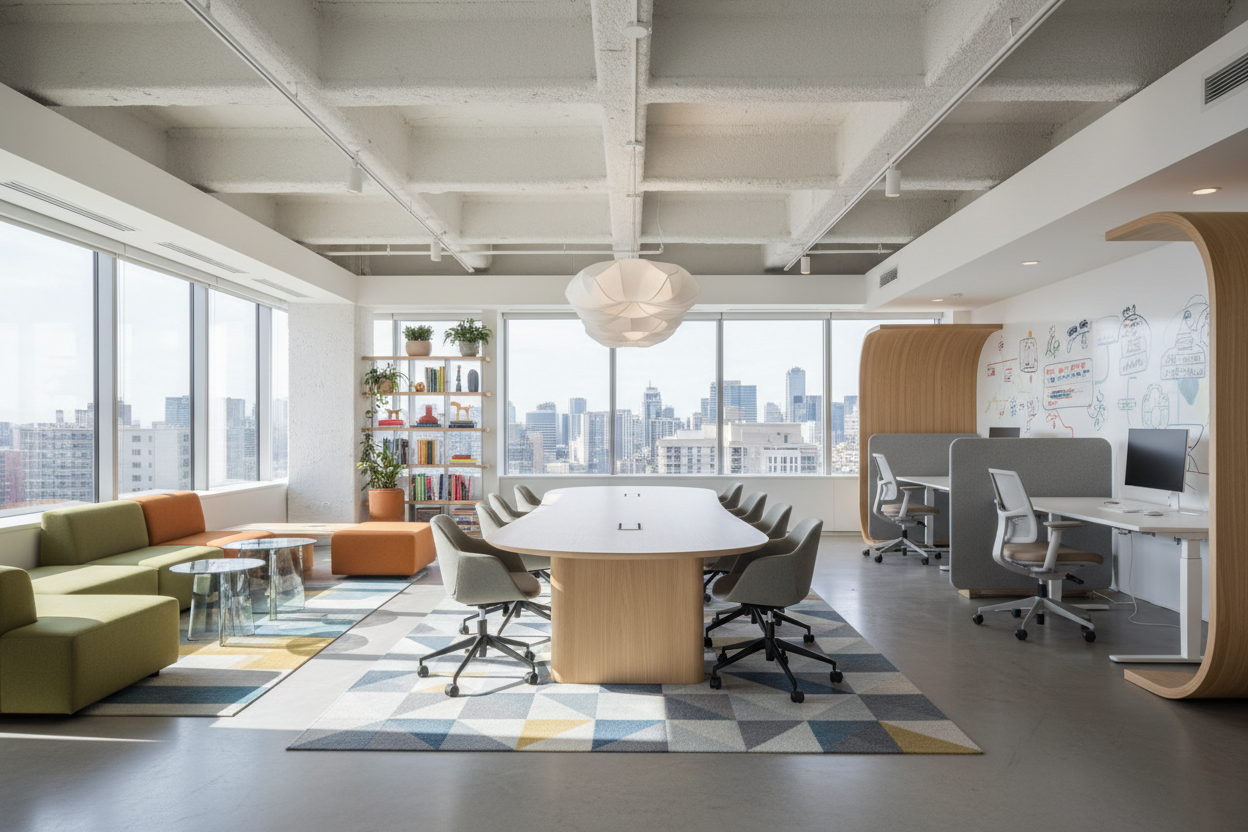
The most common mistake I see is cramming too many desks into a space without considering circulation. Office interior designers prioritize 'flow.' You need a minimum of 36 to 48 inches for walkways. If you are fitting out a smaller area, look for an interior designer for office projects who understands vertical storage and multi-functional furniture. The goal is visual balance; a heavy executive desk needs to be offset by lighter shelving or substantial artwork to prevent the room from feeling lopsided.
Choosing the Right Materials: Durability is Key
In a home, a velvet sofa is lush. In a lobby, it is a liability. Interior designers offices rely on rely on Martindale rub counts—a measure of fabric durability.
Textiles and Surfaces
For seating, I always recommend high-performance crypto-weaves or top-grain leather which patinas rather than cracks. For surfaces, avoid solid wood tops for communal desks; they ring easily with water cups. Instead, high-pressure laminates (HPL) or quartz composites offer the look of natural material with the resilience required for corporate environments.
Lighting Layers
Never rely solely on overhead grid lighting. It creates shadows and eye strain. A skilled decorator will layer ambient lighting (general glow), task lighting (desk lamps), and accent lighting (highlighting architectural features). This triad creates depth and reduces fatigue.
My Personal Take on Interior Decorator for Office Projects
In my fifteen years of designing, I have learned that the glossier the finish, the higher the maintenance. I once worked with a tech startup that insisted on high-gloss white lacquer desks for that sleek, 'Apple-store' aesthetic. I advised against it, noting that computer mice scratch lacquer and fingerprints would be visible from the doorway.
They insisted, so we installed them. Three months later, I was called back. The desks looked greasy from natural skin oils and were micro-scratched everywhere a keyboard had moved. We ended up having to cover the tops with custom leather blotters just to hide the wear. Now, when I act as an interior designer for office spaces, I bring a sample of high-gloss material and put a fingerprint on it right in front of the client. It usually settles the debate immediately.
Conclusion
Investing in professional design isn't just about making a space look pretty; it's about engineering an environment where success can happen. Whether you need interior designers for office space planning or just a decorative refresh, the right expert will save you money on durable furniture and save your team from ergonomic nightmares. Treat your office design as a business tool, not an afterthought.
Frequently Asked Questions
How much does an interior decorator for office spaces cost?
Fees vary wildly based on scope. Some charge a flat design fee (often $2,000–$10,000 for small offices), while others charge an hourly rate ($100–$300/hr) or a percentage of the total furniture and renovation costs.
What is the difference between residential and corporate office interior designers?
Corporate designers must adhere to stricter fire codes (like CAL 117 for fabrics), ADA accessibility requirements, and specify furniture rated for commercial use, which is significantly more durable than residential furniture.
Can a designer help with a very small home office?
Absolutely. Many professionals offer 'e-design' or consultation packages specifically for small footprints, focusing on vertical storage solutions and ergonomic layouts that fit into compact rooms.


Leave a comment
This site is protected by hCaptcha and the hCaptcha Privacy Policy and Terms of Service apply.