










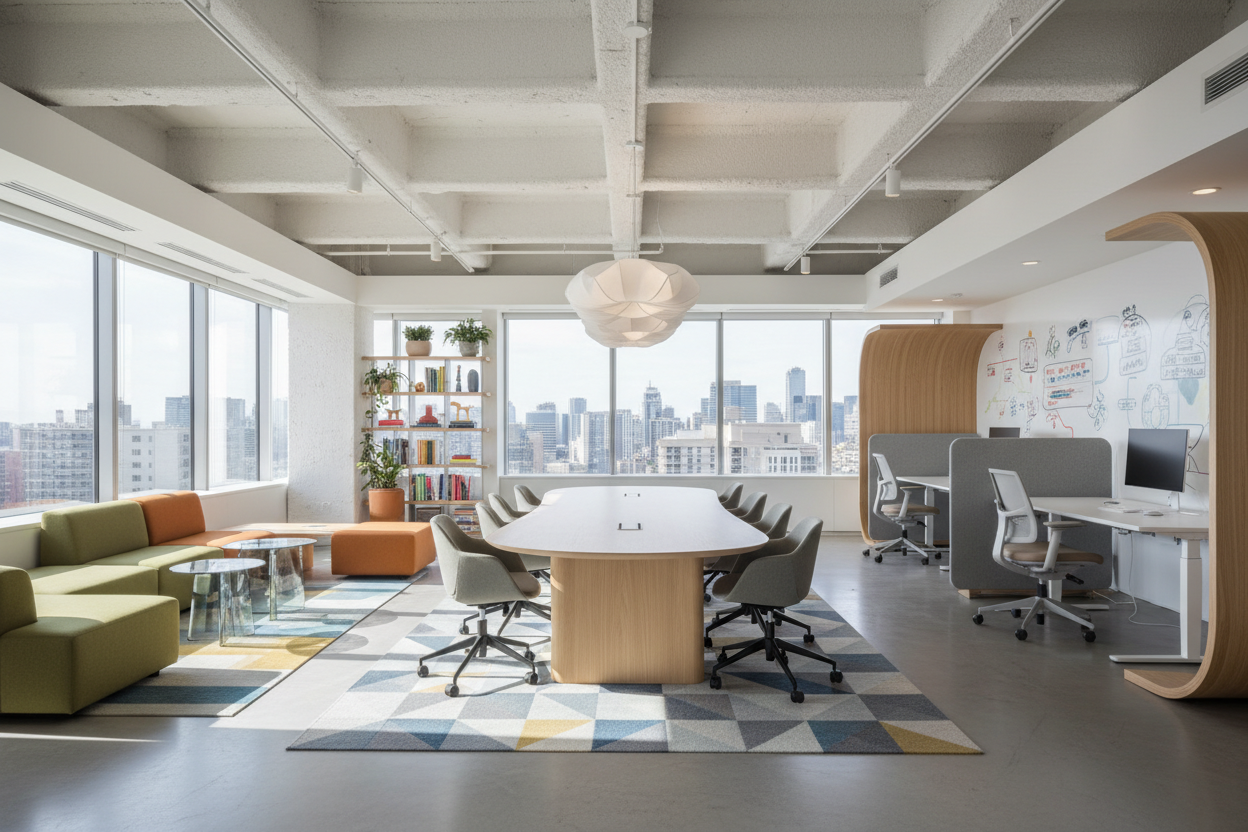
Most workspaces suffer from what I call "beige fatigue." It is the stifling feeling that comes from fluorescent lights and standardized cubicles, which quietly kills innovation. As a designer, I constantly remind clients that a creative office interior is not just about placing a ping-pong table in the breakroom; it is about engineering a physical environment that stimulates the brain while supporting the body. The goal is to curate a space that reflects your brand's ethos without sacrificing the focused productivity required to keep the business running.
Key Features of a High-Performance Workspace
- Acoustic Management: Look for sound-absorbing materials like felt baffles or cork wall coverings to dampen echo in open spaces.
- Lighting Layers: Ensure a mix of ambient (overhead), task (desk lamps), and accent lighting to reduce eye strain and set the mood.
- Modular Furniture: Prioritize desks and seating that can be reconfigured easily for solo work or team collaboration.
- Biophilic Elements: Integrate real plant life and natural wood textures to lower stress levels and improve air quality.
Structuring Your Layout for Flow
When executing creative office interior design, the floor plan dictates the energy. The era of the rigid grid is over, but total chaos is not the answer either. I recommend a "neighborhood" approach. This involves creating distinct zones: high-energy areas for collaboration and quiet, enclosed nooks for deep work. This variety prevents the visual monotony that drains energy by 2 p.m.
Materiality: Moving Beyond Laminate
The difference between a generic office and unique office interiors often comes down to tactile details. Standard laminate surfaces feel cold and institutional. Instead, consider introducing solid wood communal tables or walnut veneers for executive desks. These materials age beautifully and add warmth.
Textiles and Upholstery
For seating, performance fabrics are non-negotiable. While a bouclé armchair looks stunning in a residential setting, it may not withstand the friction of 40-hour workweeks. Opt for high-rub-count wool blends or commercial-grade leathers that offer the visual softness of a living room but the durability of a commercial space.
The Ergonomic Equation
Creativity cannot flourish if your back hurts. A common pitfall in designing an aesthetic workspace is prioritizing the silhouette of a chair over its lumbar support. When sourcing furniture, look for pieces with adjustable seat depth and armrests. The visual weight of the chair should also balance with the desk; a heavy, executive leather chair often looks out of place next to a minimalist, floating writing desk.
My Personal Take on Creative Office Interior
Lessons from My Own Projects: The "Industrial" Trap
I once designed a studio for a graphic design firm that wanted a raw, industrial look—concrete floors, exposed brick, and open ductwork. Visually, it was a masterpiece. However, within two weeks, I got a frantic call. The hard surfaces created an echo chamber where phone calls were impossible, and the polished concrete, while sleek, made the space freezing cold in the winter.
We had to retrofit the space with heavy wool area rugs and suspend acoustic clouds from the ceiling to fix the sound issues. The lesson? A creative office interior must sound and feel as good as it looks. Now, I always test the acoustics of a room before recommending hard flooring, no matter how trendy the aesthetic is.
Conclusion
Designing a workspace is an investment in your team's mental state. By blending ergonomic necessity with bold aesthetic choices, you create a space that people actually want to commute to. Don't be afraid to mix textures and break away from traditional layouts to find what works for your specific workflow.
Frequently Asked Questions
How do I make a small office feel creative but spacious?
Focus on vertical storage and wall-mounted shelving to keep floor space clear. Use glass partitions instead of solid walls to allow light to travel through the space, making it feel larger while still providing separation.
Is custom furniture worth it for an office?
For reception areas or conference tables, custom pieces are often worth the investment as they serve as focal points. For individual workstations, high-quality manufactured ergonomic chairs are usually a safer and more cost-effective bet.
What are the best colors for a creative workspace?
While brand colors are important, avoid oversaturating the walls with bright reds or oranges, as they can induce anxiety. Muted greens, blues, and warm terracottas tend to foster focus and creativity without causing visual fatigue.

Leave a comment
This site is protected by hCaptcha and the hCaptcha Privacy Policy and Terms of Service apply.