










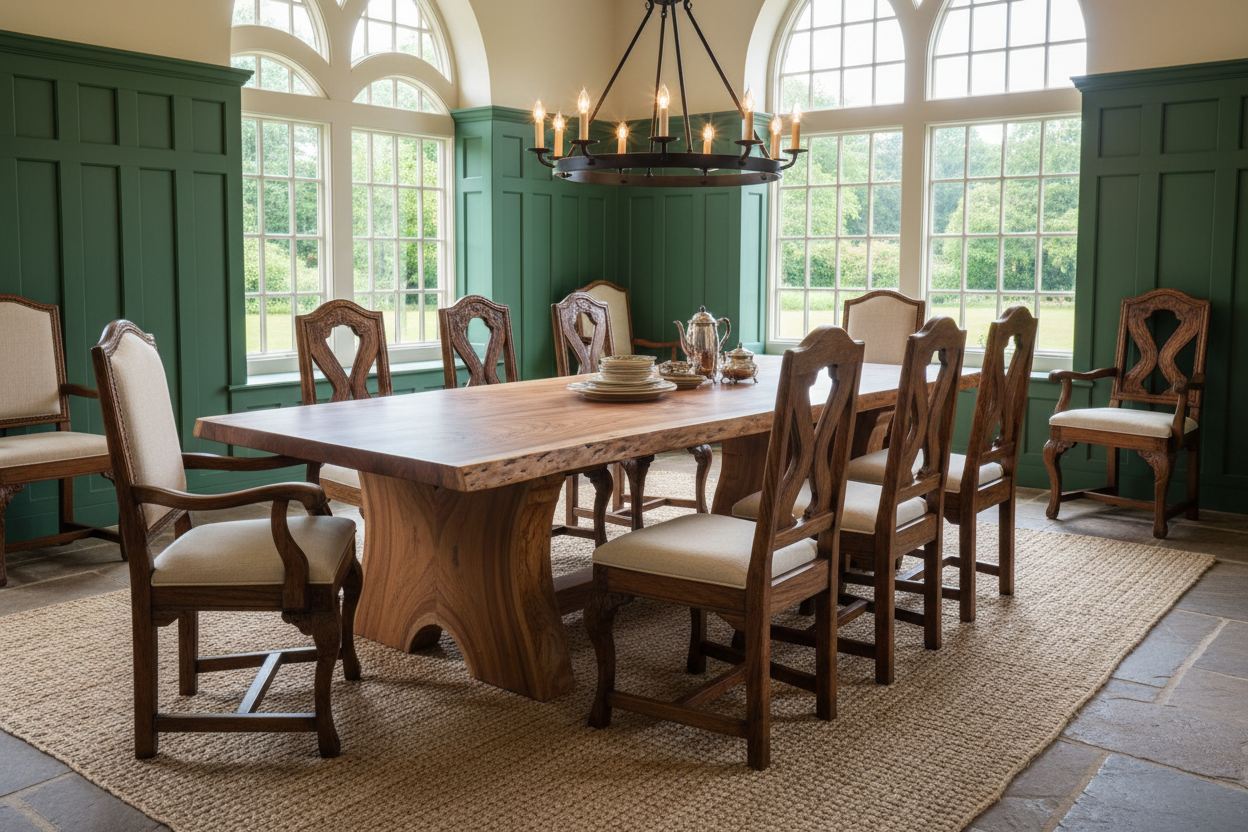
There is a specific warmth and weight to natural timber that particle board simply cannot replicate. If you are looking for furniture that survives holiday dinners, homework sessions, and the occasional spilled glass of wine, solid wood dining room sets remain the gold standard of interior design. Unlike veneers that eventually peel or bubble, real wood possesses a resilience that allows it to age gracefully, often looking better after ten years of use than it did on the day of delivery.
Choosing the right table is about more than just aesthetics; it is about understanding how materials interact with your lifestyle. A dining table is the anchor of the home. It takes a beating. Understanding the difference between a table that will wobble in six months and one that will serve your grandchildren requires looking past the stain color and examining the bones of the furniture. Whether you prefer the rugged look of a farmhouse trestle or the clean lines of mid-century modern walnut, the principles of quality construction remain constant.
The Real Value of Solid Timber
I learned the hard way why material quality matters during my first year as a homeowner. I bought a budget-friendly table that looked like oak but was actually a thin veneer over composite board. Six months later, a heavy ceramic serving bowl slipped from my hand. It didn't just scratch the surface; it gouged through the veneer, revealing the ugly, sawdust-colored manufactured wood beneath. There was no fixing it. You can't sand down a photograph of wood.
Years later, I replaced it with a genuine solid wood dining table set crafted from white oak. When my toddler inevitably drove a metal toy car across the surface, leaving a distinct scratch, the outcome was entirely different. Because the material was solid through and through, I simply lightly sanded the area, applied a bit of oil, and the scratch blended into the grain. That recoverability is the primary reason to invest in solid lumber. It turns catastrophic damage into manageable character.
Deciphering Wood Species and Hardness
Not all solid wood is created equal. The durability of your set depends heavily on the species of tree used. In the furniture industry, we look at the Janka hardness scale, which measures the resistance of wood to denting and wear. Understanding this scale helps you align your purchase with your family's habits.
The Hardwoods
Maples, oaks, walnuts, and cherries are the heavy hitters. North American Hard Maple, for instance, is incredibly dense. It resists scratches and dents aggressively, making it ideal for high-traffic homes with children or pets. Oak is famous for its durability and prominent grain patterns, which effectively hide minor mishaps and dust. Walnut offers a softer, darker aesthetic that is prized for its rich color, though it is slightly softer than maple and requires a bit more care to prevent deep scratching.
The Softwoods
Pine is a common choice for rustic or country-style furniture. It is significantly softer than the hardwoods mentioned above. While this makes it more affordable, it also means the table will acquire a patina of dents and dings much faster. For some, this "lived-in" look is desirable. For others who want a pristine surface, pine might lead to disappointment.
Construction and Joinery Indicators
The stability of solid wood dining room sets comes down to how the pieces are connected. When shopping, look underneath the table. You want to see evidence of wood-on-wood joinery. Mortise and tenon joints, where a projecting piece of wood fits into a hole in the corresponding piece, are a hallmark of quality. Dovetail joints in the drawers of a buffet or console are another good sign.
Be wary of tables held together primarily by staples, glue, or visible screws driven at odd angles. While some hardware is necessary, especially for detachable legs, the structural integrity should rely on the wood itself. Furthermore, look for "breadboard ends" or other mechanisms that allow for wood movement. Real wood breathes; it expands in humid summers and contracts in dry winters. A well-built table is designed to allow this movement without cracking or warping. If the wood is locked down too tight without room to shift, the tabletop will eventually split.
Finishes and Maintenance
The finish you choose for your solid wood dining table set dictates how you will care for it. Generally, there are two camps: film finishes and penetrating finishes.
Film finishes, like polyurethane or lacquer, sit on top of the wood. They create a hard shell that resists water rings and stains effectively. This is the "set it and forget it" option for many families. However, if the film gets scratched, repairing it often requires stripping the whole surface.
Penetrating finishes, such as tung oil or linseed oil, soak into the wood fibers. They offer a more natural, matte look and feel velvety to the touch. The trade-off is that they offer less protection against standing water and heat. You will need to use coasters and trivets religiously. The upside is maintenance; if the table looks dry or gets scratched, you just wipe on another coat of oil. It is a more interactive relationship with your furniture, but many find the tactile quality worth the effort.
Fitting the Set to Your Room
Beyond material, the shape and footprint of the set must function within your space. A common mistake is buying a set that fills the room visually but leaves no space for movement. You generally need 36 inches of clearance between the edge of the table and the nearest wall or piece of furniture to allow a diner to slide their chair back comfortably.
Pedestal tables are excellent for tighter, square spaces because they eliminate the four corner legs, offering more legroom and flexibility with chair placement. Trestle tables work beautifully in rectangular rooms and offer a sturdy base that rarely interferes with guests' knees. If you host large gatherings only occasionally, look for a solid wood table with self-storing leaves or high-quality gear slides. The mechanics should operate smoothly; if you have to fight the table to open it in the showroom, it won't get any easier at home.
The Verdict on Investment
Buying quality furniture is undeniably a larger upfront financial commitment than buying flat-pack alternatives. However, the cost-per-use over a lifetime makes it the more economical choice. A cheap table might last five years before it looks too shabby to keep. A solid oak or maple table will likely outlast you. When you factor in the ability to sand, refinish, and repair natural timber, you aren't just buying a place to eat dinner. You are securing a permanent fixture for your home that will witness decades of morning coffees and birthday cakes.
Frequently Asked Questions
How do I prevent my solid wood table from cracking?
The most common cause of cracking is rapid changes in humidity. Try to keep your home's humidity levels relatively stable, ideally between 40% and 45%. Avoid placing the table directly over heating vents or in direct sunlight, as these can dry out the wood unevenly and cause stress fractures.
Can I mix different wood tones in my dining room?
Absolutely, mixing wood tones adds depth and prevents the room from looking like a catalog page. The trick is to keep the undertones consistent; for example, mix warm walnut with warm oak, rather than mixing a cool-toned grey wood with a warm cherry. Using a rug between the table and the floor can also help bridge the gap between different wood finishes.
Is a solid wood table harder to clean than a veneer one?
Not necessarily, but you should avoid harsh chemical cleaners. A damp microfiber cloth with a mild dish soap solution is usually sufficient for daily cleaning. Unlike veneer, which can be damaged by water seeping into the seams, solid wood is generally more forgiving as long as you wipe up spills reasonably quickly.

Leave a comment
This site is protected by hCaptcha and the hCaptcha Privacy Policy and Terms of Service apply.