










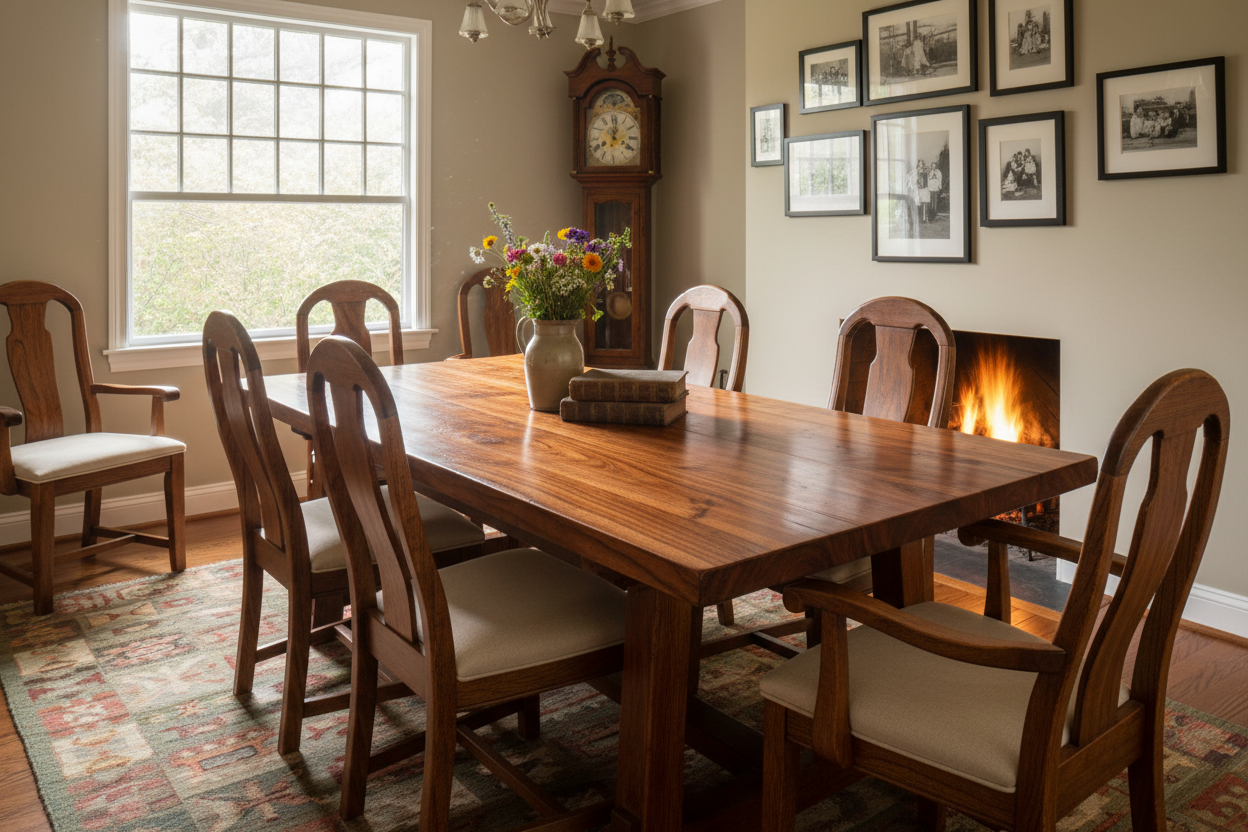
Choosing the right furniture for your eating area isn't just about aesthetics; it is about finding a balance between durability, style, and the reality of daily life. If you are looking for a centerpiece that offers longevity and character, a dining table set wooden in construction is almost always the superior choice over glass, metal, or laminate alternatives. Wood brings a tactile warmth to a room that synthetic materials simply cannot replicate, evolving with your home as it acquires a patina over time.
However, not all wood is created equal. The market is flooded with terms like "solid wood," "veneer," and "composite," making the buying process confusing. To make a smart investment, you need to look beyond the stain color and understand the grain, the joinery, and the finish. A well-made table handles homework sessions, holiday feasts, and morning coffee without wobbling or warping, eventually becoming an heirloom rather than landfill.
Decoding Wood Hardness and Durability
The longevity of your furniture depends largely on the species of timber used. Hardwoods like oak, maple, walnut, and cherry come from deciduous trees and are generally denser and more resistant to scratches. Softwoods, such as pine or cedar, come from coniferous trees. While often more affordable, softwoods dent easily. If you have a busy household with children or pets, prioritizing hardwoods will save you frustration down the road.
You can gauge durability by referencing the Janka hardness scale. Hickory and hard maple sit high on the scale, making them nearly indestructible against dropped forks or heavy centerpieces. Walnut is slightly softer but prized for its rich, dark color. Rubberwood is a common, eco-friendly option found in many mid-range sets; it is technically a hardwood but behaves somewhat softly, making it a decent budget-friendly compromise, though less durable than oak.
A Lesson Learned in Pine
My own appreciation for wood density came the hard way. Years ago, I fell in love with a farmhouse-style table made of reclaimed pine. It looked rustic and charming in the showroom. Within three months of bringing it home, that table looked less "rustic" and more "abused." Every time my kids did their homework, the pressure of the pencil left indentations in the soft wood. A dropped set of keys created a gouge that snagged sweater sleeves. While I eventually refinished it, the experience taught me that for a high-traffic surface, density matters. I replaced it with a white oak wooden dining table chair set five years ago, and despite daily use, it looks better today than the day it arrived.
Sizing and Space Planning
Before falling in love with a finish, you must map out the footprint. A common mistake is buying a set that physically fits in the room but chokes the flow of traffic. You generally need 36 inches of clearance between the edge of the table and the nearest wall or piece of furniture. This allows guests to slide their chairs back and stand up without feeling trapped.
For smaller areas, round tables are efficient space-savers because they lack sharp corners to bump into. If you are furnishing a breakfast nook, compact wood kitchen table and chair sets are ideal. They often feature drop leaves or pedestal bases that maximize legroom. For larger, formal dining rooms, rectangular tables usually seat more people, but consider an extendable table with leaves. This gives you the flexibility to host Thanksgiving dinner without sacrificing your floor space for the rest of the year.
Inspecting the Construction
The difference between a table that lasts five years and one that lasts fifty often lies underneath the surface. When you are shopping, get on the floor and look at the underside of the table. You want to see wood-on-wood joinery. Mortise and tenon joints or dovetail construction indicate high craftsmanship. These joints account for the natural expansion and contraction of wood as humidity changes.
Be wary of tables held together primarily by staples, glue, or visible screws driven directly into the wood without pocket holes. Corner blocks—pieces of wood bolted into the corners where the legs meet the apron—add significant stability. If a table sways when you lean on it in the store, it will only get worse once you get it home.
The Truth About Veneers
Veneer often gets a bad reputation, but it is not inherently bad. High-quality veneers involve a thin slice of premium hardwood glued over a stable core like plywood or MDF. This can actually prevent splitting and warping in humid climates better than solid wood. However, cheap veneers over particle board will peel and chip. If you are buying a vintage piece, check the edges; if the grain pattern "falls off" the edge or doesn't match the end grain, it is veneer. For a dining table set wooden throughout, ensure the description specifies "solid wood" for both the top and the legs.
Matching Chairs and Cohesion
Buying a bundle is convenient, but don't feel restricted to the pre-packaged look. A wooden dining table chair set sold together ensures a perfect color match, which is great for formal, traditional spaces. However, mixing woods can add depth to a room. If you choose to mix, try to keep the undertones consistent. A warm walnut table pairs well with warm cherry chairs, but might clash with cool, grey-toned ash.
Comfort is the final, non-negotiable factor. Wood chairs are durable and easy to clean, but they can be hard for long dinner parties. Look for chairs with a scooped seat, often called a "saddle seat," which conforms better to the body than a flat plank. Alternatively, upholstered chairs add comfort but introduce the risk of staining. Many homeowners opt for wood kitchen table and chair sets for daily meals and reserve upholstered seating for the ends of the table or a separate formal dining room.
Maintenance for Longevity
Solid wood is a living material. It responds to its environment. To prevent cracking or bowing, try to keep your home's humidity levels relatively stable. Avoid placing the table directly over a heating vent or in direct, scorching sunlight, which can bleach the finish unevenly.
For cleaning, skip the harsh chemical sprays. A damp microfiber cloth followed by a dry one is usually sufficient for daily wiping. If your table has an oil finish, you may need to re-oil it once or twice a year to keep the wood nourished and water-resistant. Lacquer or polyurethane finishes are lower maintenance but harder to spot-repair if they get scratched. Treating your furniture with respect will ensure it remains the gathering place of your home for decades.
Frequently Asked Questions
Can I mix different wood finishes in the same dining room?
Yes, mixing wood finishes adds visual interest and prevents the room from looking like a showroom catalog. To make it work, keep the undertones (warm vs. cool) consistent, or use a rug to separate the visual planes of the different wood tones.
What is the best wood for a family with young children?
Oak and maple are excellent choices because they are dense hardwoods that hide scratches well, especially with a matte or distressed finish. Avoid high-gloss finishes or softwoods like pine, which show fingerprints and dents instantly.
How do I fix white heat rings on a wooden table?
White rings usually indicate moisture trapped in the finish, not the wood itself. You can often remove them by gently ironing a towel placed over the spot on a low, dry setting, or by massaging the area with a mixture of baking soda and toothpaste, though you should test a hidden area first.

Leave a comment
This site is protected by hCaptcha and the hCaptcha Privacy Policy and Terms of Service apply.