










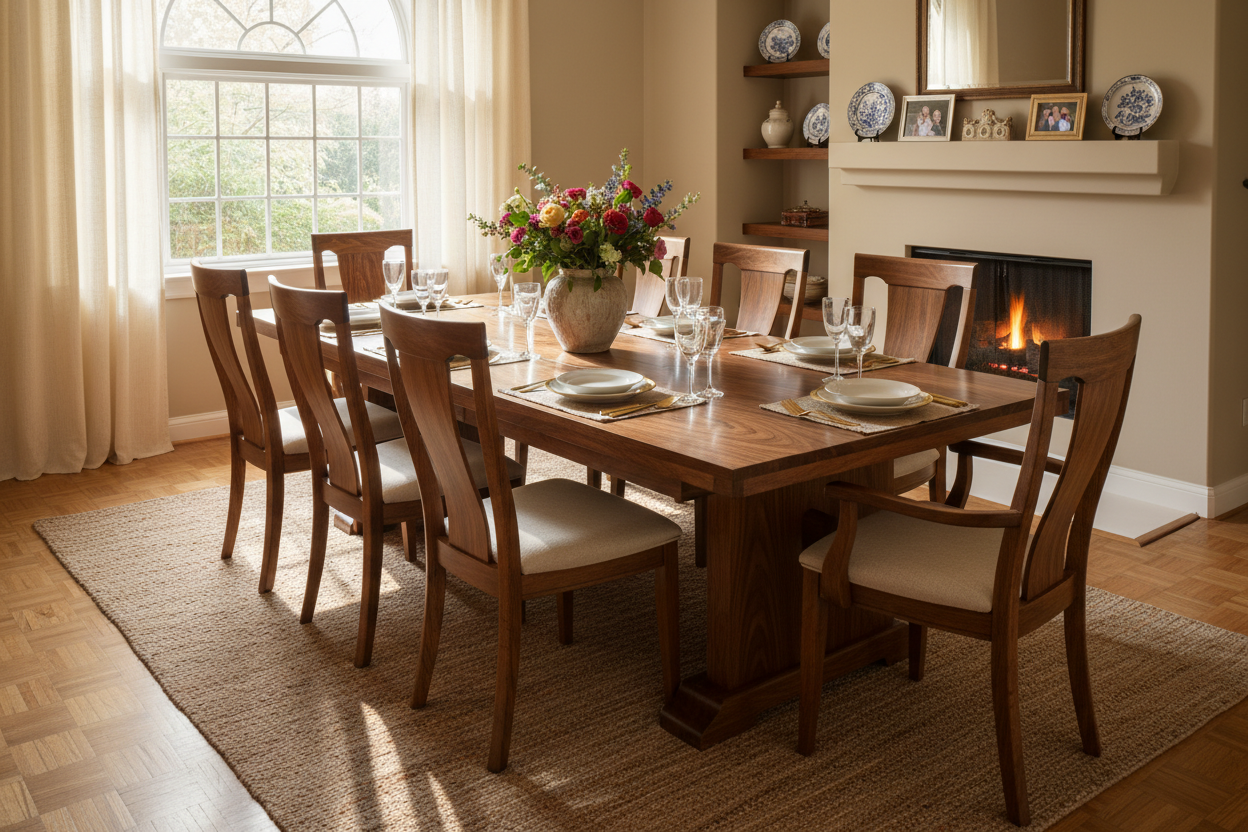
Choosing the right furniture for your eating area is less about following trends and more about understanding how you actually live. A high-quality wood dining room table set is rarely an impulse buy; it is an investment in a piece of furniture that will likely outlast your car and possibly your current home. Solid wood offers a tactile warmth and structural integrity that engineered materials simply cannot replicate. If you want a table that can survive homework sessions, holiday feasts, and the occasional spilled glass of wine, natural timber is the superior choice.
The Reality of Living with Real Wood
I learned the hard way that not all wood furniture is created equal. Years ago, I bought a budget-friendly table that looked like reclaimed oak but was actually particle board with a textured sticker on top. Within six months, a water glass left a permanent bubble in the surface, and the legs began to wobble. When I finally upgraded to a solid maple wood dining table and chairs, the difference was immediate. The table felt heavy and grounded. When my nephew dragged a toy car across it, the resulting scratch didn't ruin the piece; it just added a bit of history that could eventually be sanded out.
This is the primary advantage of genuine lumber. Unlike veneers or laminates, solid wood can be repaired. It breathes and moves with the seasons, developing a patina that makes it look better at year ten than it did at year one. You aren't just buying a surface to eat off; you are buying longevity.
Hardwood vs. Softwood: What Actually Matters?
Navigating wood types can be confusing, but it comes down to density. If you want a wood table set that resists dents, you need a hardwood. Maple, oak, walnut, and cherry are the industry standards for a reason. They land high on the Janka hardness scale, meaning they can take a beating without showing deep indentations.
Pine and farmhouse-style fir tables are popular for their rustic aesthetic and lower price point, but they are softwoods. If you write on a piece of paper directly on a pine table, you might find your grocery list etched into the varnish. That rustic look is charming if you embrace the dings and scratches as character, but it can be frustrating if you prefer a pristine look. For a busy family home, a dining wooden table and chairs made from white oak or hard maple is usually the most practical option.
Analyzing Construction and Joinery
The stability of a wood dining table and chairs set depends entirely on what is happening underneath the tabletop. You should look for tables that use traditional joinery techniques. Mortise and tenon joints or dovetailing are indicators of craftsmanship that relies on the strength of the wood itself rather than screws and glue, which can fail over time.
Pay attention to the apron—the piece of wood running underneath the table surface connecting the legs. This adds crucial rigidity. However, you also need to test the clearance. There is nothing worse than falling in love with a wood table with chair configuration only to realize you cannot cross your legs because the apron is too low. Sit in the chair, scoot all the way in, and ensure your movement isn't restricted.
The Chair Dilemma: Matching vs. Mixing
Buying a pre-bundled wooden table and chairs set is the safest route for ensuring the wood tones and finish sheens match perfectly. Wood stains can be notoriously difficult to coordinate if you buy pieces separately; a "walnut" finish from one manufacturer might look red, while another looks green-gray.
However, mixing styles is a valid design choice if you want a more curated, less showroom-perfect vibe. A heavy farmhouse table paired with sleek, mid-century modern chairs creates a dynamic contrast. If you go this route, the connection between the wood table and chair should be intentional. Try to match the undertones (warm vs. cool) even if the darkness of the wood varies. Alternatively, you can bypass the wood matching issue entirely by pairing a timber table with painted, upholstered, or metal chairs.
Protecting the Finish
The finish is the shield that stands between your dinner and the raw wood. Most modern tables come with a polyurethane or lacquer finish, which sits on top of the wood and creates a hard, durable shell. This is low maintenance and easy to wipe down with a damp cloth. It resists water rings well, making it ideal for high-traffic homes.
Oil finishes, often found on higher-end or custom pieces, penetrate the grain rather than sitting on top. They offer a more natural, matte look and feel incredible to the touch. The trade-off is maintenance. You will likely need to re-oil the surface once or twice a year to keep it from drying out. If you are looking at a wood dining table and chairs set with an oil finish, be honest with yourself about whether you are willing to put in that periodic labor.
Sizing for Your Space
Visual weight is just as important as physical dimensions. A dark, chunky mahogany set will shrink a room visually, while a light ash or blonde oak set will make the space feel airier. When measuring, you need at least 36 inches of clearance between the edge of the table and the nearest wall or piece of furniture to allow people to push their chairs back comfortably.
If your dining room is tight, consider a pedestal table rather than one with four corner legs. The central base allows you to squeeze in an extra seat without anyone straddling a table leg. Round tables also facilitate better conversation, as everyone faces the center. Regardless of the shape, ensure that every wood table and chair component fits within your designated rug area if you use one, to prevent chairs from rocking on the uneven transition between rug and floor.
Frequently Asked Questions
How do I fix white water rings on a wood table?
White rings usually indicate moisture trapped in the finish, not the wood itself. You can often remove them by gently applying dry heat with a hair dryer set on low, or by using a specialized watermark remover cloth. For oil finishes, rubbing a mixture of baking soda and toothpaste can sometimes draw the moisture out.
Do solid wood tables require humidity control?
Yes, wood is hygroscopic, meaning it absorbs and releases moisture from the air. Extreme changes in humidity can cause solid wood to crack or warp. It is best to keep your home's humidity levels relatively stable, between 40% and 45%, and avoid placing the table directly over a heat vent or in direct, harsh sunlight.
Is rubberwood real wood?
Rubberwood is a genuine hardwood harvested from rubber trees that have finished their latex-producing cycle. It is eco-friendly and durable, similar to maple in hardness, but it is susceptible to warping if not properly sealed. It is often used in mid-range furniture and offers excellent value for the price.

Leave a comment
This site is protected by hCaptcha and the hCaptcha Privacy Policy and Terms of Service apply.