










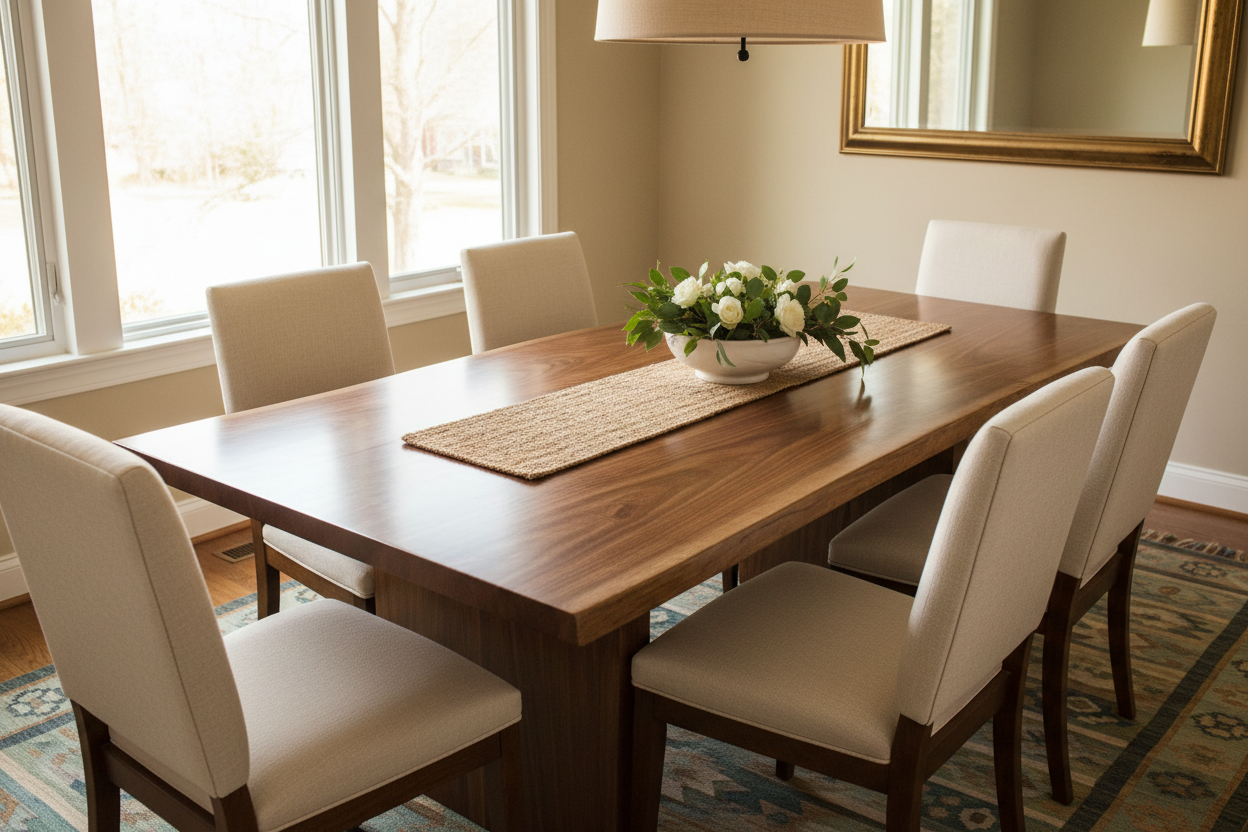
Choosing the centerpiece of your gathering space is rarely a decision to take lightly. The table is where homework gets done, holiday meals are devoured, and late-night conversations happen over half-empty wine glasses. While glass, metal, and composite materials drift in and out of vogue, a dining table with wood construction remains the gold standard for a reason. It offers a tactile warmth and structural integrity that synthetic materials simply cannot replicate.
Wood is a living material, even after it has been felled, milled, and finished. It reacts to the environment, develops a patina over time, and tells a story through its grain. Whether you are furnishing a sprawling formal room or a cozy breakfast nook, understanding the nuances of timber selection and construction will ensure you buy a piece that lasts for generations rather than just a few years.
Defining the Atmosphere of Your Room
The material you choose dictates the mood of the entire room. A glass table feels modern and airy, but it can also feel cold and clinical. In contrast, a wood table dining room setup immediately grounds the space. The visual weight of timber adds a sense of permanence. Darker woods like walnut or mahogany tend to lean towards formal and traditional aesthetics, creating a sense of gravity and elegance. Lighter woods, such as white oak or ash, evoke a Scandinavian or farmhouse vibe, making the room feel brighter and more casual.
I recall hunting for my first real piece of furniture years ago. I found a beat-up farmhouse table at an estate sale. It was heavy, scarred, and absolutely beautiful. That table survived two moves, a puppy that liked to chew on table legs, and countless spills. The scratches didn't ruin it; they became part of the woodwork dining table history. That is the primary difference between wood and veneer or laminate. When you damage a synthetic table, it looks broken. When you scratch a solid wood table, it looks lived-in.
Kitchen vs. Formal Dining: Choosing the Right Function
Not every table belongs in a dedicated dining hall. The requirements for a wood kitchen dining table differ significantly from a piece meant for occasional holiday feasts. In the kitchen, durability and footprint are paramount. This is a high-traffic zone where the table serves as a prep surface, a desk, and a dining spot. You want hardwoods that can withstand moisture and heat fluctuations typical of a cooking area.
For smaller apartments or breakfast nooks, a massive rectangular slab will overwhelm the space. Here, a round breakfast table wood design works wonders. It facilitates flow around the kitchen and encourages conversation. If you are specifically looking for a wood table for kitchen use, consider maple or butcher-block styles. These are dense, resist denting, and fit the utilitarian aesthetic of a working kitchen.
Conversely, a formal wooden dining room table is often larger and may feature more intricate detailing or delicate finishes. Since these tables see less daily abuse, you can opt for softer, more decorative woods like cherry or mahogany, focusing on the richness of the stain and the quality of the joinery.
Understanding Wood Types and Durability
Navigating the terminology of wooden dining furniture can be confusing. The most critical distinction is between solid wood, veneer, and composite. Solid wood is exactly what it sounds like—lumber cut from a tree. Veneer involves a thin slice of premium wood glued over a cheaper core (like plywood or MDF). While veneers can be high quality, they cannot be sanded down and refinished multiple times like solid wood.
Hardness is another factor. The Janka hardness scale rates wood density. For a family with young children, softwoods like pine might be too risky as they dent easily with the tap of a fork. Oak, maple, and hickory are excellent choices for a wood table dining set because they resist deep scratching. Teak and acacia are also gaining popularity, especially for their natural resistance to moisture, making them suitable for spaces that might see the occasional spill.
The Craftsmanship Factor
The construction method is just as important as the material. A well-made wooden table kitchen or dining piece relies on joinery to handle the natural expansion and contraction of the wood. Wood moves with humidity changes. If the construction is too rigid or uses excessive glue and screws without allowing for movement, the wood will crack.
Look for tables that use breadboard ends (the perpendicular piece at the end of a table) or sliding dovetails. Examine the underside of the table. A high-quality dining table in wooden styles will often look just as clean underneath as it does on top. Rough, unfinished undersides or visible staples are usually signs of mass-produced, lower-quality furniture.
Maintenance and Care
Owning organic furniture requires a bit of mindfulness. Water is the enemy. A dining table with wood finish needs coasters and immediate cleanup of spills. If you place a hot pot directly on the surface, you risk "blushing," where the finish turns white due to trapped moisture.
Dusting should be done with a microfiber cloth to avoid micro-scratches. Every few months, depending on the finish (oil, wax, or polyurethane), you might need to re-oil or polish the surface. This maintenance ritual keeps the wooden dining room table hydrated and rich in color. It might sound like extra work, but the reward is a piece of furniture that arguably looks better in its twentieth year than in its first.
Why Wood Remains Unbeaten
Trends in interior design move fast. Industrial metal looks came and went; high-gloss lacquer had its moment. Yet, the demand for a solid wood table dining room centerpiece persists. It connects us to nature and provides a neutral canvas that adapts to changing decor styles. You can swap out chairs, change the rug, or update the lighting, and the wood table will still fit right in.
Whether you are looking for a rugged wood kitchen dining table for daily chaos or an elegant heirloom for Sunday roasts, the investment in timber pays off in longevity and style. It is the anchor of the home, standing steady while life revolves around it.
Frequently Asked Questions
What is the most durable wood for a dining table?
Hardwoods like maple, oak, and hickory are among the most durable options for dining tables. They rank high on the Janka hardness scale, meaning they resist dents and deep scratches better than softwoods like pine or softer hardwoods like walnut.
How do I fix white heat rings on my wood table?
White rings are usually caused by moisture trapped in the finish. You can often remove them by gently ironing a clean towel placed over the spot on a low, dry setting, or by using a hairdryer to evaporate the moisture. For oil finishes, rubbing the spot with a mixture of baking soda and toothpaste can sometimes lift the mark.
Can I mix different wood tones in my dining room?
Yes, mixing wood tones creates a layered, designer look. The trick is to keep the undertones (warm, cool, or neutral) consistent. For example, a warm walnut table pairs well with lighter warm oak floors, provided there is enough contrast to keep them from clashing.

Leave a comment
This site is protected by hCaptcha and the hCaptcha Privacy Policy and Terms of Service apply.