










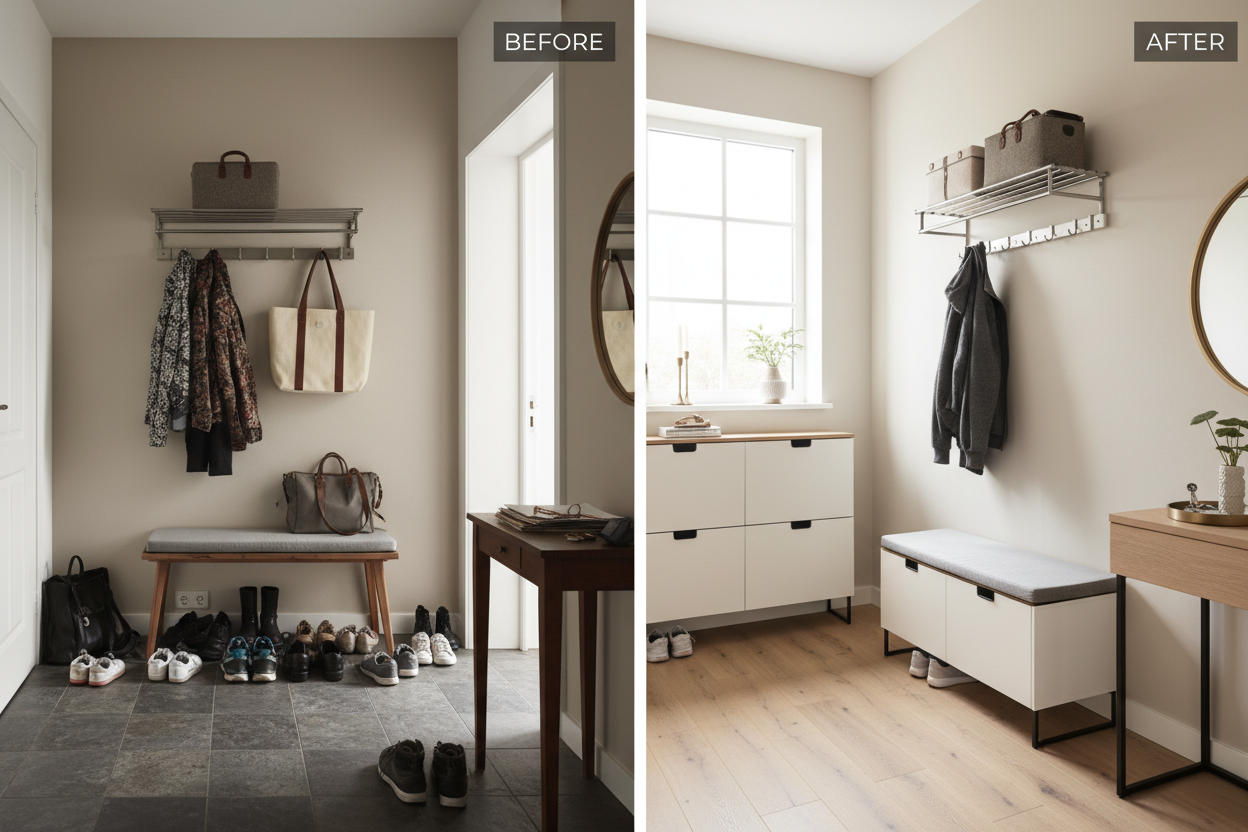
Walking through your front door should feel like a relief, a transition from the noise of the outside world into your personal sanctuary. Instead, for many of us, it feels like an obstacle course. You step over a stray sneaker, dodge a backpack hanging precariously off a chair, and toss your keys onto a pile of unopened mail. If this sounds familiar, you don't just need to clean; you need a dedicated hall organizer system that matches your lifestyle.
The solution isn't necessarily buying the biggest piece of furniture that fits. It is about creating a functional "drop zone" that intercepts clutter before it migrates to the living room or kitchen. By strategically combining entryway storage, hooks, and designated catch-all spots, you can transform a chaotic corridor into a streamlined passage that actually serves you.
The Reality of the Entryway Bottleneck
I learned the hard way that ignoring the hallway creates a ripple effect of mess throughout the entire house. In my first apartment, the entry was essentially a narrow tunnel. I didn't think I had room for furniture, so I just let things pile up on the floor. One rainy Tuesday, I rushed in, tripped over my own running shoes, and knocked a wet umbrella into a bag of dry cleaning. That was the breaking point. I realized that even eighteen inches of wall space or a slim corner could be utilized to restore sanity.
The hallway is the highest traffic area in most homes, yet it often gets the least amount of design attention. It has to handle wet coats, muddy boots, school bags, and dog leashes, usually within a confined square footage. A proper setup acknowledges this volume. It treats the space as a functional mudroom, even if you don't technically have a separate room for mud.
Choosing the Right Furniture for Your Layout
Your available floor space dictates your strategy. If you are blessed with a wide foyer, an entryway bench with storage underneath is a game-changer. It provides a place to sit while putting on shoes—which encourages family members to actually take them off at the door—and often features cubbies or drawers for hiding clutter.
For narrower spaces, you have to think thinner. A slim console table acts as a perfect landing strip. It doesn't intrude into the walking path but offers a surface for a mail sorter and a bowl for keys. Look for tables with lower shelves where you can slide in wicker baskets. These baskets act as drawers, hiding unsightly items like winter gloves or dog toys while keeping them accessible.
Vertical Solutions for Tight Squarters
When you can't build out, build up. Wall-mounted organizers are the saviors of small apartments and narrow corridors. A sturdy coat rack is essential, but consider a unit that combines hooks with a top shelf. The shelf creates a home for items you don't need daily, like bike helmets or decorative items that add warmth to the space.
Floating shelves installed at varying heights can also replace bulky furniture. You might place a mirror at eye level to check your appearance before leaving, with a shallow shelf immediately below it for your wallet and phone. This keeps the floor entirely clear, making the hall look wider and easier to vacuum.
Taming the Shoe Mountain
Shoes are the primary culprit of hallway chaos. Without a designated spot, they multiply. If you have the depth, a tip-out shoe cabinet is one of the most efficient inventions for modern homes. These cabinets are incredibly narrow—often less than 10 inches deep—but hide shoes vertically behind closed doors. They eliminate visual clutter instantly.
If a cabinet isn't an option, a simple boot tray is vital for protecting your floors, especially during wet seasons. For dry shoes, an open shoe rack works, but it requires discipline to keep tidy. To maintain a clean look, try assigning a specific number of pairs per person that are allowed in the hall, with the rest relegated to bedroom closets.
Managing the Small Stuff: Keys, Mail, and Accessories
Large items like coats are easy to spot, but it is the small items that cause the most frustration when lost. A dedicated key holder is non-negotiable. Whether it is a magnetic strip, a bowl, or a set of small hooks, it needs to be the only place keys ever go. Muscle memory will eventually take over, and the panic of lost keys will vanish.
Paper clutter is another silent invader. Junk mail often lands on the nearest surface and stays there for weeks. Install a wall-mounted mail sorter or place a divider on your console table. Create a rule: mail is sorted immediately upon entry. Trash goes to the recycling bin, bills go to the office, and personal letters stay in the sorter. This prevents the hallway from becoming a graveyard for paper waste.
Aesthetics Meet Function
Organization serves a purpose, but your hall organizer should also reflect your style. This area sets the tone for the rest of your home. If you love farmhouse style, look for distressed wood benches and galvanized metal bins. For a modern aesthetic, seek out sleek metal hooks and high-gloss shoe cabinets.
Lighting plays a huge role here as well. A dark hallway feels smaller and more cluttered. If you don't have natural light, ensure your organizer area is well-lit with a table lamp or a wall sconce. Being able to see what you are looking for prevents rummaging and keeps the system intact.
Maintaining the System
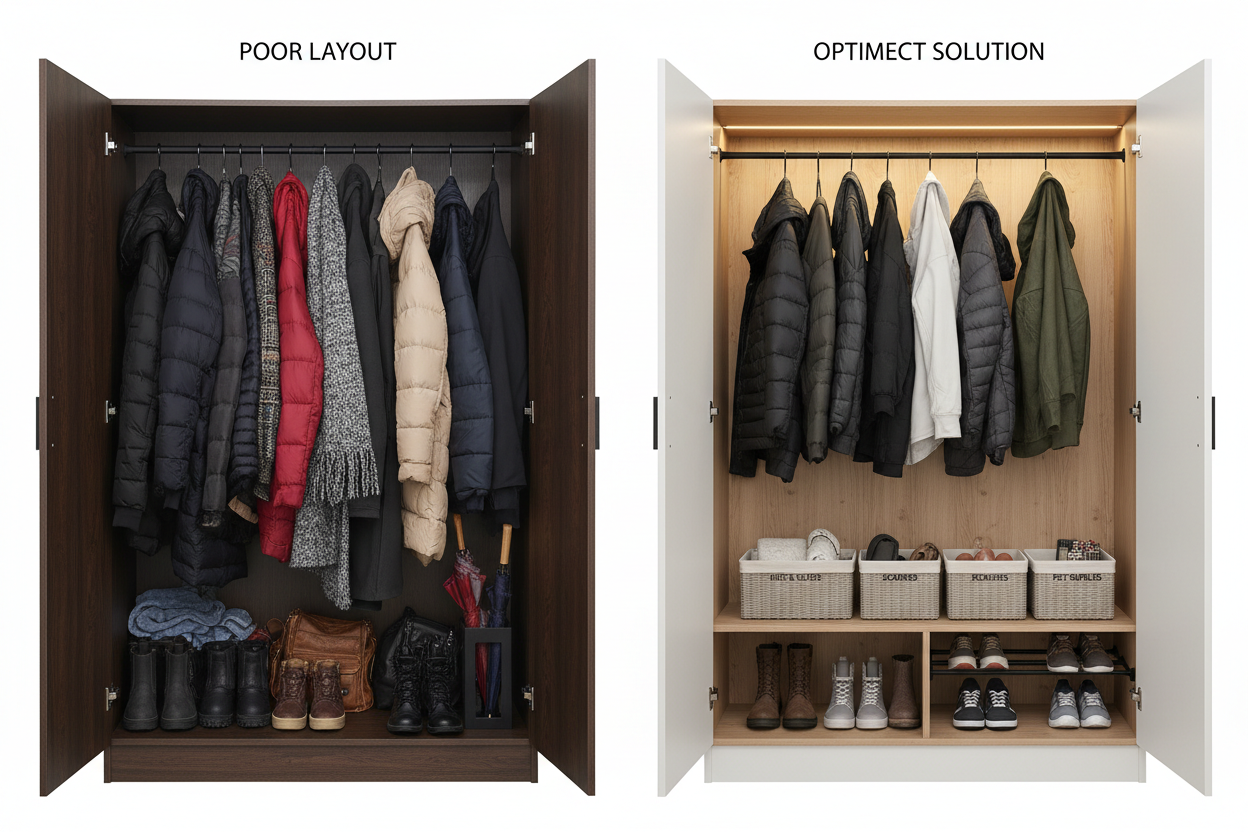
Even the best hall organizer won't work if it becomes a permanent storage unit. This space is for transit, not long-term archiving. Make it a habit to clear out the coats that are out of season. In summer, heavy parkas should move to deep storage. In winter, flip-flops shouldn't be taking up prime real estate in the shoe rack.
By rotating items seasonally and ensuring every object has a specific hook, bin, or shelf, you stop the cycle of clutter. You reclaim your entryway as a welcoming space rather than a hurdle to jump over.
Frequently Asked Questions
How do I organize a hallway that is too narrow for furniture?
Focus entirely on wall-mounted solutions. Use recessed hooks that flip up when not in use, install a floating shelf for keys, and use a wall-mounted shoe rack that keeps footwear off the floor. A large mirror can also help the space feel wider while adding functionality.
What is the best way to handle wet coats and umbrellas without ruining the floor?
Designate a "wet zone" with a waterproof boot tray and an umbrella stand. If you have space for a bench, ensure it has water-resistant materials or place the tray underneath it. Wall hooks should be spaced out enough to allow damp fabrics to breathe and dry properly.
How can I hide the electrical panel or ugly thermostat in my hallway?
You can hang a lightweight canvas art piece or a hinged cabinet over an electrical panel, provided it remains easily accessible for safety. For thermostats, consider framing them with a gallery wall of photos so they blend into the visual arrangement rather than standing out.

Leave a comment
This site is protected by hCaptcha and the hCaptcha Privacy Policy and Terms of Service apply.