










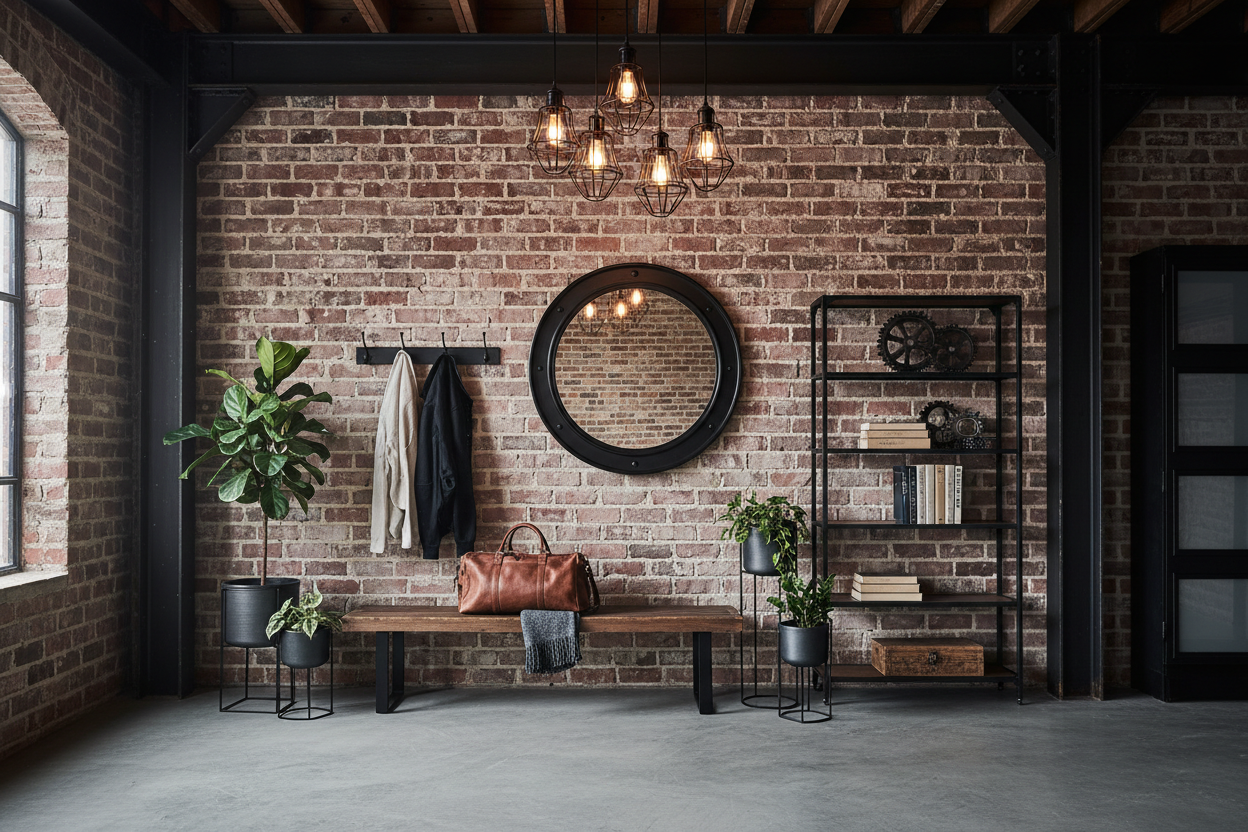
The moment someone steps through your front door, your home should tell a story. For those drawn to raw textures, utilitarian history, and a bit of edge, an industrial aesthetic offers a perfect narrative. It isn't just about making a space look like an old factory; it is about celebrating the mechanics of construction—exposed beams, metal finishes, and reclaimed wood—while maintaining a welcoming atmosphere. Creating a successful industrial foyer requires balancing these harsh, cold materials with just enough warmth to ensure the space feels like a home rather than a warehouse.
Achieving this look starts with understanding the core palette. You are generally working with greys, blacks, rust oranges, and the natural browns of aged timber. However, the secret lies in the functionality. This design style was born from spaces that were built to work, so your entryway needs to be as practical as it is stylish. Whether you are working with a sprawling hall or a tight apartment corridor, the goal is to strip back the superficial and let the structural elements shine.
My Brush with Heavy Metal
I learned the nuances of this style the hard way. A few years ago, I moved into a loft that felt too sterile. I bought a sleek, modern shoe rack, and it looked completely out of place against the concrete floors. It vanished into the background. I realized I needed something with weight and history. I spent weeks scouring flea markets until I found an old, battered metal locker from a high school gym. It was dented, chipped, and incredibly heavy.
Once I wrestled it into place, the entire dynamic of the room changed. That locker didn't just hold coats and boots; it anchored the space. It taught me that industrial design relies on pieces that have a presence. You cannot be afraid of imperfections. Rust, scratches, and knots in the wood are not defects in an industrial foyer design; they are the details that provide character.
Choosing the Right Furniture
Furniture in this design bracket typically combines wood and metal. When selecting an industrial entryway cabinet, look for pieces that utilize metal mesh, iron framing, or heavy casters. A cabinet here serves a dual purpose: it hides the clutter of daily life (mail, keys, dog leashes) while acting as a visual focal point. Apothecary-style consoles with many small drawers or repurposed mechanic carts are excellent choices that fit the theme perfectly.
Seating is equally important. An industrial entryway bench is often simple—a slab of live-edge wood resting on hairpin legs or black steel piping. If you need more storage, look for a hall tree that integrates hooks, a bench, and shoe storage into one metal-framed unit. The beauty of industrial entryway furniture is its durability. These materials are meant to take a beating, making them ideal for high-traffic zones where muddy boots and wet umbrellas are common.
Lighting: The Jewel of the Industrial Foyer
Lighting can make or break the industrial vibe. Standard builder-grade dome lights will kill the mood instantly. You want fixtures that expose the bulb or use heavy metal shades. Pendant lights with Edison bulbs are a staple because the warm, amber glow softens the harshness of the metal and concrete surroundings.
For a more dramatic industrial foyer design, consider a chandelier made of black iron piping or a wire cage fixture. If you have high ceilings, a large, oversized metal dome light finished in matte black or brushed brass can center the room. Wall sconces that mimic old factory lighting are also effective for adding layers of light, ensuring the space doesn't feel like a dungeon at night.
Textures and Wall Treatments
If you aren't blessed with natural exposed brick, you can still fake the look effectively. High-quality wallpaper or brick veneer can add that necessary grit to your walls. Alternatively, concrete-effect paint can turn a boring drywall hallway into a sleek, modern industrial tunnel. The walls set the backdrop for your industrial entryway decor.
Don't forget the floor. If you have hardwood, you are already halfway there, especially if it has a distressed finish. If you have generic tile, cover it with a vintage runner rug. Persian-style rugs with faded patterns work incredibly well in industrial spaces because they add a layer of history and much-needed softness underfoot. The contrast between a soft, worn rug and a cold metal console table is visually striking.
Accessorizing without Clutter
Decor in an industrial space should be sparse but impactful. You don't want knick-knacks everywhere. Instead, choose a few large items. A massive round mirror with a black metal frame is a classic choice. It reflects light, making the foyer feel larger, and fits the aesthetic perfectly. For wall art, think about vintage patent prints, large abstract black-and-white photography, or even architectural salvage pieces like an old gear or a metal letter sign.
Plants are the unsung heroes of industrial foyer ideas. The vibrant green of a snake plant or a fiddle leaf fig provides a necessary burst of life against the grey and brown palette. Place them in concrete or galvanized metal planters to keep the theme consistent. The organic shapes of the leaves break up the rigid, straight lines of the furniture.
Small Space Solutions
Not everyone has a grand entrance. If you are working with a small nook, vertical space is your best friend. Wall-mounted pipe shelves can replace a bulky console table. Use heavy-duty iron hooks screwed directly into the wall for coats. A slim, tall metal locker can serve as your industrial entryway cabinet without eating up floor space. The key in a small area is to keep the floor visible as much as possible, which creates the illusion of more room.
Tips for a Cohesive Look
- Stick to a neutral palette: Greys, blacks, whites, and wood tones should dominate.
- Mix metals: You don't have to stick to just black iron. Copper, brass, and brushed steel can coexist beautifully.
- Add leather: A leather accent, like a catch-all tray or a cushion on your bench, adds texture and luxury.
Designing an industrial foyer is about finding beauty in the raw and the refined. It is a style that forgives wear and tear, making it perfect for the busiest part of the house. By mixing sturdy furniture with warm lighting and personal touches, you create an entrance that is bold, functional, and uniquely yours.
Frequently Asked Questions
Can I mix industrial style with other design aesthetics?
Absolutely. Industrial blends very well with farmhouse (often called "modern farmhouse"), rustic, and mid-century modern styles. The key is to use industrial elements as the foundation—like the lighting or main furniture pieces—and soften them with the textiles and colors of the other style.
How do I stop my industrial entryway from feeling too cold?
Texture is the solution. Introduce soft elements like a wool or jute runner rug, add a leather cushion to your bench, and ensure you use warm-toned light bulbs (2700K-3000K) rather than cool white daylight bulbs. Adding plants also brings life and warmth to the space.
Is industrial furniture expensive?
It can range widely in price, but it is one of the most budget-friendly styles because it embraces imperfections. You can often find great pieces at thrift stores, flea markets, or even DIY your own pipe-shelving and reclaimed wood furniture for a fraction of the cost of buying new retail items.


Leave a comment
This site is protected by hCaptcha and the hCaptcha Privacy Policy and Terms of Service apply.