










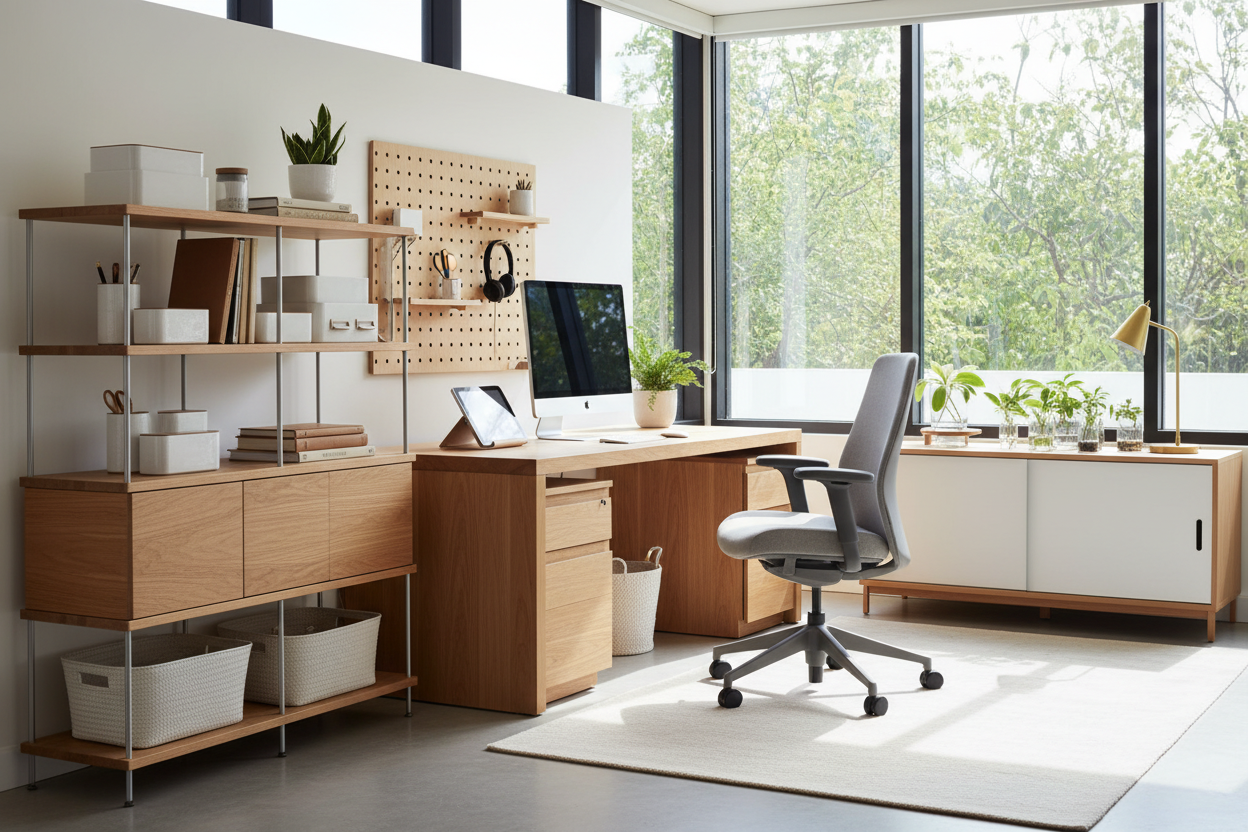
There is a distinct tension that exists in a workspace where the visual noise outweighs the design intent. As a designer, I often walk into rooms where the furniture is exquisite—perhaps a solid walnut executive desk or a mid-century modern credenza—but the impact is lost under layers of unmanaged chaos. True luxury in a workspace isn't just about the price tag of your chair; it is about the clarity of the space surrounding it. Implementing strategic home office organization hacks is less about buying bins and more about curating a workflow that feels intuitive and looks sophisticated.
Key Principles of an Organized Workspace
- Zoning: Distinctly separate your "active" work surface from "passive" reference storage to prevent desktop encroachment.
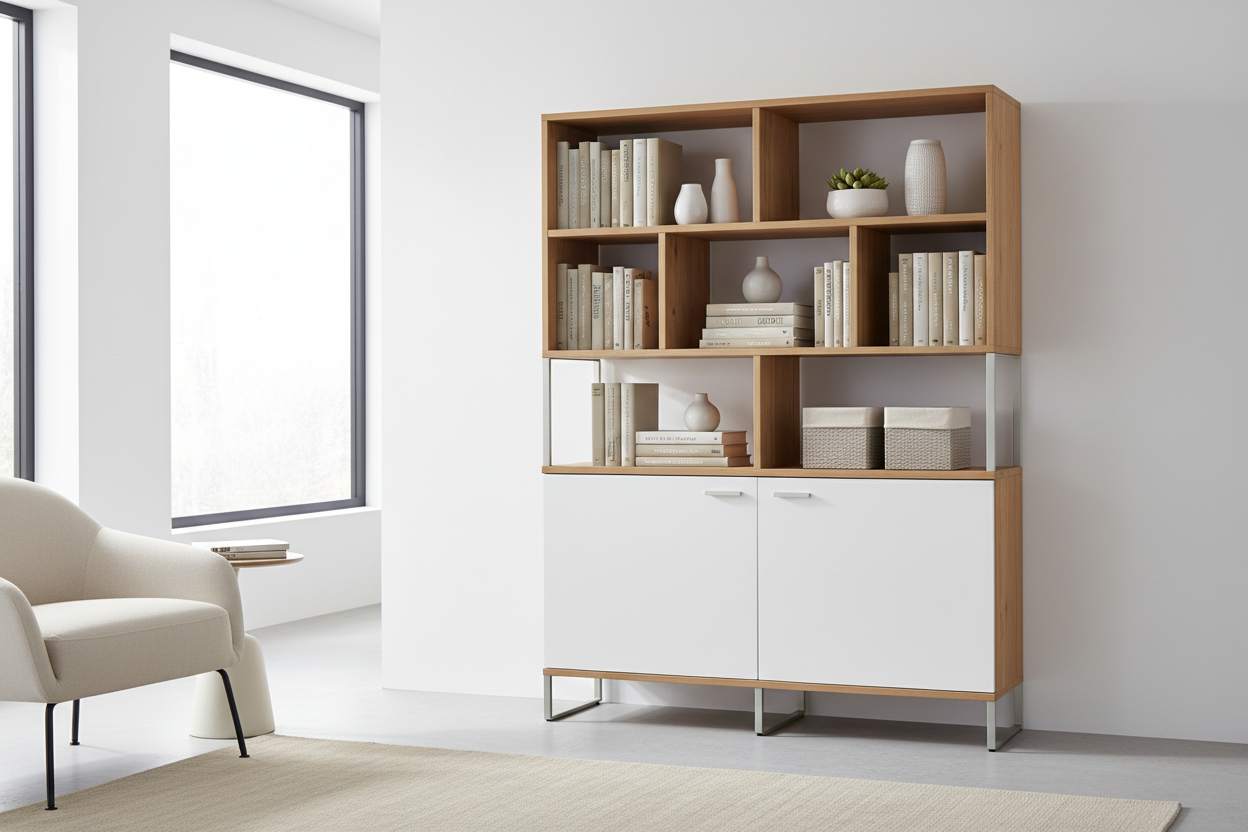
- Vertical Utilization: Maximize floor-to-ceiling potential with floating shelves or tall hutches to draw the eye upward and clear floor space.
- Visual Weight: Balance heavy, closed storage (filing cabinets) with lighter, open elements (bookshelves) to avoid a claustrophobic feel.
- Material Continuity: Select organizers that match your furniture's finish—leather, wood, or matte metal—to maintain a cohesive design language.
Zoning Your Workflow for Ergonomics and Aesthetics
The first step in any high-end design consultation is space planning. We don't just shove a desk against a wall; we look at the "reach radius." Your primary zone should only contain items you touch daily: your laptop, a high-quality notebook, and a pen. Everything else belongs in a secondary zone.
The "Floating" Layout
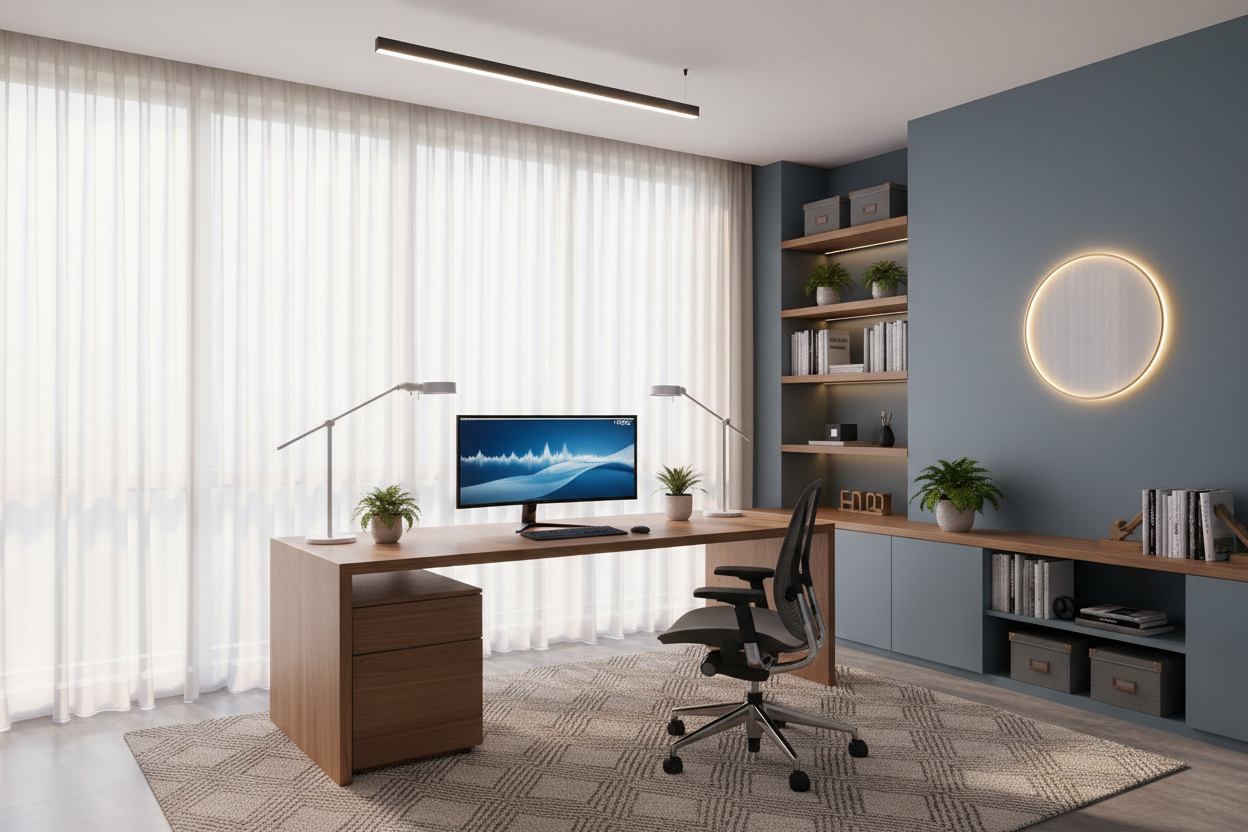
If space permits, floating your desk in the center of the room commands authority and improves flow. However, this exposes the back of your technology. Here, cable management becomes an art form. Use vertebrae cable spines that adhere to the desk leg, guiding cords to a floor box. This maintains the clean silhouette of the furniture without the visual clutter of dangling wires.
Elevating Storage: Beyond Plastic Bins
When selecting storage, treat it as furniture, not just utility. Avoid clear plastic bins which create visual noise by showing their contents. Instead, opt for opaque, textured materials.
Materiality and Texture
For a warm, organic feel, look for woven seagrass or leather-bound boxes. These add tactile interest to the room. If your aesthetic is more industrial or modern, powder-coated steel trays or concrete desk accessories provide weight and permanence. When considering diy office organization ideas, focus on customization. For example, using fabric remnants to line the bottom of wooden drawers not only adds a pop of color but protects the wood from ink stains and scratches.
Visual Balance and Shelf Styling
Open shelving is a double-edged sword. It offers accessibility but demands curation. The trick is the "2/3 Rule": fill only two-thirds of each shelf. Leave negative space to let the eye rest. Mix vertical stacks of books with horizontal objects or sculptural paperweights. This turns your storage into a focal point rather than a dumping ground.
My Personal Take on Home Office Organization Hacks
I learned a hard lesson about organization materials during a project for a client who loved the "acrylic" look. We outfitted her entire vintage mahogany desk with crystal-clear acrylic drawer dividers. It looked stunning in photos. However, two weeks later, she called me complaining about the noise.
Every time she dropped a metal pen or a stapler into the tray, it made a sharp, plastic clack that echoed in the room. Furthermore, the hard acrylic eventually caused micro-scratches on the interior lacquer of her antique drawers. Since then, I always insist on felt or velvet-lined organizers. They absorb sound, creating that hushed, library-like atmosphere that screams "luxury," and they protect the integrity of the furniture itself. It’s a sensory detail that you don't think about until you live with it.
Conclusion
Transforming your office requires a shift in perspective. It is about respecting the architecture of your furniture and the psychology of your workflow. By choosing the right materials and respecting the balance of the room, you create a space that invites focus rather than fatigue.
Frequently Asked Questions
How do I organize a small home office without it feeling cramped?
Focus on wall-mounted solutions. Floating shelves or a wall-mounted secretary desk free up floor space, making the room footprint appear larger. utilize "dead space" vertically rather than spreading out horizontally.
What is the best way to hide a printer?
Printers are rarely aesthetic objects. I recommend dedicating a lower cabinet in a credenza or a deep drawer with a pull-out shelf. Ensure the back of the cabinet is ventilated to prevent overheating.
Is custom built-in storage worth the investment?
If you plan to stay in the home for more than five years, absolutely. Custom joinery allows you to perfectly fit the architecture, eliminating awkward gaps and maximizing every inch of storage, which significantly increases the room's polished look.

Leave a comment
This site is protected by hCaptcha and the hCaptcha Privacy Policy and Terms of Service apply.