










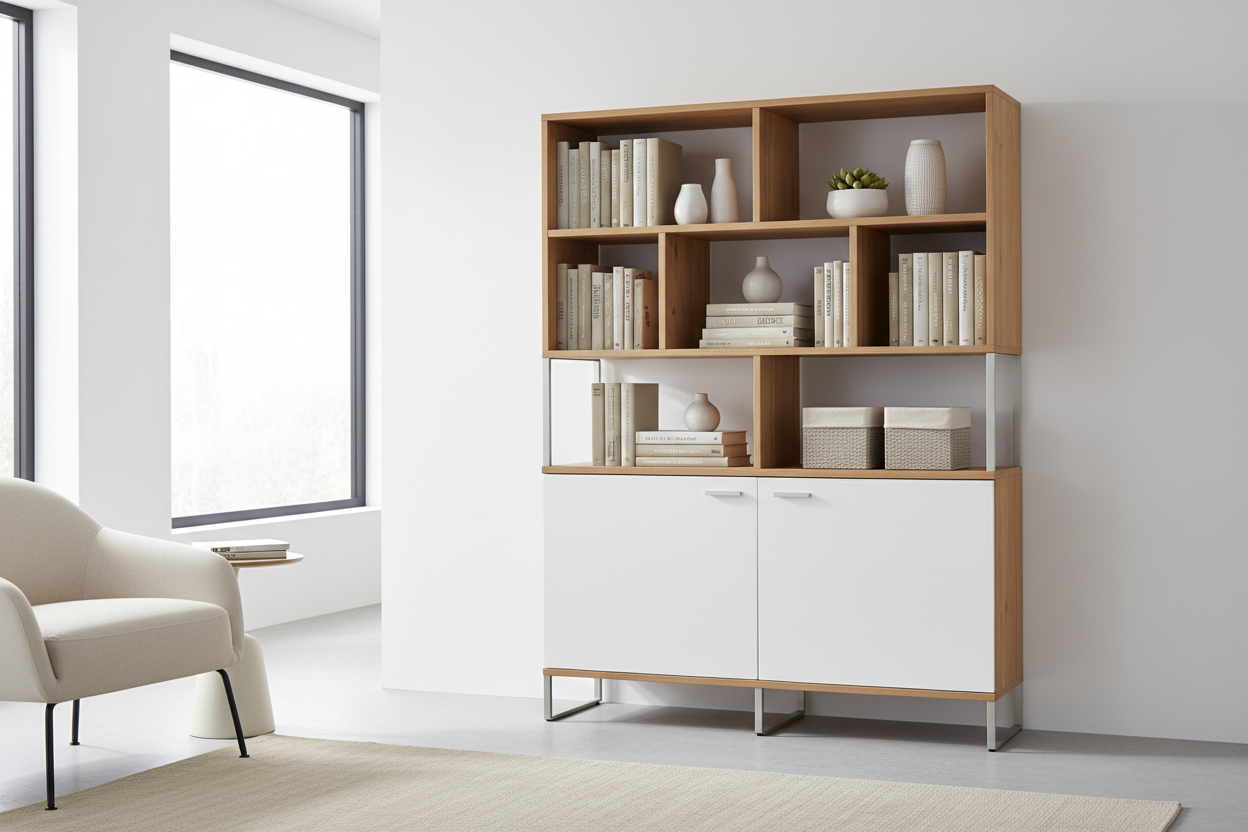
A half cabinet half bookshelf is exactly what it sounds like: a dual-purpose furniture piece featuring open shelving on the upper portion and closed cabinetry on the bottom. This hybrid design solves one of the oldest dilemmas in interior design—the conflict between wanting to display beautiful objects and needing to hide unsightly clutter. By combining these two distinct functions into a single vertical footprint, this unit maximizes vertical space while offering a visual anchor that feels substantial without overwhelming a room.
Most homeowners struggle with storage that is either too revealing or too boxy. A standard bookcase forces you to keep everything tidy because it is all on display. Conversely, a full cabinet or armoire can feel heavy and block light, making a room feel smaller. The half bookcase half cabinet offers a middle ground. The lower section usually stands about 30 to 36 inches high—roughly counter height—and provides deep storage for items like board games, paperwork, electronics, or linens. The upper section is airier, reserved for books, plants, and decor that reflect your personality.
The Functional Appeal of Hybrid Storage
The primary reason this furniture style remains a staple in both traditional and modern homes is its versatility. In a living room, the bottom cabinet swallows up Wi-Fi routers, gaming consoles, and tangles of cables that usually ruin the aesthetic of a media center. Meanwhile, the shelves above become a curated gallery for your favorite novels and travel souvenirs. This separation of church and state—or rather, mess and art—is crucial for maintaining a sense of calm in high-traffic areas.
I realized the specific value of this design a few years ago while trying to organize a cramped home office. I had initially bought simple open metal shelving. Within weeks, the shelves were a chaotic mix of printer paper, tax files, and reference books. It looked terrible, and the visual noise made it hard to focus. I swapped that unit for a vintage mid-century half cabinet half bookshelf I found at an estate sale. Suddenly, the reams of paper and ugly binders disappeared behind the sliding wood doors at the bottom. The top shelves were left with plenty of negative space for just the books I needed and a few framed photos. The room felt twice as big simply because the visual clutter was capped at knee level.
Choosing the Right Style for Your Space
When shopping for a half bookcase half cabinet, the material and finish dictate the vibe of the room. A white painted unit with beadboard backing fits perfectly into a coastal or farmhouse aesthetic. These often feature shaker-style doors and crown molding, making them look like built-in architecture rather than freestanding furniture. If you rent your home, this is a fantastic way to get the "custom built-in" look without losing your security deposit.
For a more industrial or modern look, mixed materials work best. You might find units with a metal frame and wood shelves, where the bottom cabinet is made of steel mesh or reclaimed wood. These pieces tend to have a lighter visual footprint. Mid-century modern versions often feature tapered legs and warm walnut tones, turning the storage unit into a statement piece rather than just a utility item.
Dimensions and Scale
Pay close attention to the depth difference between the top and bottom sections. A classic design often features a "step-back" profile, where the bottom cabinet is deeper (around 16-18 inches) than the upper shelves (around 10-12 inches). This step-back design is incredibly practical. It creates a small ledge that breaks up the vertical line, preventing the piece from looming over you. It also ensures the unit is bottom-heavy, which is safer and more stable, though anchoring furniture to the wall is always a non-negotiable safety step.
Styling the Open Shelves
Once you have your half cabinet half bookshelf in place, the challenge shifts to styling. The open top section is a blank canvas, but it is easy to overfill. A common mistake is packing the shelves edge-to-edge with books, library-style. While practical for a dedicated library, in a living room, this can look heavy.
Try alternating the orientation of your books. Stack some horizontally and line others up vertically. This variation creates visual rhythm. Use the horizontal stacks as risers to display small objects, like a small clock or a ceramic bowl. The goal is to let the eye travel easily across the shelves.
Don't underestimate the power of negative space. Leaving empty spots on the shelf prevents the unit from looking cluttered. Since you have the luxury of the closed cabinet below for the ugly necessities, you don't need to force every inch of the upper shelving to perform heavy-duty storage. Treat the top half as a display case and the bottom half as a workhorse.
Beyond the Living Room
While the living room is the obvious choice, these hybrid units are chameleons. In a dining room, they function brilliantly as a modern hutch. The cabinet holds serving platters, table linens, and seasonal candles, while the shelves display your best glassware or a collection of white pottery. It is less formal than a traditional china cabinet but offers the same utility.
In a nursery or child's room, the half bookcase half cabinet grows with the child. In the early years, the cabinet locks away diapers, wipes, and unsightly plastic toys. The shelves hold soft plushies and picture books. As the child grows, the bottom transitions to storing school supplies and sports gear, while the top holds textbooks and trophies. It is a piece of furniture that earns its keep over decades, adapting to the changing needs of the household.
Custom vs. Retail Options
If you cannot find the perfect pre-made unit, consider a semi-custom approach. Many DIY enthusiasts create a half cabinet half bookshelf by combining standard kitchen upper cabinets (placed on the floor with a toe kick added) with simple pine shelving built above them. This allows you to fit the unit exactly to the width of your wall. Painting the entire assembly the same color as your walls can make the room look larger and more expensive.
Regardless of whether you buy an antique, purchase a flat-pack kit, or build it yourself, the utility remains the same. You get the best of both worlds: a place to hide the chaos of daily life and a stage to celebrate the things you love.
Frequently Asked Questions
Can I use a half cabinet half bookshelf as a room divider?
Yes, but you must ensure the back of the unit is finished, as most retail units have unfinished backs meant to face a wall. Additionally, because these units can be tall and top-heavy, you must secure the base to the floor or use a tension system to prevent tipping.
What is the standard height for the cabinet portion?
The cabinet portion usually ranges from 30 to 36 inches high. This aligns with standard table or countertop heights, creating a natural visual break and putting the open shelves at a convenient eye level for display.
How do I light the open shelves without hardwiring?
You can use battery-operated puck lights or rechargeable LED strips attached to the underside of the shelves. Many modern options come with remote controls or motion sensors, allowing you to highlight your display items without drilling holes or hiring an electrician.

Leave a comment
This site is protected by hCaptcha and the hCaptcha Privacy Policy and Terms of Service apply.