










We often mistake "simple" for "empty." In reality, a truly effective workspace isn't about removing everything until the room echoes; it is about intentional curation. As a designer, I see clients struggle with visual noise that subconsciously hampers their productivity. A well-executed simple office interior solves this by prioritizing flow, light, and tactile comfort over decorative excess.
Core Principles for a Distraction-Free Workspace
- Ergonomic Integrity: Prioritize chairs with lumbar support over purely sculptural pieces; function must lead form.
- Concealed Storage: Opt for cabinetry with solid doors rather than open shelving to reduce visual clutter.
- Matte Finishes: Select non-reflective surfaces for desks to minimize eye strain from overhead lighting glare.
- Warm Materials: Incorporate natural wood (oak or walnut) to prevent the space from feeling clinical.
- Layered Lighting: Ensure a mix of ambient overhead light and focused task lighting.
Zoning and Spatial Planning
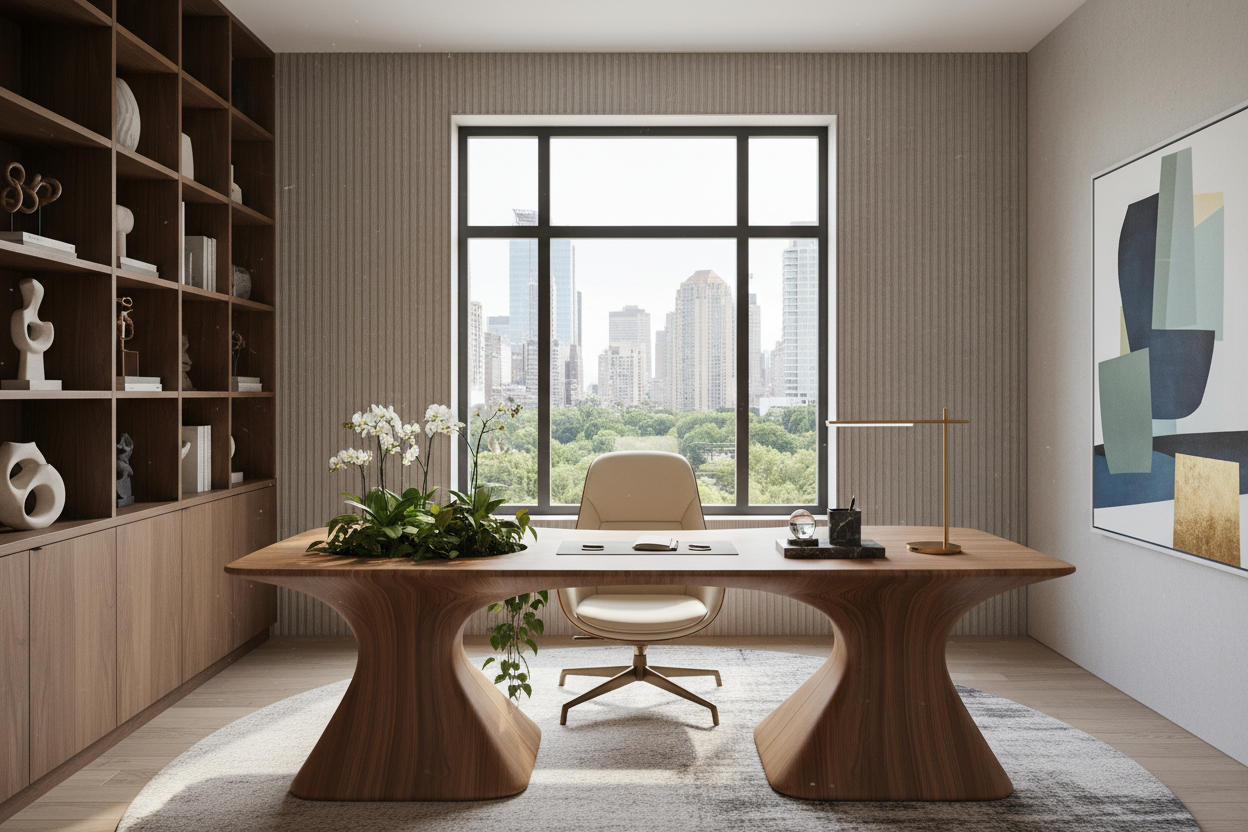
When executing a simple office interior design, the layout is your most critical tool. A common error is pushing every piece of furniture against the perimeter walls, leaving a "dance floor" in the middle. Instead, float your desk. Placing the desk perpendicular to a window or facing the door commands the room and controls sightlines.
Consider the "visual weight" of your furniture. In a simple office, you want pieces that feel light. A desk with slender metal legs or a floating wall-mounted unit occupies less visual volume than a heavy, blocky partner's desk. This allows light to travel through the room, making the space feel expansive regardless of its actual square footage.
Materiality: Texture Over Color
Simplicity often relies on a restrained color palette, but this can risk feeling sterile. The antidote is texture. If you keep the walls a neutral off-white or greige, you must introduce warmth through materials.
Wood vs. Laminate
For the primary work surface, solid wood or high-grade veneer is superior to standard laminate. Real wood has a tactile quality that grounds the space. However, be mindful of the finish. I always advise clients to choose a satin or matte varnish. High-gloss finishes might look sleek in a catalog, but in a working office, they become a magnet for fingerprints and reflect monitor glare, causing fatigue over long hours.
Acoustics and Soft Furnishings
A minimalist aesthetic often leads to poor acoustics—hard floors, hard desks, and hard walls create echoes that make phone calls tiring. To maintain a simple look while solving this, use a low-pile wool rug. It anchors the desk zone and absorbs sound without adding the visual chaos of a patterned Persian rug. Window treatments should be functional; sheer roller blinds offer light control without the heavy drape of velvet curtains.
My Personal Take on Simple Office Interiors
I want to share a specific challenge I faced with a client named Julian. He was obsessed with the "ultra-minimalist" look—think glass desk, white walls, zero clutter. It looked incredible in the rendering. However, two weeks after installation, he called me complaining of wrist pain and frustration.
The issue? The glass desk was cold to the touch and tracked every single smudge, forcing him to clean it three times a day. Furthermore, because the desk had no modesty panel or drawers, his cable management was a nightmare. We could see every wire dangling against the white wall.
We swapped the glass for a white-oaked desk with a built-in cable tray and a leather writing pad. The aesthetic remained "simple," but the functionality skyrocketed. The lesson here is that materials must be forgiving. If a surface requires constant maintenance to look good, it isn't simple; it's high-maintenance disguised as minimalism.
Conclusion
Creating a simple office is not about deprivation; it is about removing the friction between you and your work. By selecting forgiving materials, prioritizing ergonomic layouts, and hiding the functional chaos of cables and paperwork, you create a sanctuary for focus. Start by clearing your surfaces, then slowly reintroduce only what serves your workflow.
Frequently Asked Questions
How do I add character to a simple office without cluttering it?
Focus on one large-scale piece of art or a single architectural plant (like a Ficus or Snake Plant) rather than several small knick-knacks. This provides a focal point and organic softness without disrupting the clean lines of the room.
What is the best lighting temperature for a home office?
Aim for a color temperature between 3500K and 4000K. This range mimics natural daylight, which keeps you alert. Warmer lights (2700K) are too relaxing for work, while cooler lights (5000K+) can feel harsh and clinical.
Can a simple office interior work in a small bedroom corner?
Absolutely. In small spaces, use a wall-mounted desk or a "ladder desk" silhouette. These utilize vertical space and have a minimal footprint. Ensure your chair can fully tuck under the desk when not in use to maintain clear circulation paths.

Leave a comment
This site is protected by hCaptcha and the hCaptcha Privacy Policy and Terms of Service apply.