










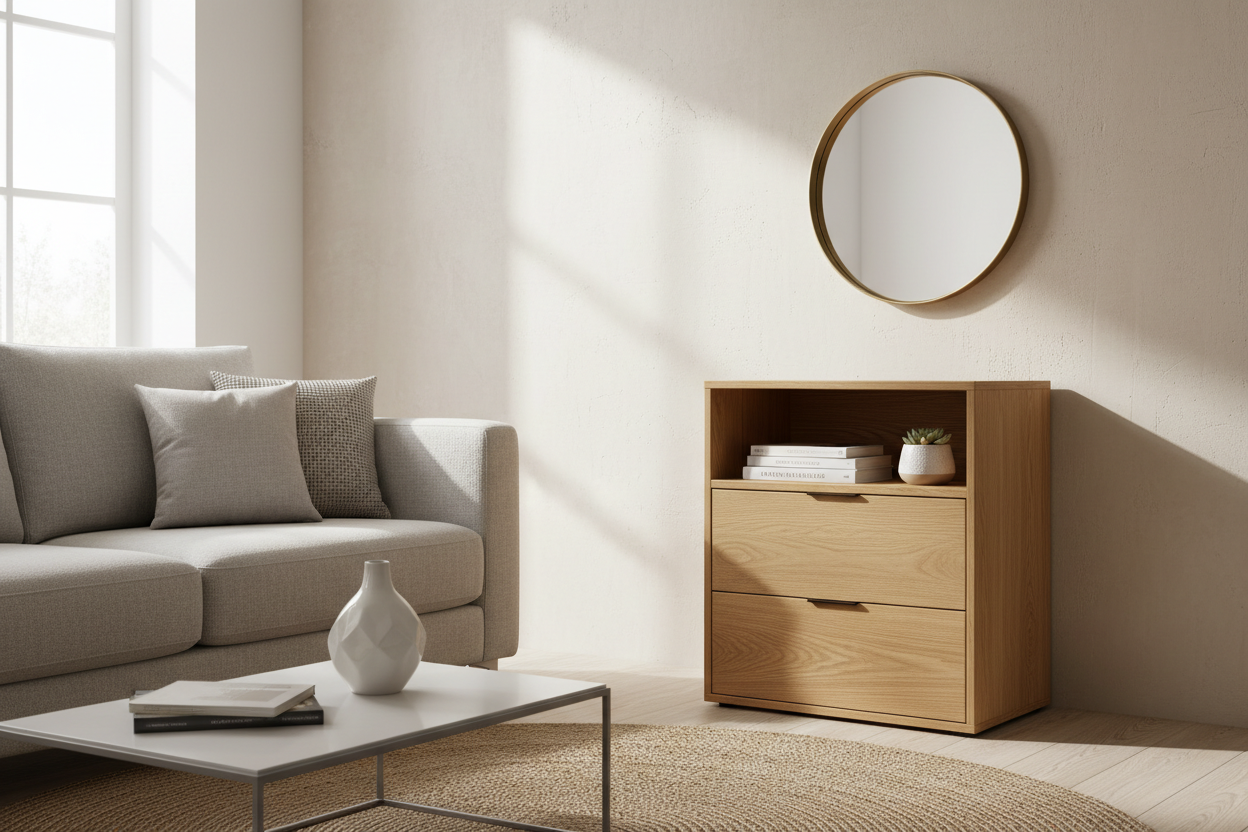
Finding storage that fits into tight corners without looking like cheap plastic bins is a common struggle for homeowners and renters alike. Small wooden cabinets for storage are the ideal solution, blending the warmth of natural materials with the practicality of organization. Whether you are trying to declutter a narrow hallway, organize a chaotic bathroom, or add a bedside companion that actually holds your books, a compact timber unit offers durability and style that flat-pack particle board simply cannot match.
Why Wood Wins in Compact Spaces
When space is at a premium, every piece of furniture needs to pull double duty. It has to function perfectly, but it also has to look good because you can't hide it away in a spare room. Wood brings an inherent texture and warmth that grounds a room. Unlike metal or plastic, which can feel cold or temporary, a solid timber piece feels permanent and intentional.
I recall my own battle with a tiny downstairs powder room that had absolutely no built-in storage. The pedestal sink looked nice but left me with nowhere to put extra toilet paper or hand towels. I spent weeks looking for a solution until I stumbled upon a vintage wooden cupboard small enough to tuck under the window yet deep enough to stack towels. It wasn't just a storage box; the grain of the reclaimed pine added a rustic character that transformed the sterile white tile room into something cozy. That experience taught me that the right cabinet doesn't just hold things; it anchors the space.
Choosing the Right Configuration for Your Needs
Not all cabinets serve the same purpose. The internal layout determines whether a piece will solve your clutter problem or just become another surface to pile junk on. You need to audit what you actually plan to store before you start shopping.
The Case for Drawers
If your clutter consists of small, loose items—think charging cables, batteries, stationery, or makeup—you need small wood cabinets with drawers. Open shelves or large cavernous cupboards are terrible for these items because they inevitably turn into a jumbled mess. Drawers provide compartmentalization. A narrow chest with three or four vertical drawers can slip beside a desk or sofa, effectively swallowing the visual noise of daily life while keeping essentials accessible.
Concealed Storage with Doors
For larger, bulkier items, a small wood storage cabinet with doors is usually the better option. This configuration is superior for stacking items like linens, cleaning supplies, or kitchen appliances. Doors offer a visual "reset" for a room. You can have a chaotic stack of video games or mismatched Tupperware inside, but once you close those timber doors, the room looks pristine. Look for units with adjustable internal shelving to maximize the vertical space inside the cabinet.
Display and Accessibility
Sometimes you want to see what you have. A small wood cabinet with shelves (open facing) works well in living rooms or kitchens where the items stored are aesthetically pleasing. This might be a spot for your ceramic bowl collection, a stack of hardcover books, or folded knit blankets. If you choose an open-shelf design, remember that it requires a bit more discipline. You can't just toss things in there; the storage becomes part of the decor.
Material Selection and Durability
The term "wooden" covers a massive spectrum of quality. Understanding the difference between wood types will help you gauge how long a piece will last and how much weight it can hold.
- Hardwoods (Oak, Walnut, Maple): These are heavy, dense, and incredibly durable. They resist dents and scratches better than softer woods. If you are buying a cabinet for a high-traffic area like an entryway, hardwood is a wise investment.
- Softwoods (Pine, Cedar): These woods offer a beautiful, often knotty aesthetic that suits farmhouse or rustic decor. They are lighter to move but can dent easily. A pine cabinet adds instant charm and develops a patina over time that many people love.
- Engineered Wood with Veneer: Many modern pieces use a core of MDF or plywood with a thin slice of real wood on top. While often cheaper, these can still be high quality. However, they cannot be sanded down and refinished as easily as solid wood if they get damaged.
Where to Use Compact Cabinets
Versatility is the main selling point here. A unit you buy for one room can easily migrate to another as your needs change. This adaptability makes them a sustainable furniture choice.
In the bedroom, these units function as superior nightstands. Standard nightstands often lack storage volume, but a small cabinet offers ample room for books, lotions, and electronics, keeping the top surface clear for a lamp and a glass of water. In the dining room, a small cabinet can serve as a petite buffet or bar, housing glassware and napkins without taking up the footprint of a full sideboard.
Entryways are another prime location. A slim wooden cabinet provides a landing pad for keys and mail, while the internal storage hides shoes, preventing the dreaded pile-up at the front door.
Navigating the Market
When you are ready to buy, you will find small wooden cabinets for sale in a variety of venues, from high-end furniture showrooms to flea markets. If you are buying new, pay close attention to the joinery. Dovetail joints in drawers are a sign of quality construction that will last for decades. Check the hinges on doors to ensure they are substantial enough to support the weight of the wood without sagging.
Vintage shopping offers a different appeal. Older pieces often feature old-growth wood which is denser and more rot-resistant than modern timber. However, ensure you check for signs of woodworm or structural instability. A wobbly cabinet can often be fixed with a little wood glue and a clamp, but extensive rot is a dealbreaker. Whether you choose a sleek mid-century modern teak unit or a painted farmhouse cupboard, the goal is to find a piece that fits your specific dimensions while adding a layer of texture to your home.
Maintenance and Care
Wood is organic and reacts to its environment. To keep your cabinet looking its best, avoid placing it directly in front of radiators or heat vents, as the fluctuations in temperature can cause the wood to crack or warp. Sunlight can also bleach the color over time, so be mindful of placement near south-facing windows.
Regular dusting with a soft, dry cloth is usually sufficient. If the finish looks dull after a few years, a feed-and-wax product can rejuvenate the grain and protect the surface from moisture. This simple maintenance ensures your storage solution remains a beautiful focal point rather than just a utility box.
Frequently Asked Questions
Can I use a wooden cabinet in a bathroom with a shower?
Yes, but you must ensure the wood is properly sealed with a marine-grade varnish or polyurethane to prevent moisture damage. Ventilation is key, so make sure the bathroom has an exhaust fan or window to reduce humidity levels that could warp the wood over time.
How do I remove a water ring from the top of my wooden cabinet?
For fresh white rings (trapped moisture), try gently ironing a towel placed over the spot on a low, dry setting, or use a hairdryer on low heat. For darker rings, which indicate damage to the wood fibers, you may need to sand the area lightly and refinish it.
Is it better to buy solid wood or veneer for a small cabinet?
Solid wood is generally better for longevity and repairability, as it can be sanded and refinished multiple times. Veneer is more stable in changing temperatures and often more affordable, but it is difficult to repair if the surface layer chips or peels.


Leave a comment
This site is protected by hCaptcha and the hCaptcha Privacy Policy and Terms of Service apply.