










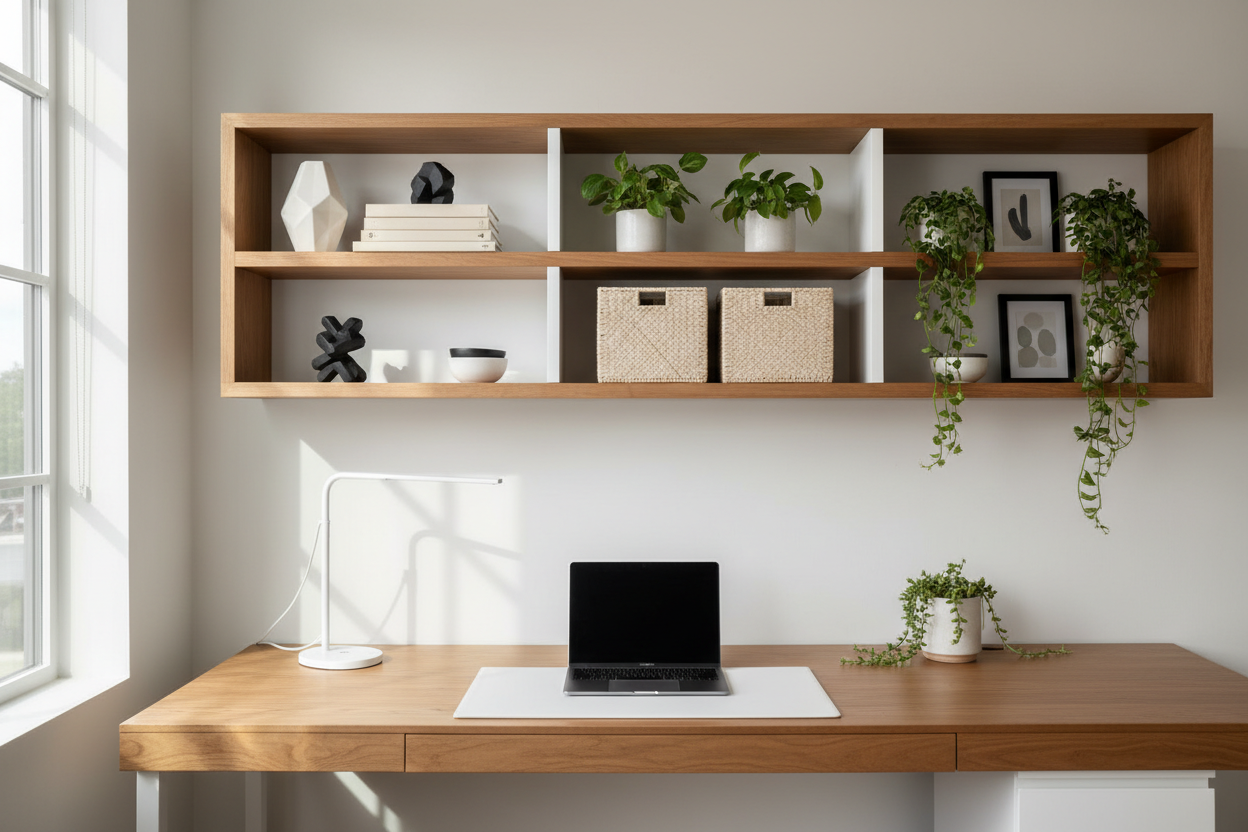
There is a delicate tension in interior design between the need for utility and the desire for minimalism. Nowhere is this more apparent than in the home office. We often sacrifice floor space for filing cabinets or clutter our surfaces with technology, ruining the visual flow of a room. The solution isn't just more furniture; it is the integrated desk and shelf system. Whether you are outfitting a dedicated study or carving a workspace out of a living room corner, choosing the right combination of surface area and vertical storage is the single most impactful decision you will make for your productivity and your room's aesthetic.
Key Features to Look For
- Vertical Clearance: Ensure the desk with shelves above has at least 20-24 inches of clearance for monitors to avoid a cramped setup.
- Weight Capacity: Check the load rating, especially for a desk with shelves on top intended for heavy reference books or equipment.
- Material Integrity: Avoid particle board for long spans; look for reinforced metal or solid wood in a large desk with shelves to prevent sagging.
- Leg Room Ergonomics: Verify that a desk with shelves below or side storage doesn't encroach on the space needed for your chair to swivel freely.
Defining Your Silhouette: Hutch vs. Trestle
In the showroom, I often steer clients toward one of two distinct profiles based on their room's volume. The first is the vertical integrator—often categorized as a computer desk with upper shelves or a hutch. This is ideal for maximizing square footage. By utilizing the wall space, a desk with high shelves draws the eye upward, making ceilings appear higher while keeping the footprint compact. These are perfect as home office desks with shelves where floor space is at a premium.
Conversely, for a more open, airy feel, consider a desk with shelf below or a trestle style. Here, the storage is discreetly tucked under the work surface. A desk with storage shelves located near the floor allows for a clean line of sight across the room, which is essential if your workspace faces into a living area. This desk with shelving style prevents the furniture from dominating the room visually.
Materiality and Durability
When selecting a workstation with shelves, the material dictates both longevity and style. A cheap desk with shelves made from low-grade laminate may suffice for a temporary student rental, but for a permanent home office, it lacks the structural rigidity required for heavy use.
For a sophisticated look, seek out a desk table with shelves featuring mixed materials—such as walnut veneers paired with matte black metal frames. This industrial-chic approach is common in a computer stand with shelves, offering durability without the visual bulk of traditional wood cabinetry. If you are looking at a large desk with shelf systems attached, ensure the joinery is robust. A desk with attached shelves relies heavily on the connection points; poor hardware here leads to the dreaded wobble.
Optimizing for Technology
We cannot ignore the 'computer' aspect of the modern desk. A standard writing desk often fails to accommodate towers and cables. If you use a desktop tower, look specifically for a computer desk with pc shelf or a desk with computer shelf designed to keep the CPU off the floor (reducing dust intake) but ventilated.
Furthermore, a computer desk with top shelf functionality is excellent for elevating your screen to eye level, improving ergonomics without an aftermarket monitor arm. However, be wary of a desk with shelf on top that is too narrow; it must be deep enough to hold the monitor stand stability. For those with extensive setups, a computer desk with storage shelves offering cable management grommets is non-negotiable to maintain that luxury, cord-free look.
Lessons from My Own Projects
I learned a hard lesson about desks with shelves above during a project for a graphic designer in a downtown loft. We selected a stunning, architectural desk with upper shelf unit that looked perfect on the floor plan. It was a desk with 3 shelves stacked vertically, offering immense storage.
However, once we assembled it, we realized the 'standard' clearance between the desktop and the first shelf was only 16 inches. My client's professional-grade dual monitors were 18 inches tall on their stands. We ended up having to drill new holes and void the warranty to move the shelf up. It was a nightmare that taught me to never trust the stock photo of a computer desk with shelves; always measure the vertical void. Also, I noticed that on darker finishes, specifically on a desk with shelf attached, dust settles visibly on the lower rungs within hours. Now, I always recommend lighter woods or textured finishes for low shelves under desks to hide the inevitable dust bunnies.
Conclusion
Whether you choose a sprawling office table with shelves or a compact computer shelf desk, the goal is harmony. The right piece should anchor your room, not clutter it. By prioritizing vertical clearance, material strength, and ergonomic flow, you transform a simple desk and shelf purchase into a long-term investment in your work-life balance.
Frequently Asked Questions
How much weight can a desk with wall-mounted shelves hold?
This depends entirely on the anchoring. A freestanding desk with attached shelves is usually rated for 20-50 lbs per shelf. However, if you are buying a desk with shelving above that mounts to the wall, you must hit the studs. Never rely on drywall anchors for heavy books.
Is a desk with shelves under uncomfortable for tall people?
It can be. A desk with shelf under the main surface often reduces legroom. If you are over 6 feet tall, measure the 'knee well' width and height. You might prefer a desk with shelves and storage located on the side (an L-shape) rather than directly underneath.
How do I style a desk with lots of shelves without it looking messy?
The rule of thirds applies. Fill one-third of your office desk with shelves above with books, one-third with decorative objects (plants, vases), and leave one-third empty (negative space). This prevents your work desk with shelves from looking like a storage locker.


Leave a comment
This site is protected by hCaptcha and the hCaptcha Privacy Policy and Terms of Service apply.