










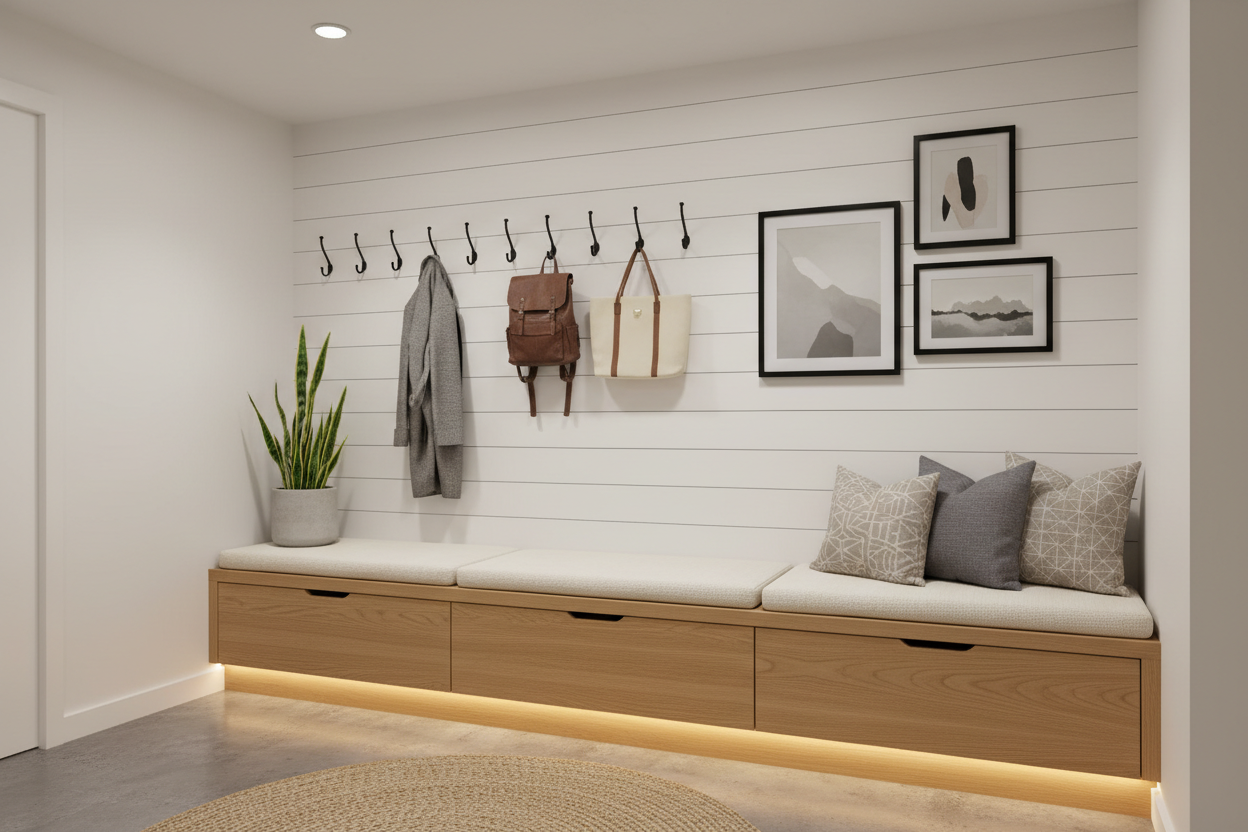
Walking through your front door should feel like a relief, not an obstacle course. Yet, for many homeowners, the entryway is a chaotic dumping ground for shoes, backpacks, and seasonal coats. The solution often isn't just buying more baskets or a standalone rack; it is changing the architecture of the space itself. A built in entryway bench anchors the room, defining the area while providing a dedicated spot to sit, take off shoes, and immediately stow them away.
Unlike freestanding furniture, a built-in unit maximizes every vertical and horizontal inch available. It blends into the walls, making even narrow hallways feel purposeful rather than cluttered. Whether you are working with a sprawling mudroom or a tight nook by the front door, custom joinery allows you to tailor the storage exactly to your family's habits. If you are tired of tripping over boots, a permanent seating solution is likely the upgrade your home needs.
Why Custom Seating Beats Store-Bought Furniture
I learned the hard way that standalone benches often fail in high-traffic zones. A few years ago, I attempted to organize my own narrow front hall with a standard wooden bench ordered online. It looked decent in photos, but in reality, dirt accumulated underneath it, and it became a catch-all surface for junk mail rather than a place to sit. It wobbled every time someone sat down to tie their laces. Eventually, I tore it out and framed a custom bench wall-to-wall. The difference was immediate. The structure felt solid, the gap behind the furniture disappeared, and the visual flow of the room improved instantly because the bench looked like it had always belonged there.
A built in entryway bench offers structural integrity that flat-pack furniture cannot match. By securing the unit to the studs, you eliminate wobbling and create a seamless transition between the floor and the wall. This approach also allows you to navigate tricky architectural features. Baseboard heaters, uneven floors, or oddly placed outlets can be accommodated within the design, turning awkward dead space into a functional asset.
Planning Your Foyer Layout
Before cutting any wood or calling a carpenter, you need to assess the traffic flow. A foyer built in bench should invite people in, not block their path. Standard depth for a bench is between 15 and 18 inches. If you go much deeper, it encroaches on the walkway; any shallower, and it becomes uncomfortable to sit on. In tighter spaces, you might opt for a floating design to keep the floor visible, which tricks the eye into thinking the room is larger than it is.
Consider the height as well. The standard seat height mimics a dining chair, usually sitting around 18 inches off the finished floor. However, if you plan to add a thick foam cushion, you need to account for that usually 2-to-3-inch difference during the build phase. Ignoring this math often results in a seat that feels unnaturally high for the average adult and impossible for children to use comfortably.
Storage Strategies: Drawers, Cubbies, or Flip-Tops?
The primary driver for this project is almost always clutter control. A built in entryway bench with storage is only as good as its accessibility. There are three main ways to handle the space underneath the seat, and your choice depends largely on who lives in your house.
Open cubbies are the most common choice for families with young children. Kids are rarely patient enough to open a drawer or lift a lid to put their shoes away. If you provide an open slot at floor level, there is a much higher success rate for shoes actually making it inside. You can make these look tidier by sliding wicker or wire baskets into the cubbies to obscure the contents.
For a cleaner, more architectural look, deep drawers are superior. They hide the visual noise completely. You can store winter gear, dog leashes, or shoes without seeing a jumble of laces and soles. Heavy-duty drawer slides are essential here, as the weight of footwear adds up quickly.
The flip-top bench is a classic approach, utilizing the entire cavity of the bench box. While this maximizes volume, it is often the least practical for daily use. If you have a cushion on top, or if coats are hanging on hooks above the bench, lifting the lid becomes a hassle. This style of entryway built in bench with storage is best reserved for long-term storage items you do not need to access daily, such as seasonal blankets or off-season sports gear.
Design Elements and Materials
When selecting materials for an entryway bench built in, durability is paramount. This furniture will endure wet raincoats, muddy boots, and heavy bags being dropped on it daily. Cabinet-grade plywood is generally preferred over MDF for the structural box, as it holds screws better and resists moisture more effectively. For the face frames and trim, solid wood like poplar or maple provides a hard surface that paints beautifully.
Aesthetics play a massive role in how the bench integrates with the rest of the home. If your house features traditional molding, wrapping the base of the bench in the same baseboard used throughout the room grounds the piece. For a farmhouse or coastal vibe, adding shiplap or beadboard to the wall backrest protects the drywall from scuffs while adding texture.
Creative Entryway Built-In Bench Ideas
You can elevate the design beyond a simple box. Consider flanking the bench with tall, vertical lockers or cabinetry. This creates a "nook" effect that feels cozy and high-end. Lighting is another game-changer. installing a sconce on the side wall or a picture light above the bench adds warmth to the entry. If you are dealing with a corner, an L-shaped configuration can double your seating and storage capacity.
Don't forget the hardware. If you choose drawers, the pulls should be robust and easy to grab. For open cubbies, lining the bottom with a durable rubber mat or tile can prevent water damage from dripping umbrellas or snowy boots, extending the life of your cabinetry.
Installation Considerations
Whether you hire a professional or tackle this as a DIY project, the scribing process is what separates a built-in from a box pushed against a wall. Walls are rarely perfectly straight, and corners are almost never 90 degrees. A true built-in requires scribing the filler pieces to match the contours of your specific walls. This eliminates gaps and creates that high-end, custom look.
Ventilation is another technical detail often overlooked. If your entryway has a floor vent where the bench needs to go, you cannot simply cover it up. You must extend the ductwork through the toe kick of the bench base. This ensures your HVAC system continues to function correctly and keeps the mudroom area warm to dry out damp coats.
Ultimately, a well-executed bench changes the rhythm of your home. It provides a pause point between the outside world and your sanctuary, organizing your life the moment you step through the door.
Frequently Asked Questions
How deep should a built-in bench be for sitting?
A comfortable depth for a bench is typically between 15 and 18 inches. If you plan to add thick back cushions or throw pillows, you may want to extend this to 20 inches to ensure there is still enough room to sit comfortably without feeling pushed off the edge.
Can I build a bench over a baseboard heater?
Yes, but you must allow for proper airflow to prevent overheating and fire hazards. This usually involves installing a metal grille in the front face of the bench and using heat-shielding materials inside the structure to direct the warm air out into the room rather than trapping it inside the cabinet.
What is the best paint finish for an entryway bench?
Because entryways see high traffic and moisture, a semi-gloss or satin finish is ideal. These sheens are much easier to wipe down and clean than matte or eggshell paints. Using a high-quality enamel paint will also provide a harder shell that resists chipping when shoes are tossed against it.


Leave a comment
This site is protected by hCaptcha and the hCaptcha Privacy Policy and Terms of Service apply.