










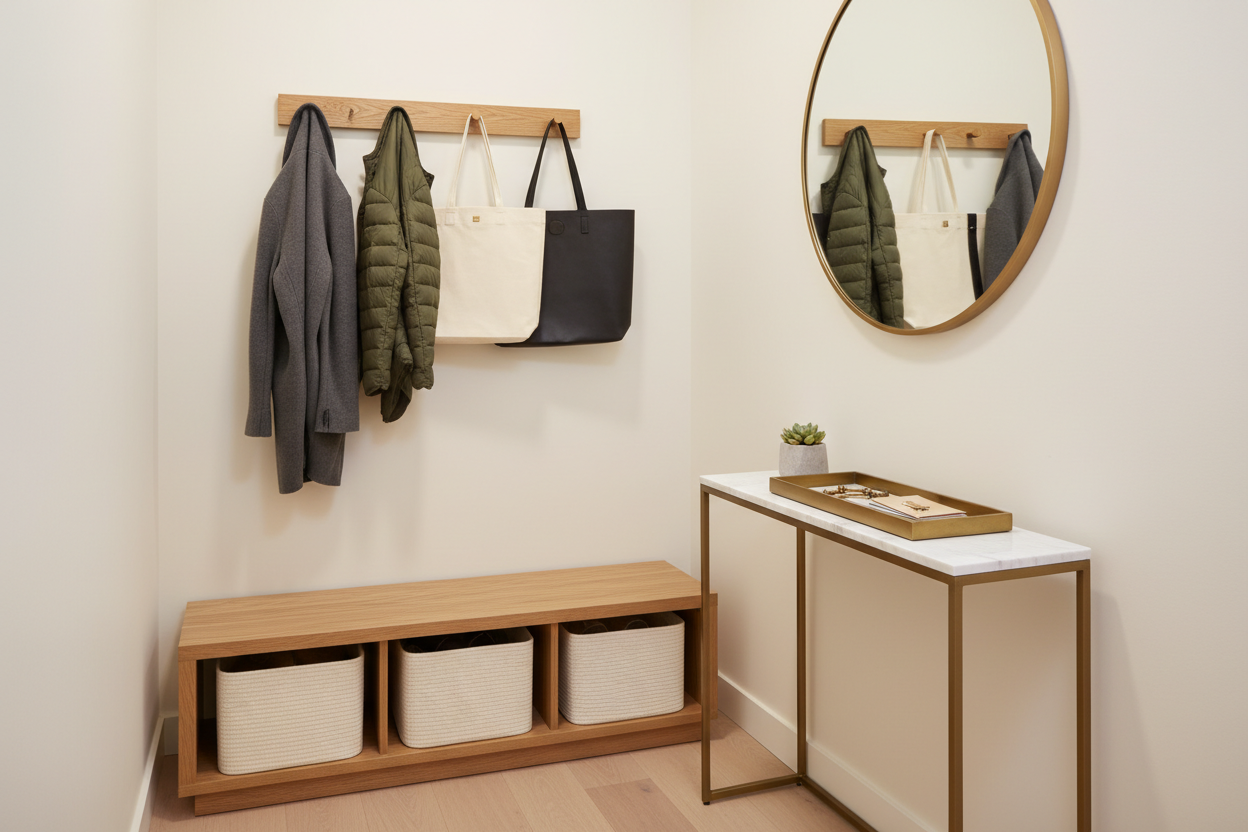
Walking through your front door should feel like a relief, not a collision course with clutter. For those of us living in condos or rentals, the foyer is often less of a grand hall and more of a narrow strip of flooring that barely separates the front door from the living room. Yet, this transitional space carries a heavy burden. It needs to catch keys, sort mail, store shoes, and set the tone for the rest of the home. Finding the right apartment entryway table is the secret weapon to turning that chaotic patch of floor into a functional command center.
The solution isn't just buying the smallest piece of furniture you can find. It is about understanding flow and vertical utility. You need a surface that acts as a landing strip without choking the walkway. Whether you have a long, dark hallway or a door that opens directly into the kitchen, a well-chosen console or shelf anchors the space. It tells guests (and your own brain) that you have arrived home.
The Reality of Apartment Foyers
I learned the hard way that ignoring the entryway leads to a messy apartment. In my first city rental, the door opened immediately into a narrow corridor. I didn't think I had room for furniture, so I skipped it. The result was inevitable: my keys ended up on the kitchen counter, my mail piled up on the dining table, and my bag lived on the floor where I constantly tripped over it. It wasn't until I installed a shallow, 8-inch deep floating shelf that the chaos subsided. That tiny sliver of surface area completely changed how I entered and exited my home. It gave me a dedicated spot to drop my things, keeping the rest of the living area pristine.
When you are hunting for an entryway table apartment living requires you to prioritize depth over width. Standard console tables are often 14 to 18 inches deep. In a suburban house, that works fine. In an apartment hallway, that can block traffic and make the walls feel like they are closing in. Look for pieces specifically labeled as "slim" or "narrow," ideally hovering around 10 to 12 inches in depth. If your hallway is truly tight, you want to maintain at least 36 inches of walking clearance creates a comfortable path. Anything less, and you will find yourself turning sideways to shimmy past your decor.
Choosing the Right Silhouette
Visual weight is just as important as physical dimensions. A solid oak cabinet with doors might fit physically, but it can make a small foyer feel heavy and cramped. Open-frame consoles with metal legs or glass tops are excellent for apartments because they allow the eye to travel through the furniture to the wall behind it. This trick of the eye makes the room appear larger than it actually is.
However, if your primary goal is hiding clutter, an open table might backfire. Seeing a jumble of dog leashes and reusable bags through a glass table doesn't scream "organized." In this case, a slim shoe cabinet is a brilliant alternative to a traditional table. These units tilt out, offering significant storage for footwear and miscellaneous items while remaining incredibly shallow against the wall. They provide a flat surface on top for styling but keep the messy reality of daily life tucked away behind closed drawers.
The Floating Solution
Renters often hesitate to drill holes, but a wall-mounted console is often the best entryway table apartment dwellers can choose. By keeping the floor visible underneath the unit, you maintain an airy aesthetic. This space underneath is valuable real estate, too. You can tuck two woven baskets beneath a floating shelf to hold umbrellas or slippers without them sprawling across the floor.
Styling for Function and Form
Once you have the furniture in place, the setup needs to work for you. The "drop zone" theory relies on having a specific vessel for loose items. Never leave the table surface completely bare, or it will become a magnet for junk. Place a small tray or ceramic bowl on the table specifically for keys and wallets. When items have a designated container, the table looks styled rather than messy.
Lighting is another element that transforms a dark apartment hall. Most rentals lack outlets in the hallway, making lamp placement difficult. A battery-operated lamp or a rechargeable sconce can add a warm glow that welcomes you home. If you have a mirror above the table—which you absolutely should to check your reflection before leaving—the light will bounce around the room, effectively doubling the sense of space.
Making It Personal
Your apartment entryway table is the first thing guests see, so it should reflect your personality, not just your organizational skills. A stack of two or three coffee table books can add height and color. Lean a piece of framed art against the wall if you aren't allowed to use nails. A tall vase with dried eucalyptus or branches adds vertical interest without requiring maintenance or sunlight, which is often scarce in apartment hallways.
The goal is to balance the utilitarian needs of leaving the house with the aesthetic joy of coming home. By selecting a piece that fits the scale of your apartment and styling it with intention, you reclaim that lost square footage. You turn a pass-through space into a functional room of its own.
Frequently Asked Questions
How much walking space do I need in front of my entryway table?
Ideally, you should aim for a minimum of 36 inches (3 feet) of clearance between the edge of the table and the opposite wall. If your hallway is narrower than that, consider a floating shelf or a semi-circle table to prevent hip-bumping accidents and keep the flow comfortable.
What can I use if a standard console table is too big for my apartment?
Look for "sofa tables," radiator covers, or wall-mounted floating shelves, which are typically much shallower than standard consoles. Shoe cabinets (like the IKEA Trones or Hemnes) are also popular alternatives because they offer closed storage while protruding less than 10 inches from the wall.
How do I style an entryway table without it looking cluttered?
Use the "rule of three" and group items of varying heights, such as a tall lamp, a medium plant, and a low catch-all tray. Crucially, use a tray or bowl to corral small loose items like keys and change; containing the mess makes the overall surface look intentional and tidy.

Leave a comment
This site is protected by hCaptcha and the hCaptcha Privacy Policy and Terms of Service apply.