










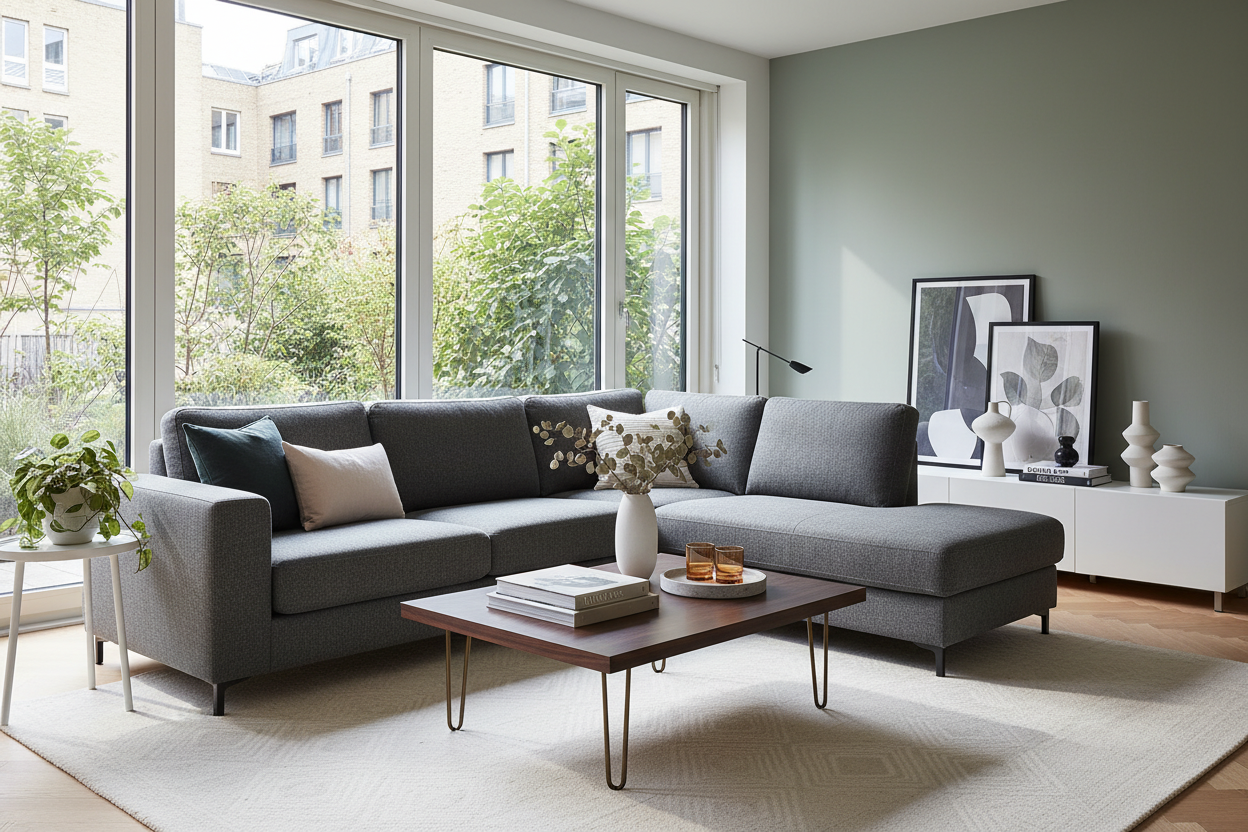
One of the most frequent design dilemmas I encounter isn't a lack of budget; it's a lack of cohesion. You purchase a comfortable sectional, add a coffee table, and suddenly the room feels crowded or, conversely, disconnected. The secret to a high-end aesthetic isn't necessarily custom furniture; it is mastering the spatial relationship between your ikea sofa with table selection. By focusing on scale, texture, and ergonomics, you can make flat-pack furniture look bespoke.
Quick Decision Guide: The Essentials
Before heading to the warehouse, consider these four critical factors to ensure your pairing works functionally and aesthetically:
- Scale & Proportion: The table should be roughly two-thirds the length of the sofa seat to maintain visual balance.
- Height Alignment: For standard sofas, the table should be the same height as the seat cushions or 1-2 inches lower.
- Material Contrast: Avoid matching wood tones perfectly. If the sofa leg is oak, try a metal, glass, or lacquer table to add depth.
- Traffic Flow: Ensure there is 14 to 18 inches of clearance between the sofa edge and the table for comfortable legroom.
Mastering Visual Weight and Balance
When curating a sofa set for living room ikea layouts, you must consider visual weight. A chunky, ground-hugging sofa like the KIVIK requires a table with some mass to it; pairing it with spindly, thin legs can make the table look fragile and out of place.
Conversely, if you have a leggy, airy frame like the SÖDERHAMN, a solid block table or a heavy wooden chest can ground the space, preventing the room from feeling like it is floating away. This interplay of heavy and light is what designers call "dynamic balance."
Materiality: Breaking the "Catalog" Look
A common mistake with a living room ikea sofa set is buying everything from the same series. While convenient, this often results in a sterile, showroom atmosphere. To elevate the design, introduce tactile contrast.
Mixing Textures
If you have chosen a velvet or heavy weave fabric for your seating, pair it with a sleek, hard surface like the VITSJÖ (glass and metal) or a marble-topped alternative. If your sofa is a smooth leather (like the MORABO), soften the hard lines with a warm, organic wood table like the STOCKHOLM or LISABO. This friction between soft and hard materials creates a sophisticated, layered environment.
Ergonomics and Functionality
Beyond aesthetics, the interaction between your ikea sofa with table must be functional. In smaller urban apartments, I often advise clients to skip the large central coffee table entirely. Instead, consider nesting tables or C-tables that slide over the sofa arm.
This approach improves flow in tight quarters and brings the surface to you—perfect for working on a laptop or resting a drink without leaning forward awkwardly. The goal is to minimize reach while maximizing floor space.
My Personal Take on IKEA Sofa with Table Pairings
I want to share a specific lesson from a project I worked on last year involving the popular SÖDERHAMN series. We paired it with a high-gloss white coffee table to keep the room looking modern and clean.
The Mistake: I didn't account for the remarkably low seat height of the SÖDERHAMN (which sits much lower than standard sofas). The table we chose was standard height (approx. 18 inches). Once assembled, the table towered over the seat cushions, making the sofa feel like a sunken pit and the table feel like a dining surface. It completely threw off the ergonomics.
The Fix: We swapped it for the low-profile TOFTERYD table. The lesson? Always measure the seat height of your sofa, not just the back height, before buying a table. Also, a quick note on the high-gloss finishes: they show micro-scratches from ceramic mugs almost immediately. I now always recommend styling them with a large tray or coffee table books to protect the "landing zone."
Conclusion
Creating a beautiful living space doesn't require a limitless budget, but it does require intentionality. By respecting proportions and embracing material contrast, you can pair an IKEA sofa with a table in a way that feels curated and personal. Measure twice, mind the gap, and don't be afraid to mix collections.
Frequently Asked Questions
How much space should be between the sofa and the coffee table?
The golden rule in interior design is 14 to 18 inches. This provides enough room to walk through without banging your shins, but keeps the table close enough to set down a drink comfortably.
Can I use a side table as a coffee table?
Absolutely. In fact, using two matching side tables side-by-side is a fantastic designer hack for long sofas or narrow rooms. It offers flexibility to move them around when you have guests.
Should the coffee table be lighter or darker than the sofa?
There is no strict rule, but contrast is key. If you have a dark charcoal or navy sofa, a light wood or glass table will pop. If you have a beige or white sofa, a black metal or dark walnut table provides a necessary focal point.

Leave a comment
This site is protected by hCaptcha and the hCaptcha Privacy Policy and Terms of Service apply.