










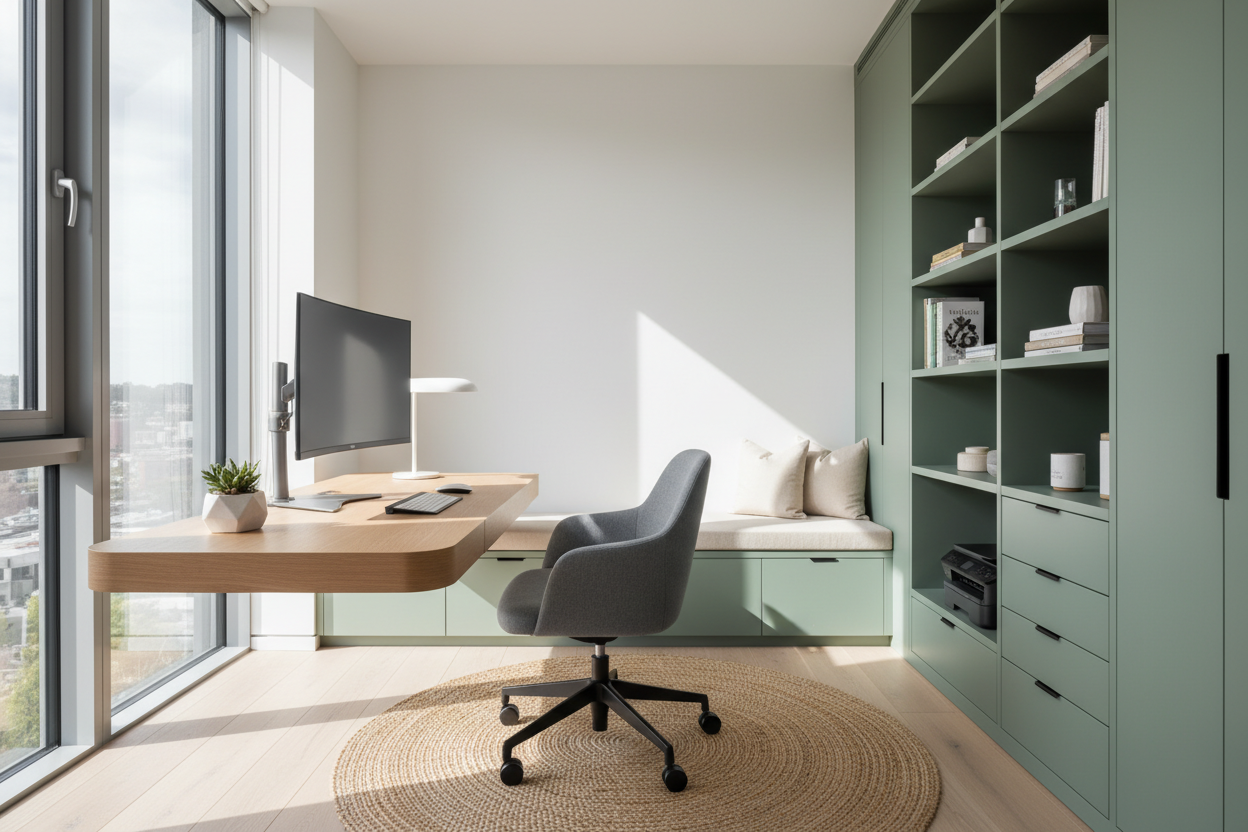
Square footage is often the first casualty in modern residential layouts, leaving many homeowners trying to squeeze a productive workspace into a closet, a nook under the stairs, or a cramped spare room. The challenge isn't just fitting a desk in; it is cultivating an environment that fosters focus without feeling claustrophobic. Successful small office design requires a shift in perspective—moving away from traditional corporate bulk toward streamlined, architectural intentionality.
Key Features to Look For in Compact Workspaces
Before purchasing furniture or choosing paint swatches, consider these core elements to ensure your space functions as well as it looks.
- Visual Weight: Opt for furniture with slender legs or glass tops to maintain sightlines and reduce the feeling of overcrowding.
- Vertical Utilization: Prioritize floor-to-ceiling shelving or wall-mounted units to free up valuable floor space.
- Ergonomic Scale: Choose task chairs and desks scaled for residential footprints, not sprawling executive suites.
- Multi-functional Lighting: Layer ambient, task, and accent lighting to define zones within a small footprint.
Mastering the Layout and Flow
When curating small office ideas for work, the placement of your primary assets is non-negotiable. The most common error I see is facing the desk directly against a blank wall. While space saving, it creates a stagnant visual field. Instead, aim for the "command position"—facing the door or a window. If you must face a wall, use a mirror or artwork with depth to artificially expand the horizon.
For a small office set up, traffic flow is paramount. Ensure you have at least 30 to 36 inches of clearance behind your chair for movement. If your room is narrow, consider a galley layout with distinct zones: a deep work surface on one side and shallow storage on the other.
Furniture Selection: Material and Scale
The Importance of Visual Weight
In modern office design ideas for small spaces, material selection dictates the room's perceived size. A heavy, solid oak double-pedestal desk will visually swallow a 10x10 room. Instead, look for materials that offer durability without bulk. Walnut veneers on engineered wood provide the warmth of timber with a lighter profile. Alternatively, acrylic or tempered glass desks effectively "disappear," making the small work office feel significantly larger.
Ergonomics in Tight Quarters
Many office design ideas for small spaces neglect the human body. A compact chair doesn't mean an uncomfortable one. Look for task chairs with a smaller wheelbase but full lumbar support. Avoid high-back executive leather chairs; they dominate the vertical space. A mid-back mesh chair offers breathability and a slimmer silhouette, crucial for maintaining an airy aesthetic.
Styling and Storage Solutions
Small office design inspiration often comes from verticality. Floating shelves are superior to bookcases in tight quarters because they keep the floor visible—a classic designer trick to trick the eye into seeing more space. When considering small office setup ideas, think about closed storage for the bottom third of the room (to hide cable clutter and paperwork) and open storage for the upper two-thirds (for books and decor).
Finally, color plays a massive role. Monochromatic schemes—where the walls, trim, and even shelving are painted the same hue—blur the boundaries of the room, making a small office setup design feel boundless rather than boxy.
My Personal Take on Small Office Design
In my fifteen years of designing interiors, the most frequent regret I hear from clients isn't about the desk size—it's about the chair clearance. I once designed a custom built-in for a client's small office design ideas for work project in a converted sunroom. We maximized the desk surface beautifully, but I initially overlooked the specific caster-base width of their preferred ergonomic chair.
Once installed, we realized the chair's base kept bumping into the baseboards, leaving scuff marks and limiting their swivel range. It was a functional nightmare. We had to swap the chair for a model with a 24-inch base rather than the standard 27-inch. Now, whenever I consult on a small office set up, I physically tape out the "swivel zone" on the floor. It’s an unglamorous detail, but in a small room, losing three inches of rotation can be the difference between a flow state and constant frustration.
Conclusion
Designing a compact workspace is an exercise in editing. By prioritizing scale, embracing vertical storage, and respecting the ergonomic envelope, you can create a studio that feels like a sanctuary rather than a cell. Trust the measurements, invest in visually light materials, and let the design work for you.
Frequently Asked Questions
What is the minimum size for a functional home office?
While you can fit a laptop desk in a hallway, a fully functional small office design generally requires a minimum footprint of 5x7 feet. This allows for a standard 48-inch desk and adequate chair clearance without impeding traffic flow.
How do I hide cables in a floating desk setup?
For a clean small office setup design, install a J-channel raceway underneath the desk surface to house power strips. Use paintable cord covers that run vertically down the wall, matching your wall color to make the cords virtually invisible.
Can dark colors work in a small office?
Absolutely. While white expands space, dark colors like charcoal or navy can blur corners and create a cozy, library-like atmosphere. This is particularly effective for modern office design ideas for small spaces where focus and mood are prioritized over perceived square footage.

Leave a comment
This site is protected by hCaptcha and the hCaptcha Privacy Policy and Terms of Service apply.