










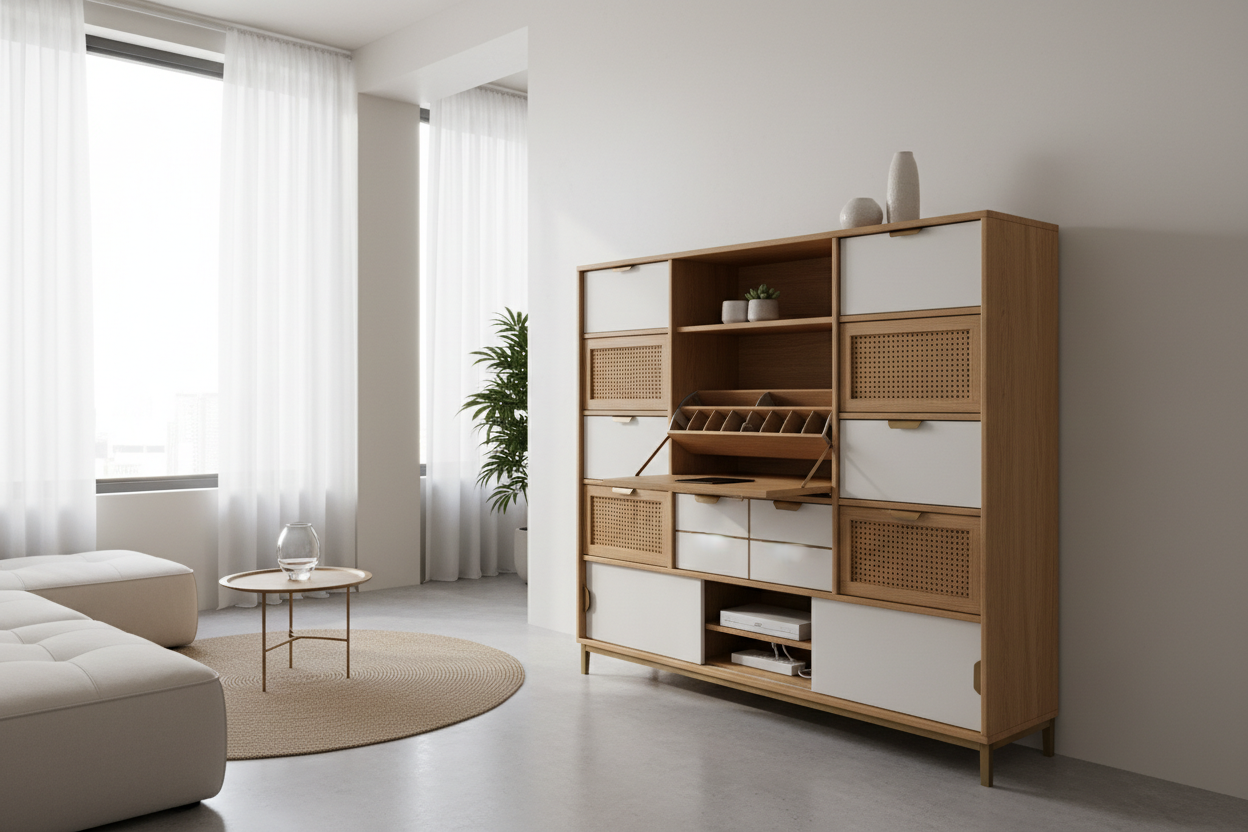
Clutter has a way of accumulating on flat surfaces. It starts with a few letters on the table, then keys on the counter, and suddenly, the room feels chaotic. The solution isn't always a massive renovation or buying an oversized wall unit. Often, the most effective fix is a small cabinet with doors tucked neatly into an unused corner. These compact furniture pieces work tirelessly to hide the mess while adding a layer of sophistication to your decor. Whether you are outfitting a studio apartment or just trying to organize a specific nook, finding the right storage piece changes the dynamic of a room instantly.
The Strategic Value of Short Storage
Vertical space gets a lot of attention in interior design, but there is immense utility in lower-profile furniture. A short cabinet with doors offers a unique advantage: it provides storage without visually overwhelming the room. By keeping the sightlines open at eye level, the space feels larger and airier. This makes a short storage cabinet with doors ideal for placing under windows, beneath wall-mounted TVs, or in narrow hallways where a tall unit would feel imposing.
I remember my first apartment, which had a frustratingly narrow entryway. Shoes and mail were a constant tripping hazard. I eventually found a small door cabinet that was shallow enough to fit against the wall without blocking the path. It became a designated landing strip. Keys went in a bowl on top, and the visual clutter of shoes vanished behind the panels. That simple addition of a small storage with doors completely shifted the energy of coming home from chaotic to calm.
Choosing the Right Configuration for Your Needs
Not all compact storage is created equal. The internal layout determines exactly how useful the piece will be for your specific items. If you have a mix of loose odds and ends—like charging cables, pens, or cutlery—you should look for a small cabinet with doors and drawers. The drawers catch the tiny items that usually get lost, while the cabinet section handles the bulkier objects.
For those needing to store books, binders, or stacked linens, a short cabinet with doors and shelves is the superior choice. The shelving provides structural organization, preventing stacks of items from toppling over. A small cabinet with shelves and doors allows you to categorize your belongings: towels on the top shelf, cleaning supplies on the bottom. If you are storing taller items, like vases or tall liquor bottles, adjustable shelving within a small storage cabinet with doors and shelves is a feature you shouldn't overlook.
Kitchen and Dining Solutions
The kitchen is often the battleground for counter space. A small cabinet with doors for kitchen use can serve as an auxiliary pantry or a coffee station. By moving the coffee maker and mugs to a small cupboard with door, you free up valuable prep space near the sink and stove. In a dining area, a small side cabinet with doors acts as a petite buffet, storing placemats and serving dishes that you don't use every day but still need accessible.
Style Meets Function: The Decorative Element
Storage doesn't have to be purely utilitarian. A small decorative cabinet with doors can serve as an accent piece that ties a room together. Think of intricate wood carvings, glass-paneled doors, or bold paint colors. Even a very small cabinet with doors can make a significant stylistic impact if it contrasts well with your existing furniture.
For a modern, minimalist look, you might opt for a mini cabinet with doors featuring high-gloss finishes and push-to-open mechanisms. Conversely, a rustic farmhouse vibe benefits from a small cabinet with door (singular) made of reclaimed wood with iron hardware. The goal is to view the storage cabinet with doors small enough to fit the space, yet bold enough to stand out as a deliberate design choice.
Utility and Bathroom Organization
Bathrooms and laundry rooms are notorious for having awkward, tight spaces. A small utility cabinet with doors is essential here. In the bathroom, a mini cabinet storage unit can slide next to the toilet or under a pedestal sink to hold extra toilet paper and cleaning products. These areas often require materials that can withstand humidity, so engineered wood or metal are often better choices than solid, untreated wood.
In a laundry room or garage, a short storage cabinet with doors and shelves proves invaluable for hiding detergents, tools, and pet supplies. The closed doors are particularly important here to keep potentially hazardous chemicals out of sight and out of reach of children or pets. A robust small storage cabinet with door keeps the visual noise of colorful cleaning bottles contained, making the utility space feel cleaner and more organized.
The Hybrid Approach: Drawers and Shelves
Sometimes you need the best of both worlds. A small cabinet with drawers and doors offers maximum flexibility. I use a unit like this in my home office. The top drawer holds printer paper and ink, while the lower cabinet section houses my reference books. This type of small shelf cabinet with doors ensures that unsightly stacks of paperwork can be tucked away instantly when guests arrive.
When shopping for these hybrid units, pay attention to the hardware. A small storage cabinet with shelves and drawers should have smooth-gliding runners and sturdy hinges. Since these are high-traffic furniture pieces, poor hardware is usually the first thing to fail. A small storage cabinet with door mechanisms that soft-close will also extend the life of the piece and reduce noise.
Final Thoughts on Placement
Before purchasing, measure your space three times. A short storage cabinet with doors might look tiny in a showroom with twenty-foot ceilings but can feel massive in a narrow hallway. Consider the swing radius of the doors. If space is extremely tight, you might need a unit with sliding doors rather than swinging ones. Whether you choose a small cabinet with doors for the hallway, kitchen, or bath, the key is ensuring it solves a specific storage problem while complementing the flow of your home.
Frequently Asked Questions
Can I stack small cabinets to create a taller unit?
Generally, it is not safe to stack cabinets unless they are part of a modular system designed for that purpose. Stacking units that aren't secured can lead to tipping hazards. If you do stack modular units, always anchor them to the wall for safety.
How do I choose between a cabinet with drawers versus shelves?
Choose drawers for small, loose items like keys, remotes, office supplies, or silverware that would clutter a shelf. Choose shelves for larger, stackable items like linens, books, dishes, or appliances. A combination unit is best if you have a mix of both.
What is the standard depth for a small hallway cabinet?
For narrow hallways and entryways, look for a cabinet with a depth between 10 to 15 inches. This depth is sufficient to store shoes or mail without obstructing the walkway or making the space feel cramped.


Leave a comment
This site is protected by hCaptcha and the hCaptcha Privacy Policy and Terms of Service apply.