










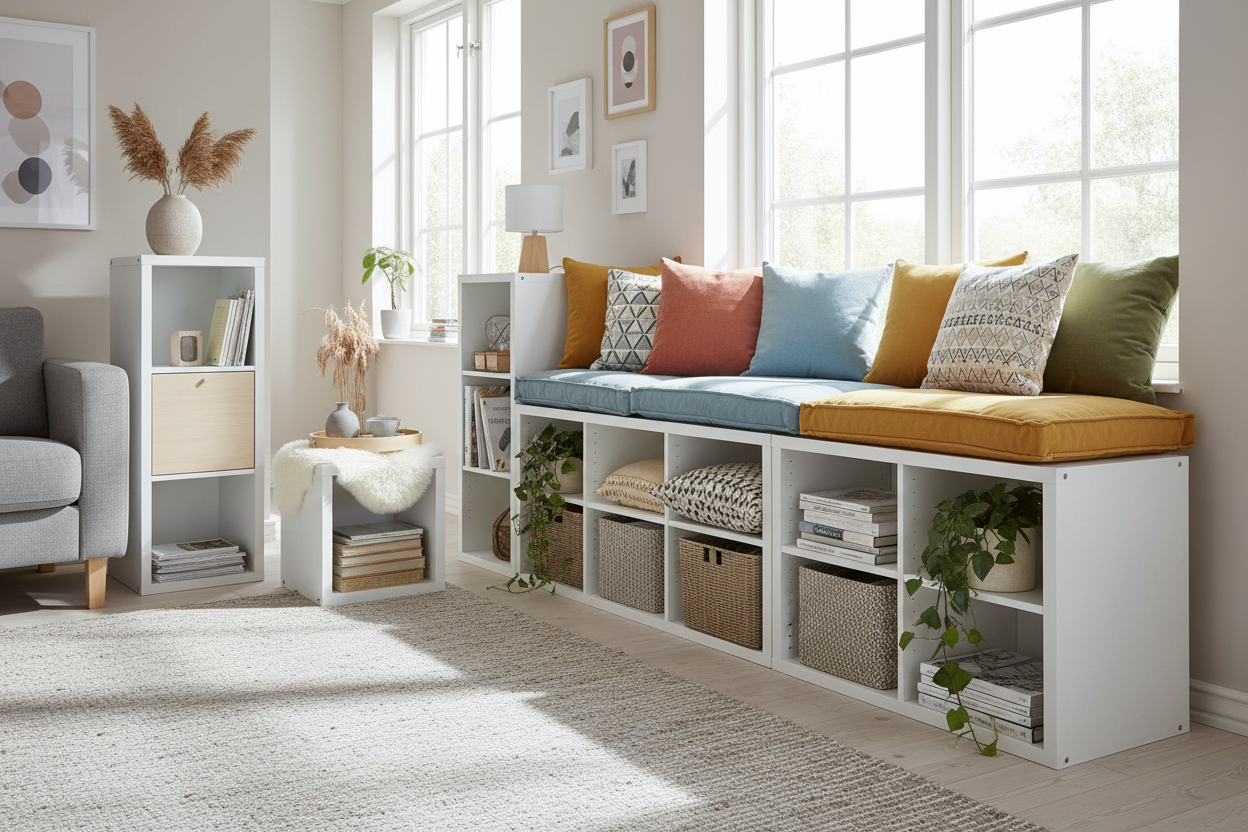
If you are looking for the ultimate multitasker in furniture, the IKEA cube seat is the answer. Whether you are eyeing the dedicated BOSNÄS footstool with storage or planning to flip a KALLAX shelving unit on its side to create a bench, these geometric pieces solve the perennial problem of limited space. They function as seating, hidden storage, and footrests all simultaneously, making them indispensable for studio apartments, chaotic entryways, and playroom organization.
The concept is simple: a hollow square structure that supports weight while swallowing up clutter. Unlike bulky armchairs or single-purpose coffee tables, a cube seat adapts to the moment. One minute it is holding a tray of drinks, and the next, it is providing an extra spot for a guest during game night. Let’s look at how to choose, style, and even hack these affordable pieces to fit your specific needs.
The Standalone Storage Cube: A Small Space Savior
The most straightforward version of this furniture category is the standalone ottoman, such as the BOSNÄS or similar seasonal variations IKEA releases. These are lightweight, usually upholstered in removable fabric, and hide a surprisingly deep compartment under the lid. They are fantastic because they essentially disappear into the room until you need them.
In a living room setting, these cubes work best in pairs. Placing two side-by-side in front of a sofa creates a flexible alternative to a traditional coffee table. You can separate them to create legroom or pull them apart when you have a full house. Because they are soft-sided, they are also much safer for toddlers who are prone to bumping into sharp wooden corners.
Maintenance is rarely a headache with these models. Most come with removable covers that you can throw in the washing machine. If you have pets that view furniture as scratching posts or nap zones, being able to bleach or wash the upholstery is a massive advantage over fixed-fabric furniture.
My Experience with the "Entryway Drop Zone"
I learned the value of cube seating the hard way in my second apartment. The hallway was incredibly narrow—barely wide enough for two people to pass—and shoes were constantly piling up in a chaotic mound near the door. There was no room for a proper bench, and putting on boots involved an awkward hopping dance while leaning against the wall.
I bought two simple storage cubes and placed them against the wall. Suddenly, the chaos vanished. The winter hats and dog leashes went inside the cubes, and the shoes were tucked neatly beside them. Having a dedicated place to sit while tying laces changed the entire flow of leaving the house. It wasn't a high-end renovation, but that small addition of functional seating made the apartment feel twice as organized.
Turning Shelves into Seating: The KALLAX Hack
A massive subculture exists around turning the IKEA KALLAX (formerly EXPEDIT) into seating. While sold as a shelving unit, the 4-cube and single-line variations are perfectly dimensioned to serve as a bench when laid horizontally. This is particularly popular for window seats and reading nooks.
To pull this off effectively, you need to address comfort. The hard laminate surface isn't inviting for long periods. You can purchase specific cushions made by third-party sellers that fit the dimensions perfectly, or you can go the DIY route. A piece of foam cut to size, wrapped in batting and fabric, and secured with velcro strips turns a hard shelf into a plush bench.
The beauty of this setup is the storage density. Underneath your seat, you have four large compartments. You can fill these with rattan baskets, fabric drawers, or leave them open for books. In a child's room, this is the gold standard for toy organization—everything is accessible at floor level, and cleanup is as easy as tossing items into the bins.
Styling and Customization
One criticism of flat-pack furniture is that it looks generic. However, the cube seat is practically a blank canvas. You don't have to settle for the stock look.
Changing the Legs
Most basic cube ottomans sit flush with the floor on tiny plastic glides. By drilling holes and adding wooden tapered legs or metallic hairpin legs, you instantly elevate the piece—literally and aesthetically. Raising the cube off the ground gives it a lighter, more mid-century modern appearance and makes vacuuming underneath much easier.
Upholstery Upgrades
If the standard IKEA grey or beige fabric clashes with your decor, recovering a cube seat is one of the easiest upholstery projects for beginners. Because the shapes are square, there is no complex pleating or curving involved. A staple gun and a yard of velvet or patterned cotton can transform a twenty-dollar item into something that looks like a boutique find.
Durability and Limitations
While these seats are versatile, you should manage your expectations regarding durability. These are not heirlooms. The hinges on storage ottomans can loosen over time if opened aggressively, and the foam on cheaper models may flatten after a few years of daily use.
For the shelf-turned-bench scenario, be mindful of weight distribution. The KALLAX is sturdy, but the internal honeycomb structure has limits. It handles sitting fine, but you wouldn't want to stand on it to change a lightbulb. If you plan to have heavy usage, reinforcing the back with a piece of plywood can add significant structural integrity.
Where to Use Them Beyond the Living Room
Don't limit these pieces to the lounge. In a bedroom, a cube seat at the foot of the bed stores extra blankets and provides a spot to put on socks. In a home office, a cube tucked under the desk can serve as a footrest during work hours and pull-out seating when a colleague or family member drops by.
They also shine in walk-in closets. Having a spot to sit while deliberating over an outfit adds a touch of luxury to the morning routine, while the internal storage keeps seasonal accessories like scarves or swimsuits out of sight but within reach.
Ultimately, the IKEA cube seat represents functional minimalism. It acknowledges that modern living spaces are shrinking and that every square inch of floor space needs to earn its keep. Whether you buy it ready-made or build it from a shelf, it is a tool for living smarter, not just a place to park your rear.
Frequently Asked Questions
How much weight can an IKEA cube seat hold?
Most standard IKEA storage ottomans like the BOSNÄS are rated for around 100kg (220 lbs). However, if you are using a KALLAX shelf as a bench, it is best to distribute weight evenly and avoid jumping on it, as the hollow-core construction is strong but can puncture under concentrated point loads.
Can I use the KALLAX insert cubes as seats?
No, the fabric or cardboard inserts (like DRÖNA boxes) that slide into the shelves are for storage only and cannot support any weight. The seating surface must be the frame of the shelving unit itself or a dedicated structure like a wooden ottoman.
Are the covers for IKEA ottomans machine washable?
Generally, yes. Most IKEA upholstered furniture features removable covers designed for machine washing, usually at 40°C (104°F). Always check the specific care tag inside the cover, as some velvet or faux leather variations might require dry cleaning or a damp cloth wipe-down instead.

Leave a comment
This site is protected by hCaptcha and the hCaptcha Privacy Policy and Terms of Service apply.