










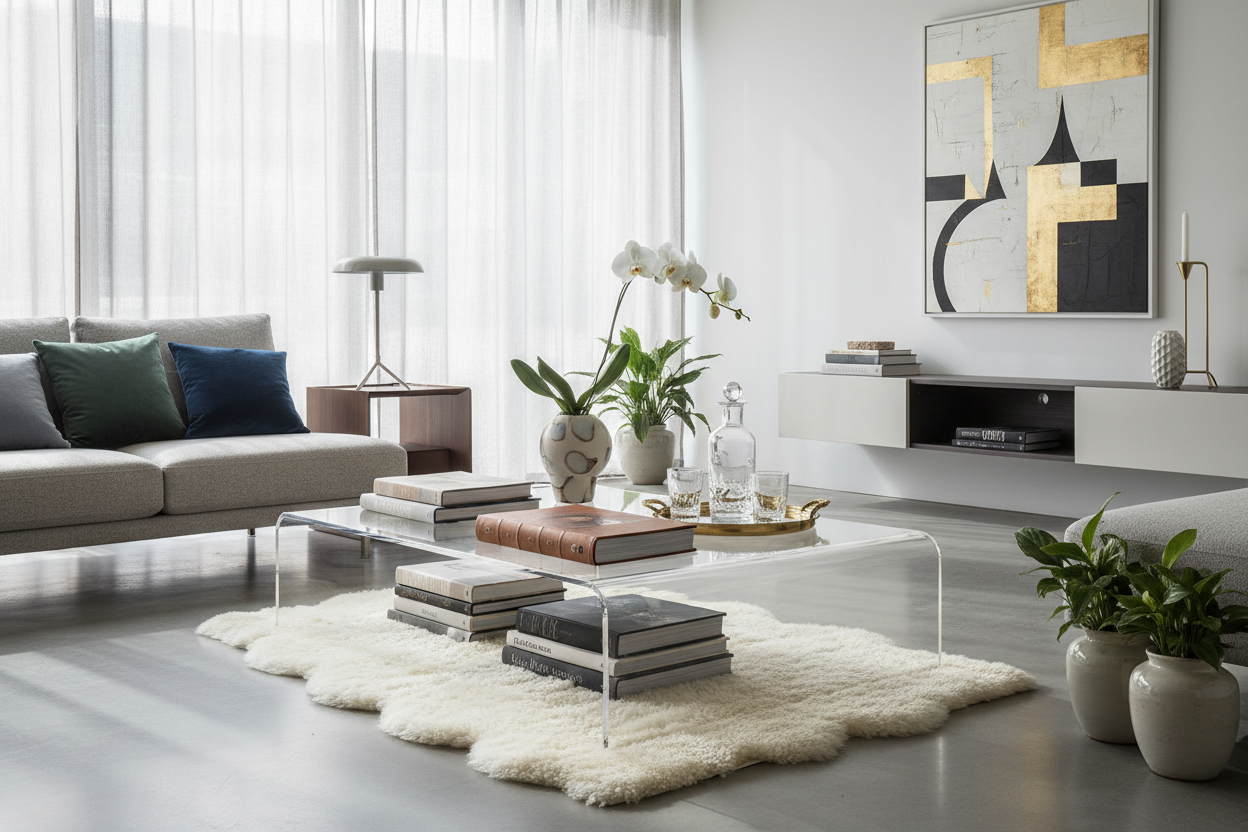
Does your living room feel cramped or visually chaotic? The dilemma often isn't the square footage, but the "visual weight" of your furniture. A heavy, solid oak chest in the center of a small room absorbs light and closes off the space. This is where the concept of the ikea acrylic coffee table becomes a vital tool in a designer's arsenal. By utilizing transparency, we can maintain functionality without sacrificing the perception of open space.
Key Features to Look For
- Visual Weight: Ensure the piece offers 100% transparency or high-gloss reflection to minimize its footprint.
- Material Composition: Distinguish between true acrylic (Lucite/Plexiglass) and IKEA’s tempered glass alternatives.
- Scale & Proportion: The table should be two-thirds the length of your sofa to maintain balance.
- Edge Finish: Look for polished or beveled edges to elevate the piece from "budget" to "bespoke."
The Power of Negative Space
In interior design, negative space is just as important as the furniture itself. When you introduce a transparent element, you are essentially tricking the eye. The floor continues underneath the table, making the room appear larger.
However, styling a clear surface requires discipline. Unlike a wooden table with drawers, there is nowhere to hide clutter. The surface becomes a display case for your floor rug and textures. If you are using a lucite coffee table ikea style piece, the rug underneath becomes the focal point. Ensure your rug has a rich texture—like a chunky wool loop or a vintage Persian—to provide the necessary contrast against the sleek, synthetic finish of the table.
Material Realities: Acrylic vs. Tempered Glass
Durability and Maintenance
While the search term often points to acrylic, it is important to note that IKEA frequently leans toward tempered glass for their transparent lines (like the Vittsjö or discontinued Tobias styling). True acrylic is warmer to the touch and has a softer impact sound, but it is prone to micro-scratches.
If you opt for a true acrylic piece (perhaps an IKEA hack using aftermarket acrylic legs on an IKEA top), be aware that it attracts dust via static. Tempered glass, conversely, is colder and heavier but far more resistant to the daily grind of coasters and keys. Choosing the right material depends on your household; I generally advise glass for homes with pets (claws scratch acrylic) and acrylic for low-traffic, high-style zones.
Elevating the Look: The Art of Layering
A common mistake with transparent furniture is leaving it completely bare, which can make a room feel sterile or "unlived in." To achieve that luxury aesthetic, you must anchor the floating object.
Use the "Rule of Three" for styling the surface. Start with a stack of coffee table books (visual weight), add an organic element like a sculptural driftwood piece or a tray of succulents (texture), and finish with a metallic object (sheen). This triad creates a vignette that draws the eye without blocking the view through the table.
My Personal Take on the IKEA Acrylic Aesthetic
I remember specifying a high-end Lucite table for a client in a compact city apartment, and then, for a guest room, we tried to replicate the look using an IKEA glass alternative to save budget. Here is the unpolished truth I learned from that project: lighting is the great equalizer.
When we placed the budget-friendly clear table near a south-facing window, the way the light passed through it made it look just as expensive as the custom piece. However, the maintenance reality was different. I noticed that on the acrylic surfaces, if you use a standard paper towel, you will instantly create "swirl marks" that ruin the crystal-clear finish. You must use a microfiber cloth. Also, a strange detail people rarely mention: acrylic has a static charge. In that project, dog hair magnetically clung to the legs of the acrylic table, whereas the glass/metal IKEA version repelled it. If you have a Golden Retriever, that static cling is a dealbreaker worth considering.
Conclusion
Whether you are sourcing a true acrylic piece or utilizing a glass alternative from IKEA, the goal remains the same: visual lightness. By carefully curating what goes under and on the table, you transform a budget-friendly item into a sophisticated centerpiece. Don't just buy furniture; curate your space for flow and light.
Frequently Asked Questions
How do I remove scratches from an acrylic coffee table?
For minor surface scratches, a specialized plastic polish (like Novus) works wonders. Apply it with a soft, lint-free cloth in a circular motion. Deep gouges, unfortunately, are often permanent, which is why coasters are non-negotiable.
Does acrylic furniture turn yellow over time?
High-quality acrylic is UV stabilized and should not yellow. However, cheaper plastics or vintage pieces exposed to direct, harsh sunlight for years may develop a warm tint. Keep this in mind regarding placement near large windows.
Can I sit on an IKEA acrylic coffee table?
Generally, no. Acrylic and glass coffee tables are designed for surface load (books, drinks), not dynamic weight (people). Acrylic is rigid but brittle under sudden pressure, and glass can shatter. Always check the manufacturer's max load rating.



Leave a comment
This site is protected by hCaptcha and the hCaptcha Privacy Policy and Terms of Service apply.