










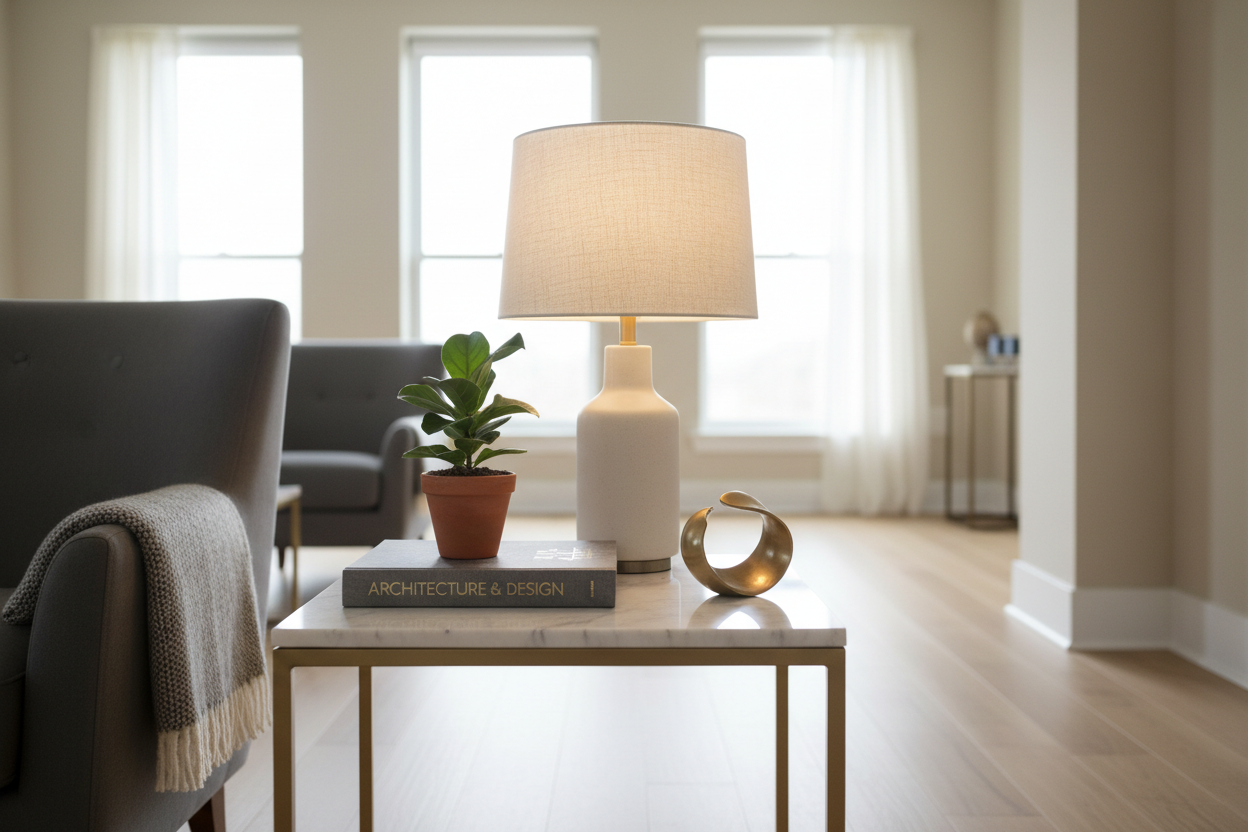
We often treat side tables as afterthoughts. They are the furniture pieces we scramble to buy after the sofa is delivered and the rug is laid down, almost as if they are merely functional necessities rather than aesthetic anchors. However, a well-chosen accent table does heavy lifting in a room. It bridges the gap between usability and style, providing that crucial landing pad for your morning coffee while balancing the visual weight of larger furniture items. If you have ever sat on a deep sofa with nowhere to set a drink, you understand that the absence of this piece is immediately felt.
The primary function is accessibility. A side table should be within easy reach of the seating it serves. If you have to lean forward awkwardly or twist your spine to put down a book, the piece is failing its ergonomic purpose. While aesthetics matter, the relationship between the height of the table and the arm of your chair or sofa is the single most critical factor in your decision-making process.
The Golden Rule of Height and Proportion
Scale is where most people get it wrong. A common mistake is selecting a piece that looks beautiful in a showroom but disappears next to a bulky sectional. The general rule of thumb is that your table surface should be equal to or just slightly lower than the arm of the seat next to it. We are talking about a variance of two inches, maximum. Anything higher feels imposing and risks elbows knocking over lamps; anything significantly lower forces an uncomfortable reach.
Visual weight is just as important as physical measurement. If you have a heavy, velvet Chesterfield sofa, a spindly wire-frame table might look flimsy and out of place. Conversely, a blocky, solid wood stump might look too heavy next to a mid-century modern chair with tapered legs. The goal is to create a dialogue between the pieces rather than a shouting match.
A Lesson Learned in Ergonomics
I learned the importance of functional dimensions the hard way a few years ago. I fell in love with a vintage low-slung Japanese lacquer table at an estate sale. It was gorgeous—deep red finish, incredible patina. I placed it next to a standard English roll-arm sofa in my living room. Visually, the color contrast was stunning. Functionally, it was a disaster. The table sat about four inches below the sofa cushion, not the arm.
Every time a guest visited, I watched them hesitate. They would hold their wine glass for the entire evening because the table felt too far away and too low to be safe. It eventually became a glorified magazine stack holder, and I had to replace it with a piece that actually served the human sitting next to it. That experience taught me that no matter how beautiful a designer side table is, it must serve the user first.
Materiality and Texture
Once you have the dimensions sorted, the fun begins with materials. This is your opportunity to introduce contrast. If your room is dominated by soft upholstery and wool rugs, you don't need more fabric. You need hard, reflective, or natural surfaces to break up the monotony.
Wood and Warmth
Wood remains the standard for a reason. It adds immediate warmth and organic texture. However, the finish dictates the vibe. Raw, live-edge woods suggest a rustic or organic modern aesthetic, while high-gloss walnut or lacquered finishes lean toward traditional or glam styles. Be mindful of water rings; if you are not the type to use coasters religiously, you might want a sealed finish or a different material entirely.
Metal and Glass
For smaller rooms, the design of side table structures often leans toward glass or acrylic tops. These materials allow light to pass through, reducing the visual footprint of the furniture. This is a classic trick for making a tight corner feel less cluttered. Brass, blackened steel, or chrome bases add a jewelry-like quality to the room, catching the light and drawing the eye.
Stone and Ceramics
Marble, travertine, and ceramic stools are having a major moment. They provide weight and permanence. A heavy stone cylinder can ground a floaty, light-colored room. These are virtually indestructible regarding spills, though acidic liquids can etch polished marble. Ceramic garden stools are excellent versatile options because they can easily move from indoors to outdoors depending on your entertaining needs.
Solutions for Compact Living
Urban living often requires creative solutions, and small tables design has evolved significantly to meet this demand. You no longer have to sacrifice surface area for floor space. The C-table is perhaps the most brilliant invention for tight quarters. The base slides under the sofa while the top hovers over the cushion, providing a surface that takes up zero walkable floor space. It is perfect for working on a laptop or eating dinner while watching a movie.
Nesting tables are another powerhouse for small footprints. They offer the flexibility of three surfaces when you have company, which can then be tucked away into a single unit when the guests leave. This tiered look also adds architectural interest to a room, preventing the furniture arrangement from looking too static or linear.
Mixing vs. Matching
Gone are the days when you bought a "living room set" where the coffee table matched the end tables, which matched the TV stand. That approach tends to make a home look like a generic furniture catalog. A curated home relies on mixing styles. If you have a matching pair of lamps, try using mismatched side tables to break up the symmetry. Perhaps one is a round antique wood table, and the other is a modern ceramic drum.
The key to mixing is maintaining a common thread. This could be a similar color palette, a shared material (like brass legs on both), or comparable visual weight. If you do choose to have identical tables on either side of a sofa, ensure the styling on top of them is different to keep the look fresh and lived-in.
Final Thoughts on Placement
Don't limit these pieces to the living room. A well-placed side table next to a bathtub holds a book and a candle perfectly. In a hallway, a slim pedestal table can hold a tray for keys. The versatility of these small surfaces allows you to constantly reinvent your space without buying new furniture. By focusing on the interplay of height, material, and utility, you transform a simple surface into an integral part of your home's design language.
Frequently Asked Questions
How much space should be between the side table and the sofa?
Ideally, you should leave about two to three inches of space between the edge of the sofa and the side table. This is close enough to reach your drink effortlessly but far enough to prevent the furniture from looking crowded or rubbing against each other.
Can a side table be taller than the sofa arm?
It is generally better for the table to be level with or slightly lower than the arm. However, if the table is taller, try to keep the difference within two or three inches. Anything taller can make the person sitting on the sofa feel boxed in and makes the table prone to being bumped.
Should my side tables match my coffee table?
No, they definitely do not need to match. In fact, avoiding a matching set usually results in a more professionally designed, layered look. Instead of matching, try to coordinate them by linking an element, such as a similar wood tone, metal finish, or design era.

Leave a comment
This site is protected by hCaptcha and the hCaptcha Privacy Policy and Terms of Service apply.