




Understanding Footrest and Leg Rest Mechanisms in Task Seating
Modern work routines frequently blur the boundary between focused typing sessions and extended reading or contemplation. While conventional task seating maintains an upright posture focused entirely on keyboard interaction, office chairs with footrests offer a convertible design. Incorporating a retractable leg support directly underneath the seat chassis transforms a standard desk chair into a recline-ready lounge platform without requiring a separate ottoman.
Understanding how these dual-purpose chairs operate requires a closer look at the mechanical connection between the seat base, the extending frame, and the backrest tilt mechanism. When properly integrated, an office chair with footrest provides smooth transitions, allowing users to switch between task mode and relaxed viewing postures throughout the working day.
Slide-Out Telescopic Rails vs. Fold-Under Linkages
The majority of desk chair with footrest models utilize one of two deployment systems: parallel telescopic rails or folding multi-bar linkages. Telescopic rail configurations rely on dual steel rods that glide forward along low-friction track guides mounted beneath the seat pan. In everyday desk tasks, the footrest cushion remains tucked flush beneath the front edge of the seat, preserving standard knee drop and floor contact.
When you want to elevate your legs, the platform slides outward horizontally, and the padded rest flips upward along a hinge axis to create an elevated support surface. Fold-under scissor linkages operate similarly but utilize pivoting arms rather than sliding tubes. Slide-out rail systems generally offer straightforward deployment and a tidy profile when stowed, keeping moving hardware safely tucked away from wandering feet and caster wheels.
Padded Platform Geometries and Calf Support Fit
The comfort of an ergonomic chair footrest depends heavily on cushion geometry. Because human leg lengths vary, a well-designed foot support targets the mid-to-lower calf area rather than the heels alone. Contoured platforms with curved outer edges reduce pressure along the achilles tendon and encourage natural leg alignment.
Platform width also plays a decisive role in freedom of movement. A wide, gently padded surface allows subtle posture shifts, letting you cross your ankles or alter foot angles without slipping off the support edges. When stowed, a low-profile platform ensures that the underside of the chair remains clean and unobstructed, preventing knee-well modesty panels or desk frames from catching on protruding upholstery.
Recline Architecture and Center of Gravity Balance
Pairing an extended leg platform with an adjustable backrest introduces dynamic changes to seating equilibrium. When you sit upright, your body weight rests squarely above the central gas lift cylinder. Extending the footrest and tilting backward transfers a notable portion of your mass rearward, demanding thoughtful structural engineering across the tilt plate and base.
Tilt-Lock Positions and Multi-Angle Ergonomics
Ergonomic office chairs with footrest features usually integrate multi-stage recline locks. Rather than relying solely on free-floating spring tension, these chairs allow users to secure the backrest across distinct angular zones:
- Upright Focus Mode: Locks near vertical alignment, supporting proper spinal posture during keyboard entry and active screen work while the footrest remains tucked away.
- Engaged Recline: Tilted slightly backward to alleviate lumbar pressure during virtual meetings or passive reading, with or without partial footrest extension.
- Full Rest Recline: Tilted deeply backward, pairing open back angles with fully extended leg elevation for reading reports, listening to presentations, or enjoying screen breaks.
A dependable tilt mechanism pairs positive lock pins with adjustable tension controls, ensuring that the transition into recline feels controlled rather than sudden.
Five-Star Base Stability and Caster Placement
Stability during deep recline depends on the diameter and structural rigidity of the five-star wheelbase. If a base diameter is too narrow, extending the leg rest while leaning backward can induce an unsettled sensation. Quality executive chair with footrest designs counter this by widening the wheel spread, ensuring the combined center of gravity of the chair and occupant stays firmly centered within the footprint of the casters.
Weight distribution also affects rolling behavior. Premium nylon or urethane casters provide stable contact across hard surfaces and low-pile rugs, preventing unintended drifting when pushing off the desk into a reclined stance.
Spatial Planning: Dual Footprints and Desk Clearance Zones
One of the most critical considerations when choosing an office chair with footrest is room clearance. Unlike a standard task chair that occupies a relatively fixed zone, a chair with an extendable leg rest operates with dual footprints: a compact desk footprint and an expanded lounge footprint.
Under-Desk Knee-Well Depth and Crossbar Interference
Before introducing a footrest chair to your workstation, evaluate the knee well beneath your desk. Standard desks often incorporate modesty panels, structural reinforcement bars, or wire management trays positioned beneath the primary desktop surface. When searching for a matching setup from a computer desk collection, ensure the vertical and horizontal clearance easily accepts the lower bracket of the chair.
If a desk features low-hanging horizontal aprons or narrow drawer pedestals, an oversized chair mechanism might bump against the cabinetry when pulled close for typing. Verifying that the clearance depth allows both full pull-in and smooth rail extension keeps daily transitions effortless.
Perimeter Turning Radius and Recline Push-Back Zones
Beyond under-desk volume, consider the clear space behind the workstation. Fully extending the leg rest while tipping the backrest rearward requires generous floor clearance behind the primary seating zone. Positioning the workstation too close to bookshelves, credenzas, or interior walls limits your ability to use the recline functions comfortably.
In my experience configuring compact workspaces, mapping out at least a clear turning perimeter behind the desk ensures you can pivot freely without clipping surrounding storage cabinets.
Material Selection: Upholstery, Cushioning, and Mechanical Hardware
Because an office chair with leg support incorporates moving mechanical assemblies and multi-zone contact surfaces, material selection directly influences long-term durability and ease of care.
Breathable Mesh vs. Padded Executive Leather Upholstery
Choosing between breathable mesh and padded leather upholstery hinges on climate preferences and personal comfort priorities:
- High-Density Foam and Leather Upholstery: Classic executive chairs favor supple bonded or synthetic leather wrapped around dense foam cushions. This provides a plush, enveloping feel that supports calves gently during long review sessions, while offering easy wipe-down cleaning.
- Breathable Mesh Construction: Mesh designs optimize continuous air circulation, preventing heat buildup along the backrest and seat. When combined with a padded fabric footrest platform, mesh seating keeps work environments thermally balanced through changing seasons.
- Woven Fabric Finishes: Heavy-duty fabric textiles deliver soft tactile contact, resisting surface friction from pants and shoes along the leg rest without displaying premature wear.
Hardware Durability: Steel Slides, Hinges, and Lock Pins
The mechanical longevity of a chair with foot rest depends on structural frame components. The slide rails must support extended leg weight without bending or rattling. Look for solid steel extension tubes, reinforced pivot brackets, and secure stopper caps at the end of sliding channels. High-grade connection hardware prevents the foot platform from tilting unevenly over years of daily extension and retraction.
Coordinating Footrest Chairs with Home Office Workstations
Integrating an ergonomic desk chair with footrest into a curated home office requires balancing functional ergonomics with cohesive room aesthetics.
Corner Desks and Open Knee-Well Layouts
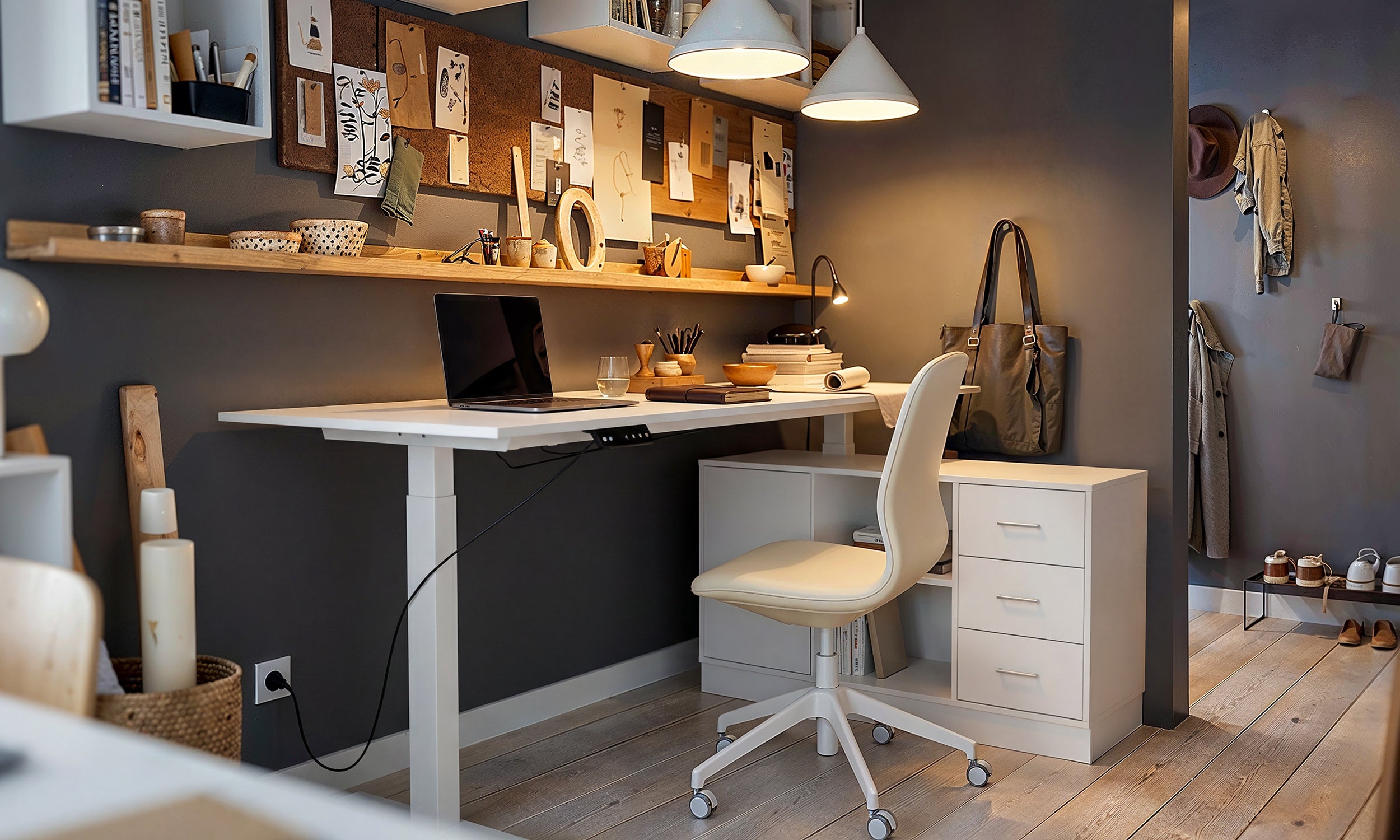
Workspaces that utilize spacious corner setups offer ideal geometry for chairs with built-in footrests. An expansive configuration, such as an office computer desk product featuring an open corner return, provides unobstructed knee-well volume. This open-format architecture allows the chair to swivel freely in multiple directions, letting you turn toward secondary monitors or recline comfortably away from keyboard peripherals without colliding with side panels.
Streamlined Writing Desks and Dual-Purpose Study Corners
In smaller multifunctional spaces, such as bedrooms or guest studies, compact writing tables demand visual order. Choosing a streamlined chair allows you to maintain clean sightlines when work concludes. When styling these environments, following an elevate desk office guide helps balance practical task tools with tasteful desktop decor, creating an organized zone where an executive footrest chair blends seamlessly rather than dominating the floor plan.
Assembly, Adjustment Routine, and Maintenance Checklist
Proper assembly and routine maintenance keep an office desk chair with footrest operating quietly and securely. Just as innovative space-saving furniture benefits from smart mechanics—a principle explored in our elevate office pull guide—retractable seating mechanisms reward attentive care.
Assembly and Setup Points
- Inspect Slide Bracket Alignment: During initial assembly, verify that both telescopic guide rails seat evenly in their mounting brackets. Misaligned rails can bind or scrape when pulled outward.
- Fasten Central Mounting Bolts Securely: Check that the under-seat tilt control plate is tightened uniformly against the seat bottom to eliminate creaks during recline.
- Test Flip-Plate Tension: Confirm that the hinge pin connecting the footrest pad to the guide rods moves smoothly without loose play or excessive friction.
Ongoing Care Routine
- Periodic Hardware Inspection: Every few months, quickly inspect under-seat fasteners and leg rest guide screws, tightening any fittings that have loosened from regular movement.
- Track Cleaning: Wipe down metal slide rods occasionally with a dry microfiber cloth to remove dust particles and maintain effortless glide action.
- Upholstery Maintenance: Clean the footrest cushion according to fabric care guidelines to remove light scuffs or dust deposited by footwear during daily use.
By pairing a well-engineered footrest mechanism with appropriate room clearances and a complementary desk layout, an office chair with footrest delivers an adaptable seating solution that supports both intense daily output and comfortable moments of pause.


Leave a comment
This site is protected by hCaptcha and the hCaptcha Privacy Policy and Terms of Service apply.