










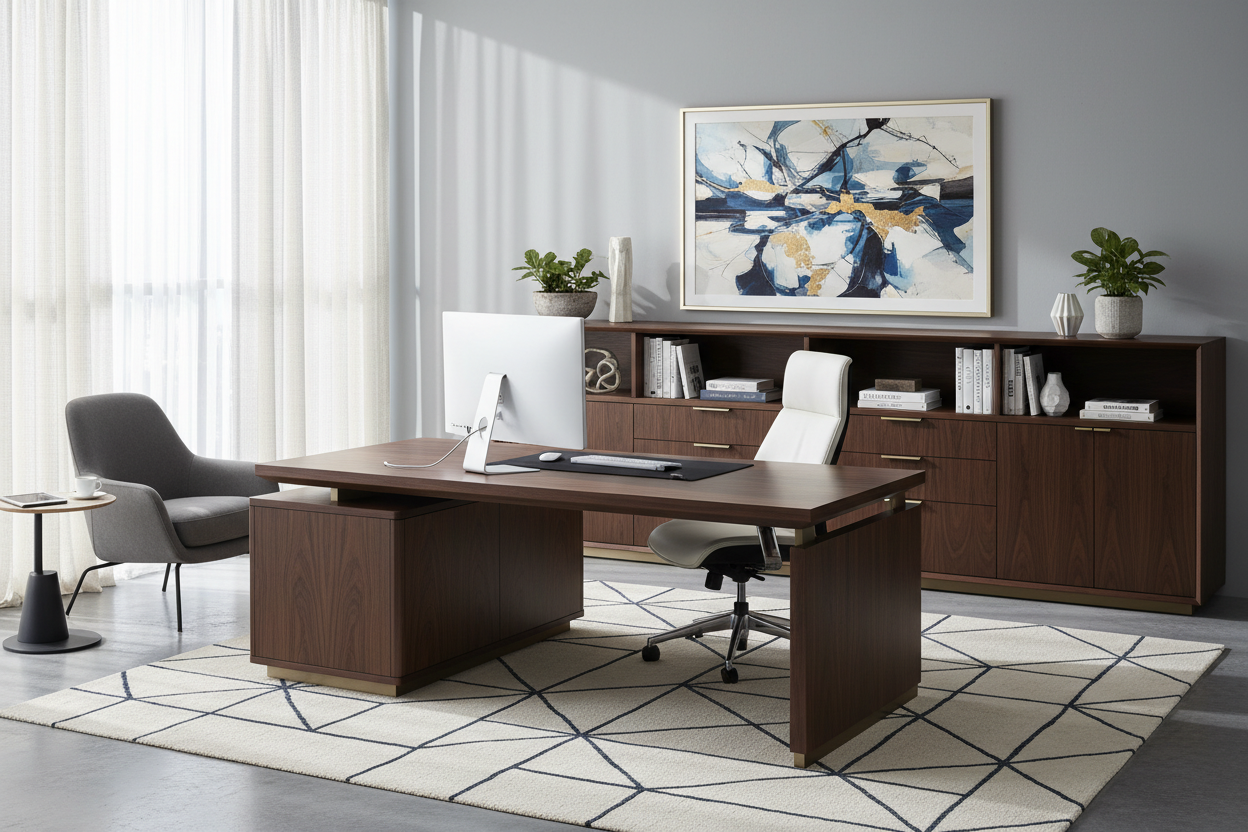
In interior design, the primary desk often gets all the glory, but the true workhorse of a functional workspace is the storage behind it. If you are struggling with surface clutter or a lack of organizational flow, the issue usually isn't your desk—it's the absence of a proper support system. Integrating the right office credenza office setup is the most effective way to balance visual weight with high-performance utility.
Key Features to Look For
- Depth & Clearance: Ensure the unit is at least 18-20 inches deep if you plan to use it as a secondary workspace or computer credenza desk.
- Cable Management: Look for pre-drilled grommets or ventilated back panels to manage tech heat and wires.
- Material Continuity: Decide if you need a matching desk and credenza for a cohesive executive look or contrasting textures for a modern vibe.
- Storage Configuration: Analyze your needs—do you require lateral file drawers, open shelving for display, or cabinets for concealing printers?
Orchestrating the Layout: The Desk and Credenza Relationship
The relationship between your office desk and credenza dictates the ergonomics of your room. In my design practice, we rarely place a desk in isolation. The most efficient layout is the "modified galley" or the L-shape configuration.
The Executive Setup
For a commanding presence, an executive desk and credenza set is the gold standard. By placing the executive desk with credenza behind it, you create a zone of authority. This allows the main desk to remain pristine for client meetings or focused work, while the credenza desk behind houses your monitors, phone systems, and paperwork. This separation of "front stage" and "back stage" is crucial for mental clarity.
The Home Office Solution
In residential spaces, footprint is often limited. A home office desk and credenza set needs to be more agile. I often recommend a desk with sideboard arrangement where the credenza acts as the anchor against a wall, and the desk floats perpendicular to it. This T-shape or L-shape allows you to pivot between tasks without rolling your chair across the room. For tighter spots, a small credenza desk can actually serve as the primary workstation if it has a knee-hole opening.
Materiality and Aesthetics
Choosing between a solid wood credenza desk and a laminate or veneer option is about more than just budget—it is about longevity and environment.
Solid Wood vs. Veneer
A wood desk and credenza in walnut or oak brings warmth and gravitas. However, be mindful of humidity control in your office. Solid wood expands and contracts. For a modern desk and credenza look that is more resistant to warping, high-grade architectural veneers are often superior. They offer the grain pattern of a wood credenza desk but with better stability for heavy equipment.
Modern Styles
If your taste leans toward the contemporary, look for a modern executive desk and credenza set featuring mixed materials—think matte lacquer fronts paired with brushed brass hardware or glass tops. A white desk and credenza can make a small, windowless office feel significantly larger and airier.
Functionality: The Tech Factor
We are long past the days of paper-only offices. Today, you are likely looking for a computer desk with credenza capabilities. This means the unit must accommodate hardware. A desktop credenza (a hutch that sits on top) can add vertical storage, but be careful not to close in the room visually. For a cleaner look, opt for a low credenza desk with drawers that includes a pull-out keyboard tray or a designated CPU cabinet with ventilation.
Lessons from My Own Projects
I learned the hard way that dimensions on a spec sheet don't always translate to reality. I once specified a stunning, high-end writing desk with matching credenza for a client's home library. The finish was exquisite, and the desk credenza combo looked perfect on the floor plan.
However, I failed to account for the depth of the client's laser printer plus the power cord sticking out the back. The credenza was 18 inches deep; the printer required 22 inches of clearance to sit safely without hanging over the edge. We ended up having to pull the unit four inches off the wall, which ruined the built-in look we were aiming for. Now, I always carry a tape measure for the client's actual hardware before buying any office furniture desk and credenza. Always measure your peripherals, not just the room.
Conclusion
Whether you choose a grand executive credenza desk or a modest writing desk and credenza set, remember that this piece of furniture is an investment in your productivity. By clearing your primary workspace and offloading the clutter to a well-designed credenza, you allow yourself the mental space to focus on what truly matters.
Frequently Asked Questions
What is the standard height for an office credenza?
Most office credenzas stand roughly 29 to 30 inches high, matching the standard height of a desk. This allows for a seamless secondary work surface. However, some credenza office desk storage units are lower (around 24-26 inches) if they are meant strictly for storage and not as a workspace.
Can I mix a vintage credenza with a modern desk?
Absolutely. In fact, a desk with matching credenza can sometimes feel too "corporate" for a home office. Pairing a sleek, glass modern desk with a vintage mid-century teak credenza creates a curated, eclectic look that adds character to the space.
How much space do I need between my desk and credenza?
To comfortably rotate in your chair and access drawers, you need a minimum of 42 inches between the edge of your office desk with credenza behind it. If it is a tight squeeze, 36 inches is the absolute minimum, but it may feel cramped.

Leave a comment
This site is protected by hCaptcha and the hCaptcha Privacy Policy and Terms of Service apply.