










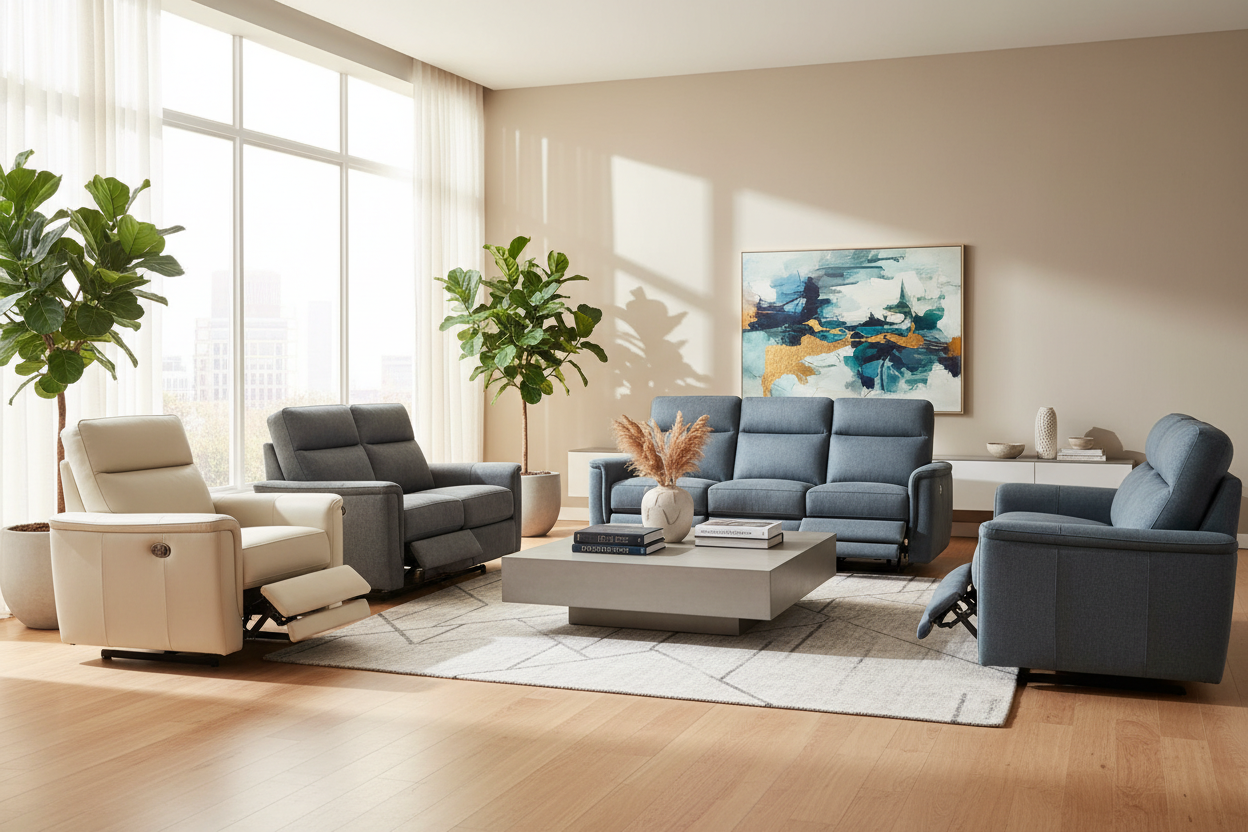
For years, there was a silent war in interior design: the battle between aesthetic integrity and the undeniable comfort of motion furniture. Clients often beg for relaxation but fear the bulky, overstuffed "cinema room" look overtaking their formal living spaces. Fortunately, the landscape has shifted. Today, high-end recliner sofa sofas offer sleek silhouettes that rival stationary architectural pieces, allowing you to prioritize ergonomics without sacrificing style.
Key Features to Look For
- Wall-Hugger Mechanism: Essential for smaller rooms; allows the sofa to be placed within inches of a wall.
- Upholstery Grade: Look for top-grain leather or high-performance Crypton fabrics for longevity.
- Frame Construction: Kiln-dried hardwood frames prevent warping and squeaking over time.
- Motor Quality: A smooth, whisper-quiet motor indicates a superior internal mechanism compared to jerky manual levers.
- Modular Backs: Removable backs are crucial for maneuvering large pieces through standard doorways.
Balancing Silhouette and Visual Weight
The primary design challenge with motion furniture is "visual weight." Traditional recliners often look heavy and anchor a room too aggressively. When selecting a furniture sofa recliner, I always advise clients to look for track arms rather than rolled arms. Track arms provide a cleaner, linear profile that helps the piece feel less imposing.
Additionally, pay attention to the leg clearance. While most recliners sit flush to the floor to hide the mechanism, newer models feature high-leg designs that expose a few inches of flooring. This simple detail creates a sense of airiness, making the room feel larger and the furniture less blocky.
Material Selection: Tactile and Functional
Choosing the right material is about more than just color; it is about how the fabric interacts with the movement of the piece. Leather is a classic choice for a reason—it moves fluidly with the mechanism and doesn't bunch up as easily as loose-weave linens might.
Leather vs. Performance Fabric
If you opt for leather, ensure it is full-aniline or semi-aniline. Corrected-grain leathers can feel stiff and may crack with the repetitive motion of reclining. If you prefer a softer touch, opt for a heavy-weight velvet or a tight-weave performance blend. These materials can withstand the friction caused by the reclining action without pilling.
Space Planning and Traffic Flow
A common error I see in floor plans is failing to account for the sofa at full extension. A standard sofa requires roughly 36 inches of clearance for a walkway; a recliner needs that plus the length of the footrest extension. When mapping out your room, measure the sofa in its fully open position. If the footrest hits your coffee table or blocks the path to the kitchen, the flow of the room is broken. Consider pairing your recliner sofa with nesting tables or a narrow oval coffee table to maintain circulation paths.
My Personal Take on Recliner Sofa Sofas
I learned a hard lesson early in my career regarding motion furniture. I specified a gorgeous, Italian-leather electric recliner for a client living in a historic brownstone. We measured the floor space perfectly, but we forgot one critical detail: the turn radius of the hallway.
The sofa arrived, and it was a nightmare. It physically wouldn't fit through the door. That experience taught me to exclusively buy motion furniture with removable backs. Now, when I inspect a showroom piece, I don't just sit in it. I reach between the back cushion and the seat deck to feel for the release clips. If the back doesn't come off, I usually won't recommend it for urban homes.
Another detail I always check is the sound. I once had a client return a piece because the electric motor had a high-pitched whine that drove their dog crazy. A quality motor should produce a low, dull hum—or ideally, silence. It’s these unpolished, practical details that determine whether you love the furniture in six months or regret it.
Conclusion
Integrating motion furniture into a sophisticated design scheme is no longer a compromise—it is a smart investment in your home's livability. By focusing on streamlined silhouettes, durable textiles, and proper spatial planning, you can enjoy the luxury of a recliner without disrupting the elegance of your living room.
Frequently Asked Questions
How much wall clearance do I need for a recliner sofa?
Standard recliners often need 12 to 18 inches of clearance. However, "zero-clearance" or "wall-hugger" models are designed to slide forward on a track, requiring as little as 3 to 5 inches of space behind the sofa.
Are power recliners better than manual ones?
From a longevity standpoint, power recliners often outlast manual ones because the motion is controlled and smooth, reducing wear on the frame. Manual levers can lead to jarring movements that loosen joints over time.
Can I put a rug under a reclining sofa?
Yes, but ensure the rug is large enough that the sofa's metal mechanism doesn't catch on the edge of the rug when extending. A low-pile rug is generally safer and causes less friction for the moving parts.



Leave a comment
This site is protected by hCaptcha and the hCaptcha Privacy Policy and Terms of Service apply.