










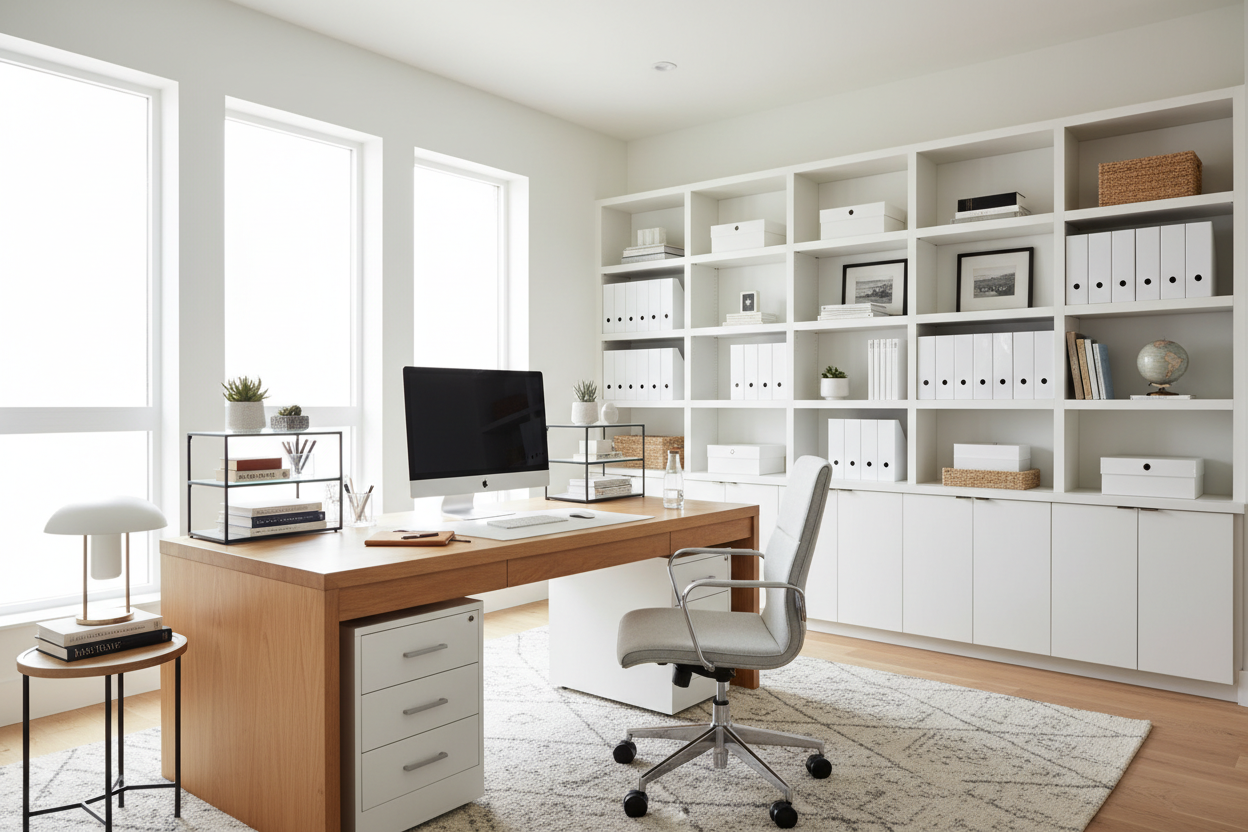
There is nothing quite as distracting as visual noise. When you sit down to work, your environment should act as a canvas for your thoughts, not a barrier to them. The dilemma most clients face isn't a lack of space, but a lack of flow. They purchase random bins and trays, hoping for a miracle, only to find the clutter returns within a week. True **home office organization** is not about buying containers; it is about designing a workflow that mirrors how your brain functions.
Core Elements of a Functional System
Before purchasing a single piece of furniture or accessory, consider these foundational pillars to ensure your space remains pristine and productive.
- Zoning Strategy: Divide the room into 'active' (daily use) and 'passive' (storage) zones to reduce movement.
- Visual Weight: Balance open shelving (for display) with closed cabinetry (for concealing chaos) to maintain a serene aesthetic.
- Ergonomic Accessibility: Ensure frequently used items are within the 'reach radius' of your chair without straining.
- Cable Management: Integrated power solutions are essential to prevent the 'spaghetti wire' look that ruins visual lines.
- Material Durability: Select finishes that resist scratching from binders and equipment movement.
Designing Your Layout: The Zone Approach
When clients ask me how to organize a home office effectively, I always start with the floor plan. We treat the desk as the cockpit. Your immediate reach—the primary zone—should only contain what you use daily: your laptop, a notebook, and perhaps a single pen cup. Everything else belongs in a secondary zone.
For the secondary zone, consider a credenza or a lateral file cabinet placed behind or beside the desk. This allows you to swivel and retrieve files without breaking your focus. This home office organization system relies on proximity; if you have to walk across the room to get a stapler, the system has failed.
Choosing Storage: Materiality and Aesthetics
Furniture selection is where function meets beauty. Avoid cheap particle board that bows under the weight of books. Instead, look for hardwood solids or high-grade architectural veneers. When organizing home office tips are discussed, we rarely talk about the tactile experience, but it matters. A walnut veneer file cabinet adds warmth and texture, making the act of filing less of a chore and more of a ritual.
Be mindful of 'visual weight.' If you have a small room, floor-to-ceiling dark wood bookcases can feel oppressive. In these instances, I recommend floating shelves or glass-fronted cabinets. However, be warned: glass requires impeccable interior organization. If you prefer to toss items in and close the door, opt for solid fronts with interesting hardware to serve as a focal point.
The Micro-Organization Layer
Once the furniture is set, we address the interiors. Drawer dividers are non-negotiable. Felt-lined organizers prevent items from sliding and rattling every time you open a drawer—a subtle detail that screams luxury. For paper management, vertical sorters are superior to horizontal trays, as they prevent the 'out of sight, out of mind' burying of documents.
My Personal Take on Home Office Organization
I learned a hard lesson about open shelving in my own studio a few years ago. I was obsessed with the 'Pinterest' look of perfectly styled open shelves behind my desk. I spent a weekend organizing my home office to look camera-ready.
The reality? It was a dust magnet. But worse, it became a source of cognitive load. Every time I looked up from my screen, my eyes were tracking the spines of books and the alignment of decorative vases. It was visually exhausting. I eventually swapped the open unit for a mid-century sideboard with sliding doors. The difference was immediate. The visual silence allowed me to think clearer. Now, I always advise clients: if you aren't naturally tidy, open shelving is an adversary, not an ally. Also, a small detail I swear by: label the inside lip of your drawers, not the outside. It keeps the exterior sleek while still guiding you where to put things back.
Conclusion
Creating a refined workspace is an investment in your mental clarity. By prioritizing closed storage, establishing clear zones, and selecting quality materials, you create an environment that supports your ambition rather than hindering it. Tips for organizing a home office are only useful if they sustain your workflow long-term. Start with the layout, invest in the furniture, and the peace of mind will follow.
Frequently Asked Questions
How do I organize a home office in a small shared space?
In shared spaces, verticality is key. Use wall-mounted floating desks or shelving units that draw the eye upward, keeping the footprint clear. Utilize uniform storage boxes to hide clutter, which helps the office area blend seamlessly with the rest of the living space.
Is a filing cabinet still necessary in a digital age?
For most, a massive four-drawer cabinet is obsolete. However, a slim, two-drawer mobile pedestal is often essential for tax documents, contracts, and warranties that must be kept physically. Look for one with a cushion top so it can double as guest seating.
How do I maintain the organization system over time?
Implement the 'Friday Reset' rule. Spend the last 15 minutes of your work week clearing your desktop and returning items to their designated zones. This ensures you walk into a clean slate on Monday morning, preventing clutter from compounding.

Leave a comment
This site is protected by hCaptcha and the hCaptcha Privacy Policy and Terms of Service apply.