










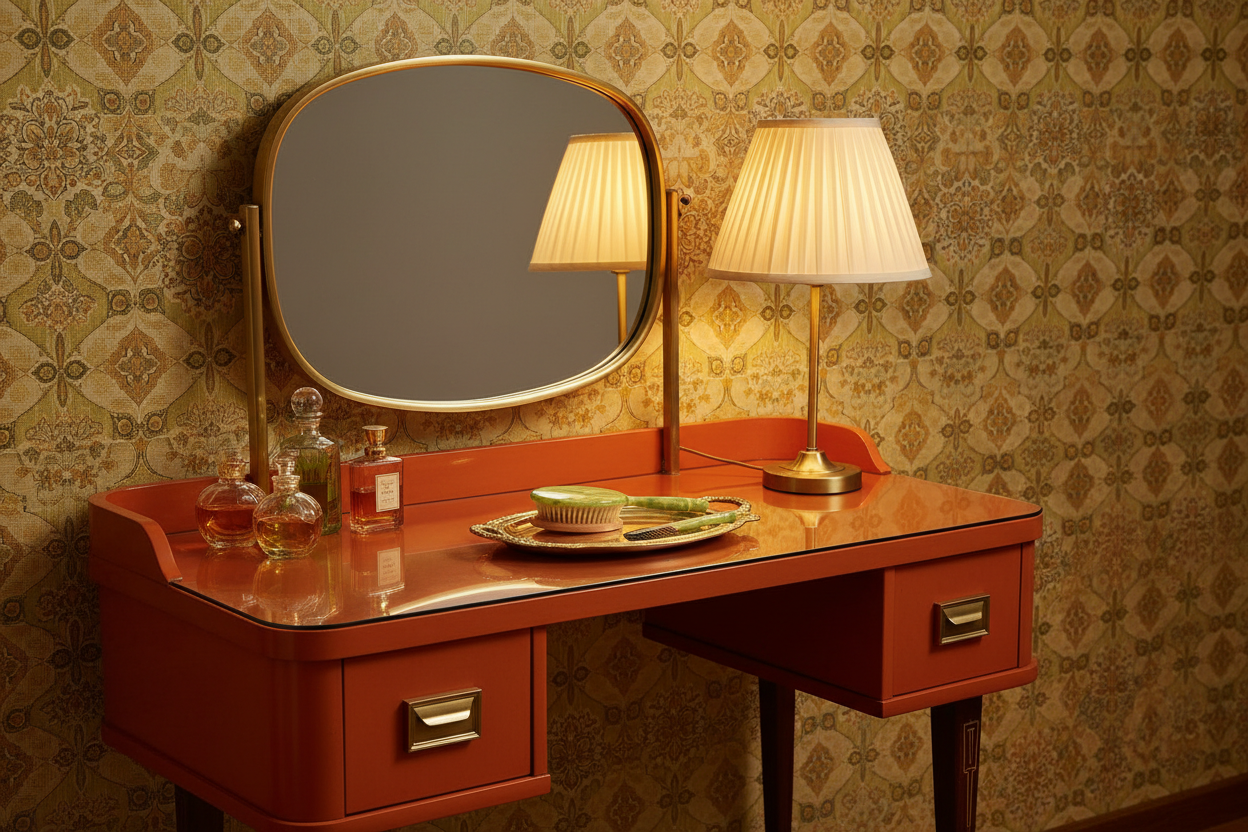
The allure of a 70s vanity lies in its timeless fusion of style and practicality. In the 1970s, vanity tables were more than just furniture; they reflected personal glamour, fashion trends of the time, and a sense of intimate ritual. Whether adorned with ornate detailing or sleek lines, these pieces became a statement in bedrooms and dressing areas, often paired with a mirror that completed the look.
The Aesthetic of a 1970s Vanity
A 1970s vanity with mirror often drew inspiration from both Art Deco influences and mid-century modern trends. The blend created a unique aesthetic — bold shapes softened by elegant curves. Many of these vanities featured wood finishes such as teak or walnut, occasionally accented with brass hardware. The mirror, typically large and framed to match the vanity, served as both a functional and decorative element.
Craftsmanship and Materials
Craftsmanship was a defining quality of 70s vanity tables. Veneered surfaces, polished wood grains, and hand-fitted joints highlighted the skill of the makers. Upholstered stools or chairs often accompanied these vanities, covered in soft fabrics that echoed the palettes of the decade: earthy browns, burnt oranges, and warm neutrals. Some designs even integrated small lighting fixtures around the mirror to bring a touch of Hollywood glam.
Personal Experience with a Vintage Vanity
Several years ago, I inherited my grandmother’s 1970s vanity table. It had a rounded mirror with a warm walnut finish, and small drawers lined with velvet where she kept jewelry. Sitting at that table with my morning coffee, I understood why these vanities hold so much sentimental value. The act of using it felt like carrying on a tradition — a quiet, reflective moment before starting the day.
Why Collectors Seek Them Today
Modern collectors and homeowners often look for authentic 70s vanity designs because they bring character and nostalgia into a space. Unlike mass-produced contemporary furniture, a 1970s vanity often tells a story. Whether it’s a flea market find or a carefully preserved family heirloom, these pieces add warmth and individuality to interiors.
Design Variations Worth Exploring
Some 70s vanity tables were minimalistic, with clean lines and smooth drawers, suitable for a subtle retro touch in modern spaces. Others embraced ornate designs with carved legs and intricate mirror frames, leaning more towards eclectic or bohemian styles. Certain models combined form and function by including compartmentalized storage for cosmetics and accessories.
Incorporating a 1970s Vanity into Modern Interiors
Placing a vintage vanity in a contemporary home can create a striking contrast. Pairing a 1970s vanity with modern lighting or minimalist décor highlights its retro charm. Using it as a focal point in a bedroom or dressing room encourages daily rituals, turning simple tasks such as putting on makeup or jewelry into relaxing routines.
Maintenance and Preservation Tips
Preserving an authentic 70s vanity requires attention to materials. Regular dusting, occasional wood conditioning, and gentle polishing of mirrors will maintain their original look. If your vanity features upholstered elements, periodic cleaning and reupholstering using era-appropriate fabrics can enhance authenticity.
Final Thoughts
The 1970s vanity, whether complete with a matching mirror or stand-alone table, is more than just a functional piece of furniture. It’s a representation of a bygone era’s elegance, a link to family traditions, and a beautiful way to add personality to your space. As trends come and go, the quiet charm and craftsmanship of these vanities ensure they remain icons in home décor.

Leave a comment
This site is protected by hCaptcha and the hCaptcha Privacy Policy and Terms of Service apply.