










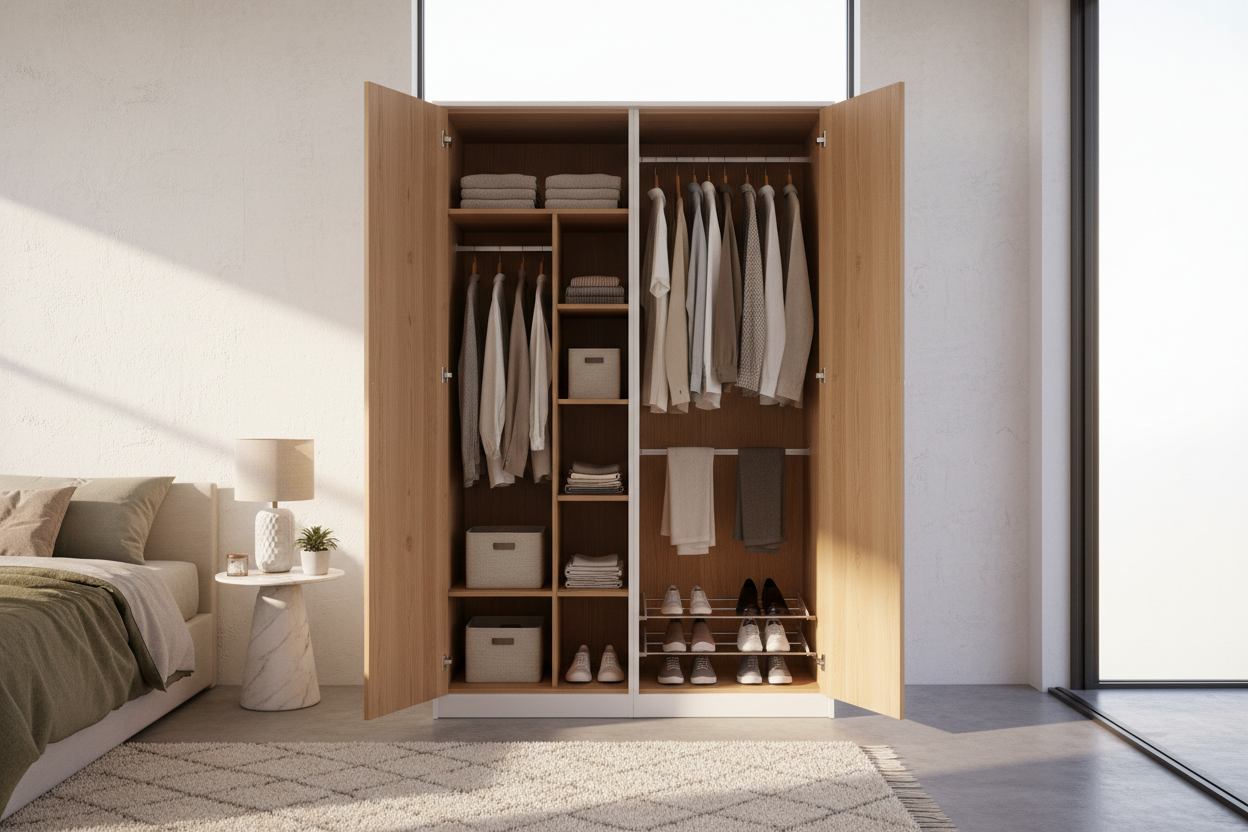
If you are staring at a pile of shirts on a chair or a garment rack that looks like it might collapse at any moment, the solution isn't necessarily a massive home renovation. You likely need a dedicated cabinet with hanging rod capabilities. These freestanding units bridge the gap between a temporary rolling rack and a built-in closet, offering a dust-free, organized home for your wardrobe without requiring a contractor.
The immediate answer to your storage woes lies in depth and weight capacity. Unlike standard bookcases, a proper wardrobe cabinet needs to be at least 20 to 24 inches deep to accommodate standard hangers without crushing your sleeves, and the rod itself must be rated to hold the specific weight of your garments—heavy winter coats require significantly different hardware than light summer blouses.
The Reality of Living Without a Closet
I learned the value of a sturdy wardrobe the hard way. My first apartment was in a charming, historic building, which is code for "zero storage space." For the first six months, I relied on a cheap, open-air metal rack. One night, roughly around 3 AM, the plastic connectors gave way, and the entire apparatus crashed to the floor, burying my alarm clock and creating a chaotic morning. That was the day I realized I needed enclosed storage. I upgraded to a heavy-duty storage cabinet with hanging rod, and the difference was immediate. Not only was the visual clutter gone because I could close the doors, but my clothes also stopped collecting ambient dust and cooking smells from the nearby kitchen.
Understanding the Configuration: Rods vs. Shelves
When shopping for these units, you will generally encounter two main types. The first is a dedicated hanging locker. These are tall, narrow, and devoted entirely to vertical space. They are excellent for long dresses, trench coats, or suits. However, most people find that a storage cabinet with hanging rod and shelves offers better utility for everyday life.
This hybrid design usually features a shorter rod on one side or across the top, with a stack of cubbies or drawers beneath or alongside it. This configuration mimics a custom closet system. You get a place to hang your button-downs, but you also gain designated spots for sweaters, denim, and accessories that shouldn't be hung up. If you have a limited footprint, prioritize the combo unit. It forces you to organize vertically, maximizing every square inch of floor space you sacrifice.
Material Matters: Metal, Wood, or Composite?
The durability of your cabinet with clothes rod depends entirely on what it is made of. If you are looking for a utility solution—perhaps for a garage, mudroom, or laundry area—metal is superior. Steel cabinets resist moisture and can handle heavy gear like turnout coats or motorcycle jackets without bowing. They often come with locking mechanisms, making them ideal for securing expensive gear.
For the bedroom, however, aesthetics usually take precedence. Solid wood is the gold standard for longevity but comes with a high price tag and significant weight. Engineered wood (particle board or MDF) is the most common material you will find online. While affordable, pay close attention to the back panel. Many cheaper units use a thin piece of cardboard for the back. If you buy a composite storage cabinet with clothes rod, ensure the backing is sturdy enough to keep the unit square, or reinforce it yourself with small brackets. A wobbly cabinet is a dangerous cabinet, especially once loaded with forty pounds of clothing.
The Depth Dilemma
This is the most common mistake buyers make. You see a beautiful cabinet online, the dimensions look slim and sleek, and you buy it. Once you assemble it, you realize the hangers don't fit straight in. You end up having to hang clothes at an angle, drastically reducing how much you can store.
Standard adult hangers are roughly 17 to 18 inches wide. A cabinet needs internal clearance greater than that to allow the door to close without pressing against the fabric. If you are looking at a slim profile unit (under 18 inches deep), it likely uses a pull-out valet rod (where clothes hang front-to-back) rather than a standard side-to-side rod. Make sure you know which mechanism the storage cabinet with hanging rod uses before you click purchase.
Assembly and Stability
Unless you are buying a vintage armoire or high-end furniture delivered by a white-glove service, you will likely be assembling this yourself. These units are heavy. A cabinet with hanging rod functionality creates a unique center of gravity shift. When the doors are open and the rod is fully loaded, the unit becomes front-heavy.
Wall anchoring is not optional here. Even if you don't have children or pets, a fully loaded wardrobe on a carpeted floor can tip forward simply by opening both doors simultaneously. Most kits come with basic anti-tip hardware. Use it. If the provided hardware looks flimsy, spend a few dollars at a hardware store for a metal L-bracket and a proper wall anchor.
Where to Use These Cabinets Beyond the Bedroom
While the bedroom is the obvious choice, these cabinets are incredibly versatile problem solvers for other areas of the home.
The Entryway Mudroom
If your home opens directly into the living room, you lack a transition zone. Placing a storage cabinet with clothes rod near the door instantly creates a mudroom. You can hide away guests' coats, hide the umbrella collection, and keep shoes off the main floor.
The Laundry Room
A storage cabinet with hanging rod and shelves is a game-changer for laundry organization. You can use the rod to hang delicate items to dry or to stage ironed shirts immediately, preventing wrinkles. The shelves can hold detergents, stain removers, and irons, keeping toxic chemicals out of sight and out of reach.
The Guest Room/Office Hybrid
Many people are converting spare bedrooms into home offices. A large built-in closet might take up space you'd rather use for a desk. A freestanding cabinet with clothes rod allows you to offer guests a place to hang their things when they visit, but it doesn't dominate the room year-round. When no one is visiting, it serves as excellent storage for office supplies or winter gear.
Making the Right Choice
Before you buy, take inventory of exactly what you need to hang. If you have mostly long dresses and coats, shelves will just get in your way. If you have mostly t-shirts and jeans with only a few blazers, a unit dominated by shelving with a small hanging section is more practical. The market is flooded with options, but the best unit is one that fits your specific wardrobe, not just the space on your wall.
Frequently Asked Questions
How much weight can a typical wardrobe hanging rod hold?
Standard wooden or hollow metal rods in flat-pack furniture typically hold between 20 to 40 pounds. If you plan to hang heavy winter coats or a dense collection of denim, look for solid metal rods or oval-shaped rods, which offer higher tensile strength and resist bending better than round ones.
Can I add a hanging rod to a cabinet that only has shelves?
Yes, but you must ensure the cabinet is deep enough (at least 20 inches) to accommodate hangers. You can purchase adjustable tension rods for light items, or screw heavy-duty flanges into the side panels for a permanent solution, provided the side panels are thick enough to hold the screws.
What is the difference between an armoire and a wardrobe cabinet?
The terms are often used interchangeably, but an armoire is traditionally a more ornate, larger piece of furniture originally designed for storing arms or electronics, often featuring a mix of hanging space and drawers. A wardrobe cabinet tends to be more utilitarian and streamlined, focusing specifically on hanging storage efficiency.


Leave a comment
This site is protected by hCaptcha and the hCaptcha Privacy Policy and Terms of Service apply.