










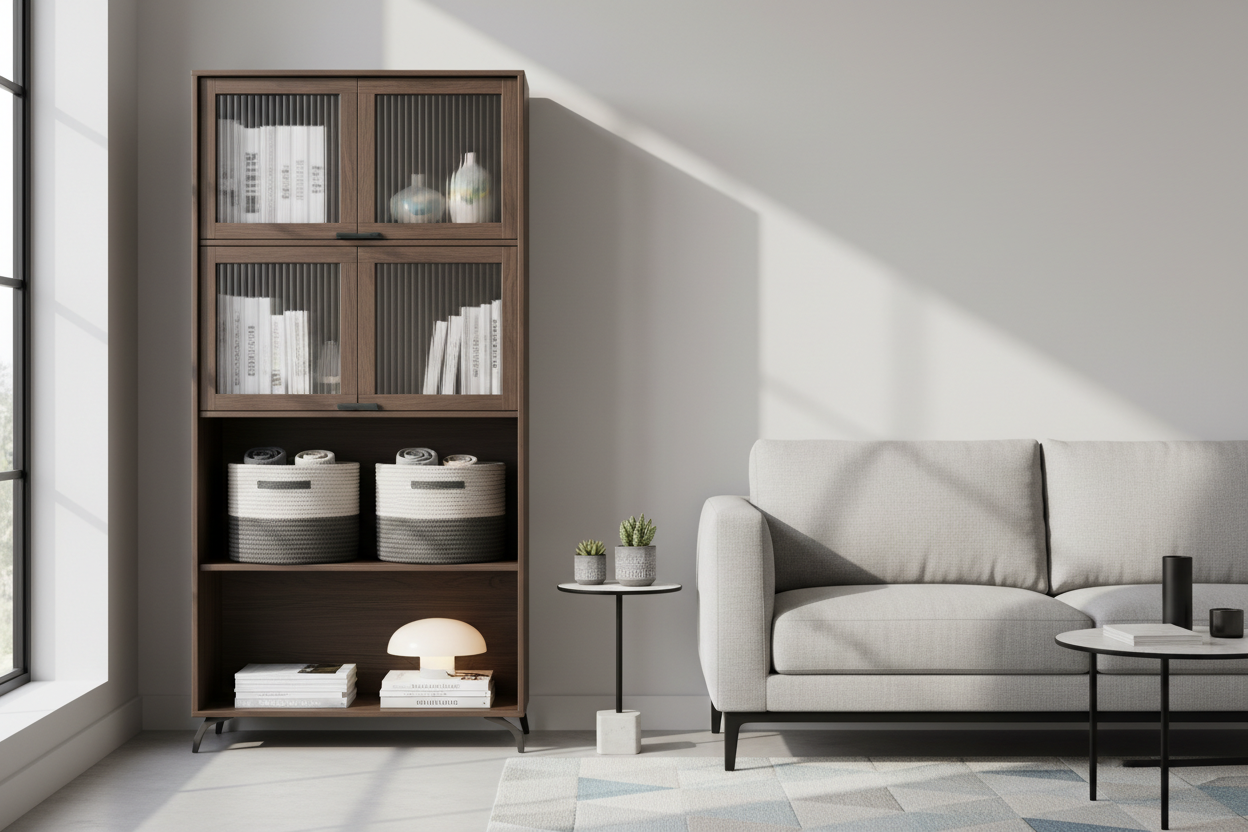
A small standing cabinet is the unsung hero of home organization, acting as a versatile storage bridge for rooms that lack built-in closets or sufficient floor space. These compact units offer immediate clutter relief without the need for mounting hardware or permanent installation. Whether you are trying to squeeze extra toiletry storage into a tiny powder room or need a dedicated spot for keys and mail in a narrow entryway, these furniture pieces provide a designated home for your belongings while occupying a minimal footprint.
Finding the balance between functionality and aesthetics in tight quarters is often a struggle. Renters, in particular, face the challenge of needing more storage but being unable to drill holes for shelving. This is where a small free standing cabinet shines. It offers vertical storage capacity and can be moved easily from room to room, or apartment to apartment, adapting to your changing needs over time.
My Battle with the "Clutter Corner"
I learned the value of these compact units the hard way. In my previous apartment, the entryway was essentially a dark, narrow hallway that opened directly into the living room. There was no coat closet and absolutely no surface area to drop things. For months, a dining chair migrated to the door to serve as a dumping ground for mail, keys, dog leashes, and reusable grocery bags. It looked terrible and made leaving the house a frantic scavenger hunt.
Buying a slim, waist-high cabinet changed the entire dynamic of that apartment. It was barely 12 inches deep, but it had a drawer for the small items and a door covering two shelves below for the bulkier bags. Suddenly, the "clutter corner" became a styled vignette with a lamp and a catch-all tray. That experience taught me that you don't need a massive renovation to fix a flow problem; you just need the right piece of furniture that respects the scale of your room.
Why Go Free-Standing?
The primary appeal of a small free standing cabinet is flexibility. Unlike wall-mounted floating shelves, which require studs, levels, and a drill, a floor cabinet is ready to use the moment you assemble it. This mobility is crucial for anyone who likes to rearrange furniture frequently or lives in temporary housing. You aren't marrying the furniture to the architecture.
Furthermore, these cabinets often bear more weight than their wall-mounted counterparts. Because the weight is transferred directly to the floor, you can store heavier items like stacks of books, ceramic dishes, or liters of cleaning supplies without worrying about drywall anchors ripping out. This makes them excellent candidates for kitchen overflow or home office organization where paper weight adds up quickly.
Choosing the Right Material for the Job
Not all cabinets work in all rooms. The environment dictates the material you should choose. If you are hunting for a bathroom storage solution, humidity is your enemy. A particle board cabinet with a cheap veneer might swell and peel after a few months of hot showers. For bathrooms, look for treated bamboo, powder-coated metal, or high-quality painted wood that seals out moisture.
In living areas or bedrooms, a small stand alone cabinet often serves as an accent piece. Here, you can prioritize aesthetics. Natural wood grains like oak or walnut add warmth, while glass-fronted metal cabinets can introduce an industrial or vintage apothecary vibe. Since these units are small, they are great opportunities to experiment with bold colors or textures that might feel overwhelming on a larger piece of furniture like a wardrobe or buffet.
Maximizing Vertical Potential
When floor space is at a premium, the only way to go is up. However, a "small" cabinet doesn't always mean short. Tall, narrow cabinets—often referred to as linen towers—are fantastic for filling awkward gaps between a vanity and a toilet or beside a washer and dryer. These units capitalize on unused vertical air rights.
If you prefer a waist-height unit to keep sightlines open, pay attention to the interior adjustability. The best small standing cabinet options feature adjustable shelving. Being able to move a shelf up or down by just an inch can be the difference between storing full-sized cleaning bottles upright or having to lay them on their sides, which invites leaks.
The Door Swing Factor
One technical detail that often gets overlooked during the shopping process is the door swing. In tight spaces, a standard cabinet door might hit a toilet, a doorframe, or your shins before it opens fully. If your space is extremely limited, consider a cabinet with sliding doors or open shelving. Sliding doors require zero clearance to open, making them the ultimate space-savers for narrow hallways or beside beds.
Styling Your Cabinet
A small stand alone cabinet is more than just a box for stuff; it is a surface for styling. The top of the cabinet is prime real estate. In a dining room, it can function as a mini bar or coffee station. In a bathroom, it holds the items you reach for daily, like cotton swabs or perfumes, arranged on a nice tray.
To keep the look cohesive, try to match the cabinet hardware to other metals in the room. If your light fixtures are brushed nickel, swapping out the stock knobs on your cabinet for matching nickel ones is a cheap, five-minute upgrade that makes the piece look custom and high-end.
Safety Considerations
Even though these are free-standing units, stability is non-negotiable. Tall, narrow cabinets have a higher center of gravity and can be prone to tipping, especially on thick carpet. If you have children or pets, anchoring the cabinet to the wall is essential, regardless of how stable it feels when empty. Most units come with a simple strap or bracket kit. It defeats the "no drilling" benefit slightly, but one small hole for a safety anchor is much easier to patch than mounting heavy shelving brackets, and it prevents dangerous accidents.
Organization Inside the Box
To truly maximize a small free standing cabinet, you need to organize the interior. Because these cabinets are often deep relative to their width, items can get lost in the back. Using square or rectangular bins that act as drawers can help. Pulling out a bin to access the back contents is much easier than digging through layers of clutter. Labeling these bins ensures that the cabinet remains a functional storage system rather than reverting to a junk drawer status.
FAQ
How do I stop my small cabinet from wobbling on uneven floors?
Many modern cabinets come with adjustable feet or levelers on the bottom. If yours doesn't, you can use simple furniture shims (small wedges of wood or plastic) under the legs to stabilize the unit. Slide the shim in until the wobble stops, then trim the excess so it isn't visible.
Can I use a wooden standing cabinet in a bathroom?
Yes, but you must ensure it is properly sealed against moisture. Look for "marine grade" finishes or simply apply a coat of clear polyurethane sealant to the wood before using it. Additionally, ensure the bathroom is well-ventilated to prevent warping over time.
What is the standard depth for a small hallway cabinet?
For narrow hallways and entryways, look for "slim" profiles, which are typically between 10 to 13 inches deep. This depth allows for storage of shoes, mail, and small items without obstructing the walking path or making the corridor feel cramped.

Leave a comment
This site is protected by hCaptcha and the hCaptcha Privacy Policy and Terms of Service apply.