










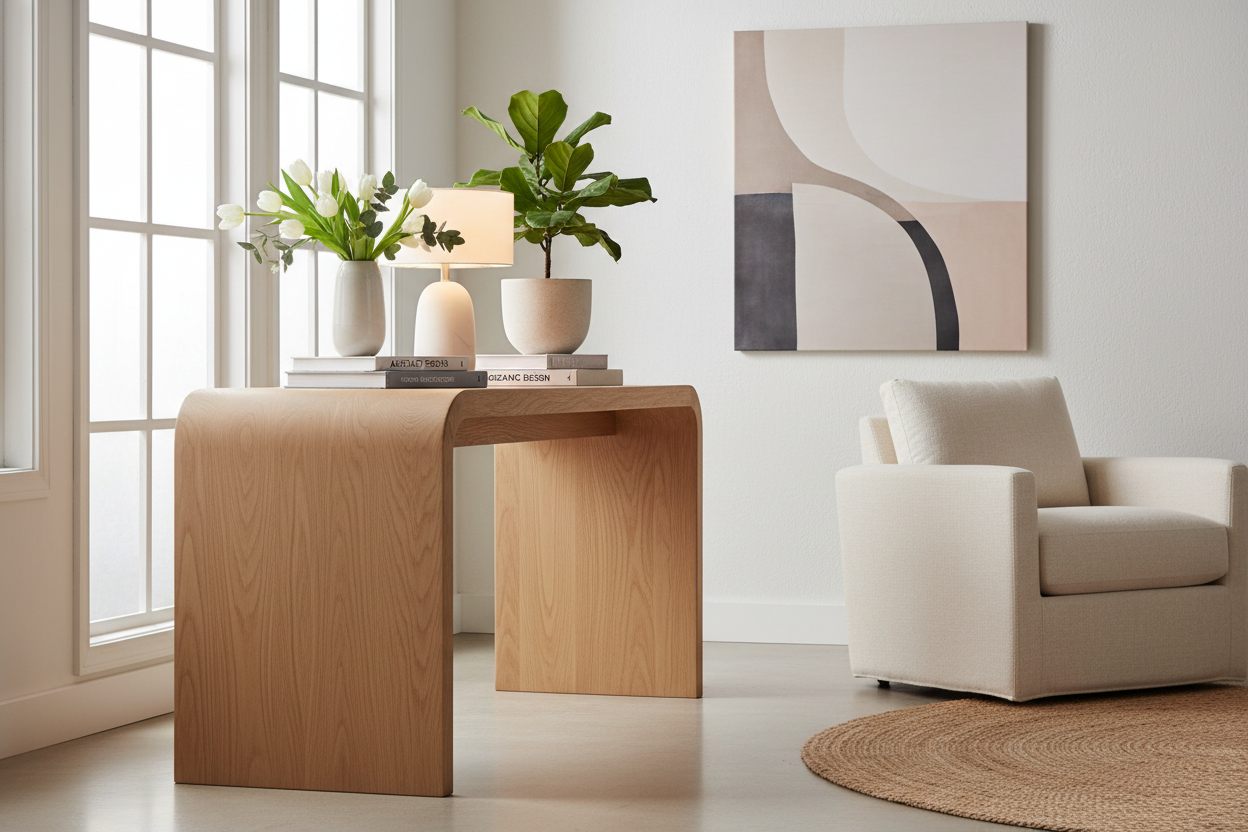
Interior design often feels like a game of Tetris involving squares and rectangles. Rugs, bookshelves, televisions, and rooms themselves usually feature sharp 90-degree angles. This is exactly why a curved console table is such a powerful tool in a designer's arsenal. It disrupts the rigidity of a space, introducing organic flow and visual relief. Whether you are trying to navigate a tight hallway without bruising a hip or looking for the perfect companion for non-traditional seating, choosing a table with a rounded silhouette is often the functional and aesthetic answer you didn't know you needed.
The Entryway: Creating a Welcoming Flow
The foyer sets the tone for the entire home, yet it is often the narrowest part of the house. Placing a rectangular piece of furniture here can create a bottleneck. A rounded entryway table or a curved foyer table is superior in these high-traffic zones because it physically creates more space. The absence of sharp corners allows traffic to flow around the furniture rather than bumping into it.
If you are working with a particularly tight vestibule, a small curved console table acts as a drop zone for keys and mail without dominating the floor plan. For wider halls, a curved hallway table with a demilune (half-moon) shape sits flush against the wall but offers a soft, inviting profile. This setup is particularly effective if your front door opens directly into the side of the furniture; a rounded edge console table ensures the door swing doesn't feel like it's clashing with a sharp obstacle.
The Challenge of the Curved Sofa
One of the most frustrating design dilemmas homeowners face is finding a sofa table for curved sofa arrangements. The trend of kidney-bean shapes and serpentine sectionals has returned, but standard furniture hasn't quite kept up. Putting a straight table behind a curved back results in awkward, triangular gaps that ruin the cohesive look of the living room.
To solve this, you need a curved couch table that mimics the radius of your seating. A sofa table for curved sectional setups should hug the back of the frame, creating a unified island in the room. If you cannot find a piece that matches the exact curve of your furniture, look for a curved back sofa table specifically designed to bridge this gap. This allows you to place lamps or decorative objects right behind where you sit, adding layers and depth to the room.
I recall a specific project where the client had purchased a stunning, velvet serpentine sofa. They tried to force a rectangular antique table behind it, and it looked like a mistake. We swapped it for a modern curved console table with a glass top. Suddenly, the furniture looked intentional. The curved sofa table followed the lines of the upholstery perfectly, turning a clumsy arrangement into a high-end vignette.
Architectural Quirks: The Curved Wall
Some homes, particularly those built in the Art Deco era or ultra-modern builds, feature rounded walls. A flat-backed piece of furniture simply will not work here. You need a table for curved wall applications. A console table for curved wall areas is designed with a concave back or a flexible footprint that respects the architecture rather than fighting against it.
If you have a rotunda or a winding staircase, an entry table for curved wall placement is essential. A curved wall table allows you to utilize space that would otherwise remain empty. In these instances, a curved console often looks like it was custom-built for the home, elevating the perceived value of the interior.
Function Meets Form: Storage Solutions
Opting for curves doesn't mean sacrificing utility. A curved console table with storage can hide clutter just as well as a boxy one. Many designs feature a curved console table with drawers seamlessly integrated into the apron of the table. For more substantial storage needs, a curved console cabinet or a rounded console cabinet offers shelving behind curved doors, perfect for storing linens in a dining room or media in a living area.
If you prefer a lighter look but still need a place for small items, a curved edge console table with drawers usually provides just enough space for essentials like car keys or chargers. These pieces often feature a rounded console table with storage shelf near the bottom, allowing for baskets or books to be displayed, grounding the piece visually.
Materiality and Style
The material you choose changes the vibe of the curve. A wood curved console table brings warmth and traditional solidity. If you want something that feels organic and raw, look for a natural curved edge console table, which often uses live-edge wood smoothed into a rounded shape. These work beautifully in Japandi or rustic-modern interiors.
For a more contemporary or glam aesthetic, a console table with curved legs—such as cabriole or hairpin legs—adds elegance. A curved leg console table draws the eye downward and can make a heavy stone or wood top feel lighter. Conversely, a round corner console table in metal or lacquer fits perfectly in industrial or minimalist spaces where you want to soften the harshness of concrete or brick walls.
Safety and Child-Proofing
Beyond aesthetics, there is a practical safety argument for these designs. A console table rounded edges or a round edge console table is a parent's best friend. Sharp corners at toddler eye level are a hazard. By swapping to a rounded corner console table or a curvy console table, you reduce the risk of injury without having to apply ugly foam bumpers to your furniture. The console table with rounded edges is inherently safer for active households where running in the hallway is a daily occurrence.
Styling Your Curved Table
Once you have selected your curved console tables, styling them requires a slightly different approach than rectangular ones. Because the surface is often shallower at the ends, center your largest decor item—like a vase or a sculpture. Flank it with smaller items that follow the curve. For a sofa table for curved couch arrangements, ensure your table lamps are not too wide, or they might teeter on the rounded edge. Whether you choose a curved console table for curved wall placement or sofa tables for curved sofas, let the negative space speak. The curve itself is a design element; you don't need to clutter every inch of the surface.
FAQ
Can I use a straight console table behind a curved sofa?
Generally, this is not recommended. Placing a straight table behind a curved sofa creates large, awkward gaps that can trap items and ruin the visual flow. It is better to use a curved table or two smaller round tables to approximate the curve.
How tall should a console table be when placed behind a sofa?
The table should be level with or slightly lower than the back of the sofa frame. It should never be taller than the sofa cushions, as this looks visually unbalanced and can obstruct the view across the room.
What is the best shape for an entryway table in a narrow hall?
A demilune (half-moon) or a shallow curved console is ideal for narrow halls. The rounded edges prevent hip bumps and allow for smoother traffic flow compared to rectangular tables with sharp corners.

Leave a comment
This site is protected by hCaptcha and the hCaptcha Privacy Policy and Terms of Service apply.