










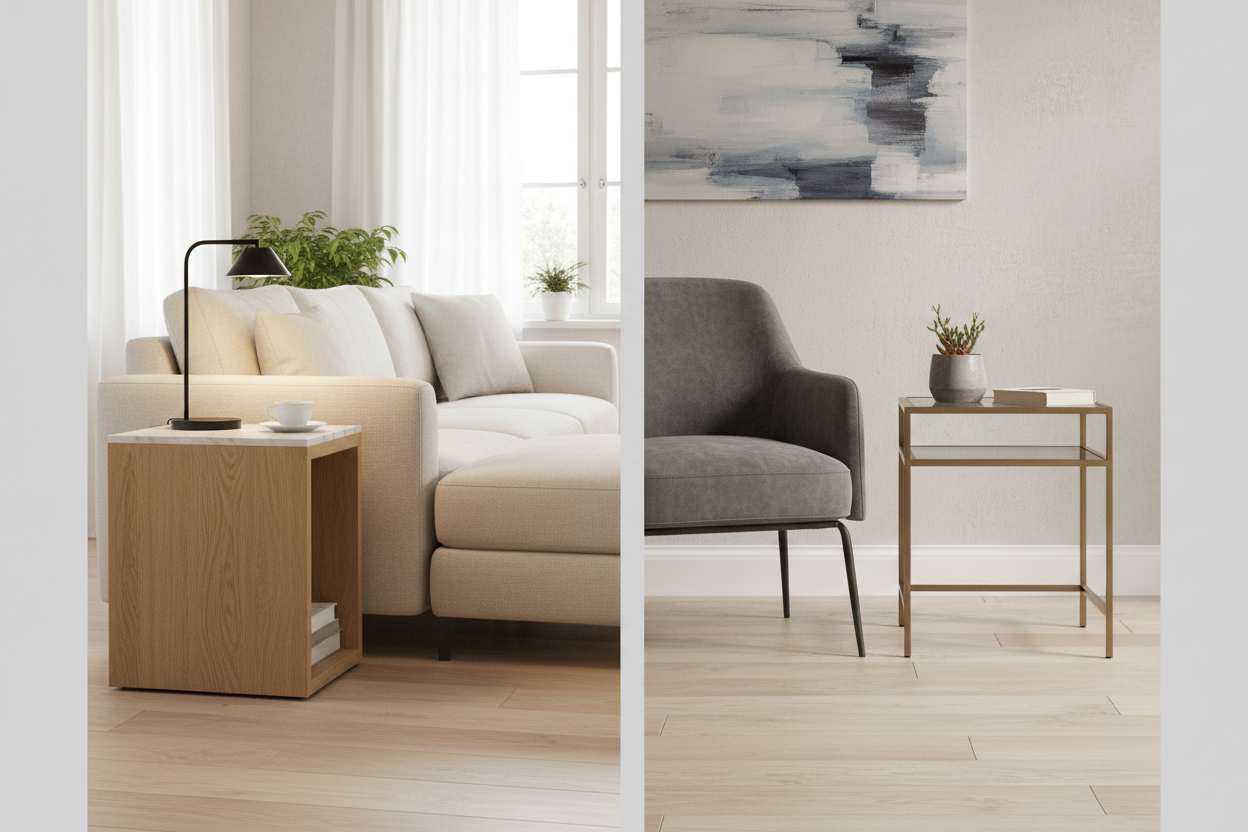
When furnishing a living room or bedroom, small accent tables often play a larger role than we expect. However, distinguishing between an end table and a side table can sometimes be confusing. While these two pieces may appear similar at first glance, there are subtle yet important differences in their design, purpose, and placement that can significantly influence the overall balance and flow of a room.
Understanding the Basics: End Table vs Side Table
The terms end table and side table are often used interchangeably in furniture discussions, but interior designers make a clear distinction. The main difference between an end table and a side table lies in their function and position within a room. An end table is typically placed next to a sofa or chair, providing a convenient surface for a lamp, beverage, or book. A side table, by contrast, is more versatile—it can be positioned anywhere in a room, beside a chair, along a wall, or even in a hallway corner.
Physically, end tables are often designed with the height of the sofa arm in mind, making them slightly taller and narrower. Side tables, on the other hand, are usually more flexible in shape and size, allowing designers to experiment with styles that complement different layouts.
Design Features and Practical Differences
One of the most evident contrasts when comparing side vs end tables is in the aesthetic details and features. End tables usually come in pairs, crafted to mirror each other on either side of a couch. Their primary goal is balance — visually and functionally. Side tables, however, are often chosen as stand-alone accent pieces that can add character or a statement to an otherwise plain corner.
Material choice can also vary. End tables often blend seamlessly with the main furniture ensemble, sharing finishes or materials such as wood, metal, or glass. Side tables might be chosen for contrast, incorporating unique textures or bold colors to add depth to the overall décor. From marble tops to reclaimed wood, side tables provide an opportunity for creative experimentation.
How Placement Affects Functionality
Another key aspect in the difference between end table and side table is their placement and how it serves the room’s needs. An end table’s purpose is rooted in accessibility—it should be within an easy reach of a seat. This convenience makes it ideal for placing remote controls, reading glasses, or beverages.
In contrast, a side table can function as a flexible accent piece. It might hold a decorative vase, support a small plant, or act as a landing surface for keys and mail near an entryway. Because of this versatility, side tables can move fluidly between rooms, whereas end tables tend to remain paired with a specific sofa or chair.
Personal Perspective: Choosing What Works Best
In my own home, I’ve had to make the side vs end table decision more than once. A few years ago, I chose compact, matching end tables for my living room because I wanted symmetry and convenience on both sides of my couch. However, in my reading nook, I opted for a round, metal side table that doubles as a design accent. The flexibility of a side table allowed me to reposition it easily, depending on the mood or setup of the space. Both choices proved functional—but the distinction helped me plan a layout that felt both cohesive and adaptable.
Tips for Selecting the Right Piece
When deciding between an end table and a side table, consider the furniture height of surrounding pieces. Generally, the top of an end table should align with the armrest of your seating for ease of use. For a side table, height can be more flexible depending on purpose—go taller if it’s meant for display, or shorter if it’s to complement lounge seating.
Your existing décor style also matters. If the goal is visual symmetry, end tables are a reliable choice. For an eclectic or layered look, consider mixing side tables of different shapes and finishes. Another detail to note is storage capability: some end tables have shelves or drawers, making them practical for keeping items like coasters or magazines close by. Side tables might prioritize aesthetics over storage, emphasizing form and finishes instead.
Common Misconceptions
Many homeowners mistakenly believe that side and end tables must match the sofa set to look cohesive. Modern interior design trends, however, challenge this notion. Mixing materials—like pairing a wooden end table with a metal-framed side table—can introduce dynamic contrast. The trick is to maintain harmony through color tones or overall design language rather than relying solely on matching sets.
Another misconception is that these tables are interchangeable. While you can technically use one in place of the other, understanding their intended roles helps maximize comfort and layout balance. The subtle difference between end table and side table can enhance the usability of a room, avoiding clutter and improving function.
Final Thoughts
The debate between end table vs side table is not just about semantics—it’s about optimizing both utility and aesthetics. End tables offer symmetry and function by the sofa’s edge, while side tables give freedom and design versatility throughout the home. The right choice depends on how you live, the layout of your space, and the atmosphere you want to create. Understanding this distinction allows you to make smarter furniture decisions that blend practicality with style.

Leave a comment
This site is protected by hCaptcha and the hCaptcha Privacy Policy and Terms of Service apply.