










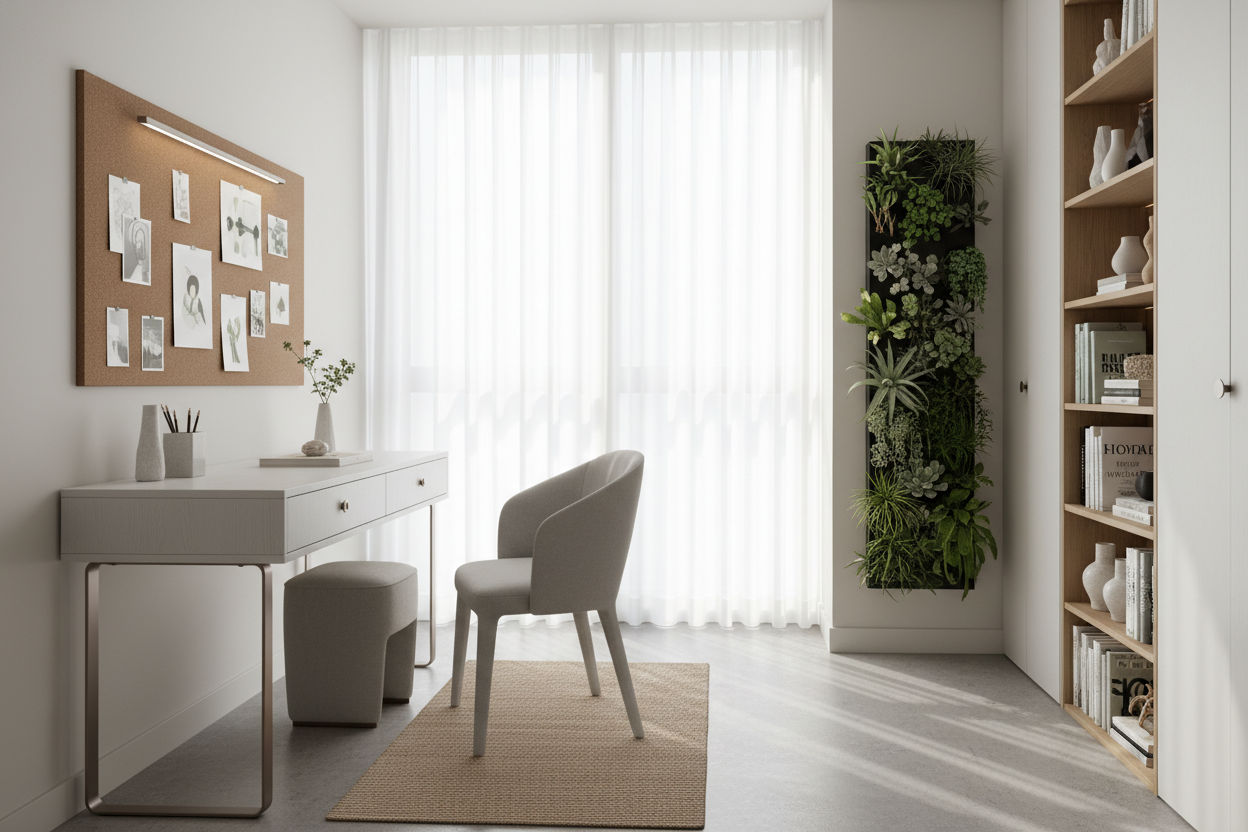
It happens constantly in my consultations: clients show me a beautifully styled home office on Pinterest, then point to the blank 36-inch sliver of wall in their guest room and ask, 'How do I make this work?' The reality of North American living right now means we are squeezing offices into studio apartments, awkward alcoves, and crowded primary suites. If you are tired of balancing your laptop on a laundry basket, you need practical space saver desk ideas.
In this guide, we will break down how to establish a functional work zone without swallowing your floor plan. You will walk away knowing exactly what dimensions to look for, which silhouettes reduce visual clutter, and how to avoid the ergonomic traps of miniature furniture.
Quick Decision Guide
- Prioritize depth over width: A desk needs at least 18 to 20 inches of depth to comfortably fit a laptop and your wrists.
- Leverage negative space: Desks with slim metal legs or floating mounts keep sightlines open, making the room feel larger.
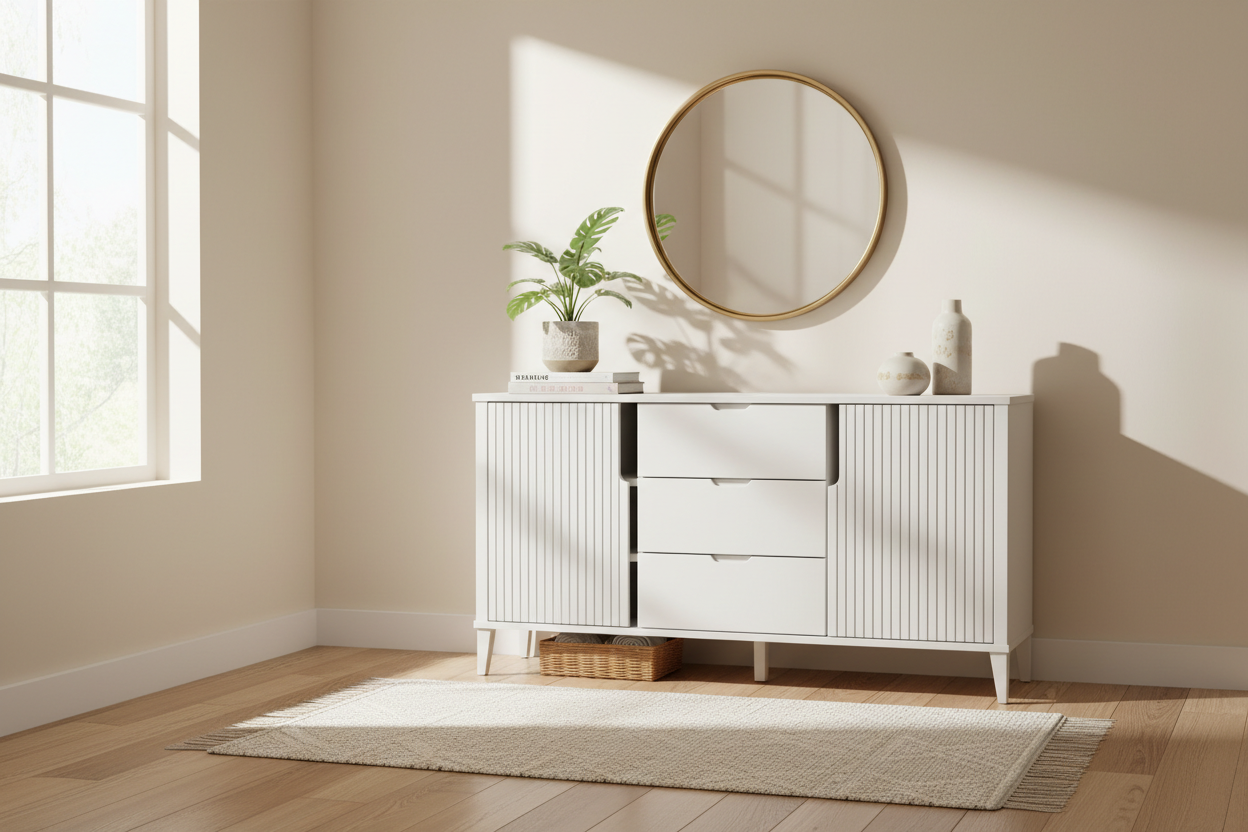
- Consider dual-purpose pieces: A console table behind a sofa can easily double as a workstation during the day.
- Watch your chair clearance: Always leave a minimum of 36 inches behind the desk to comfortably pull out your chair.
Layout Strategies for Tight Quarters
Carving Out a Work Zone
When brainstorming a desk setup for small space living, the biggest mistake is trying to float the desk in the middle of the room. In tight quarters, you want to anchor your workspace to an existing architectural feature. Look for underutilized transition zones. A wide hallway, the dead space under a staircase, or the empty corner next to a closet door are prime real estate.
If you are exploring small desk ideas for small bedroom layouts, consider swapping one of your nightstands for a compact desk. By matching the finish of the desk to your bed frame, it reads as a deliberate design choice rather than an afterthought. This is one of the most reliable desk for small room ideas when square footage is strictly limited.
Choosing the Right Silhouette
Floating and Fold-Away Profiles
Visual weight matters just as much as physical dimensions. A solid oak pedestal desk might technically fit your measurements, but it will visually suffocate a tiny room. Instead, look for creative desk ideas for small spaces that utilize wall mounting. A floating desk removes legs entirely, preserving your floor space and creating a clean, airy aesthetic.
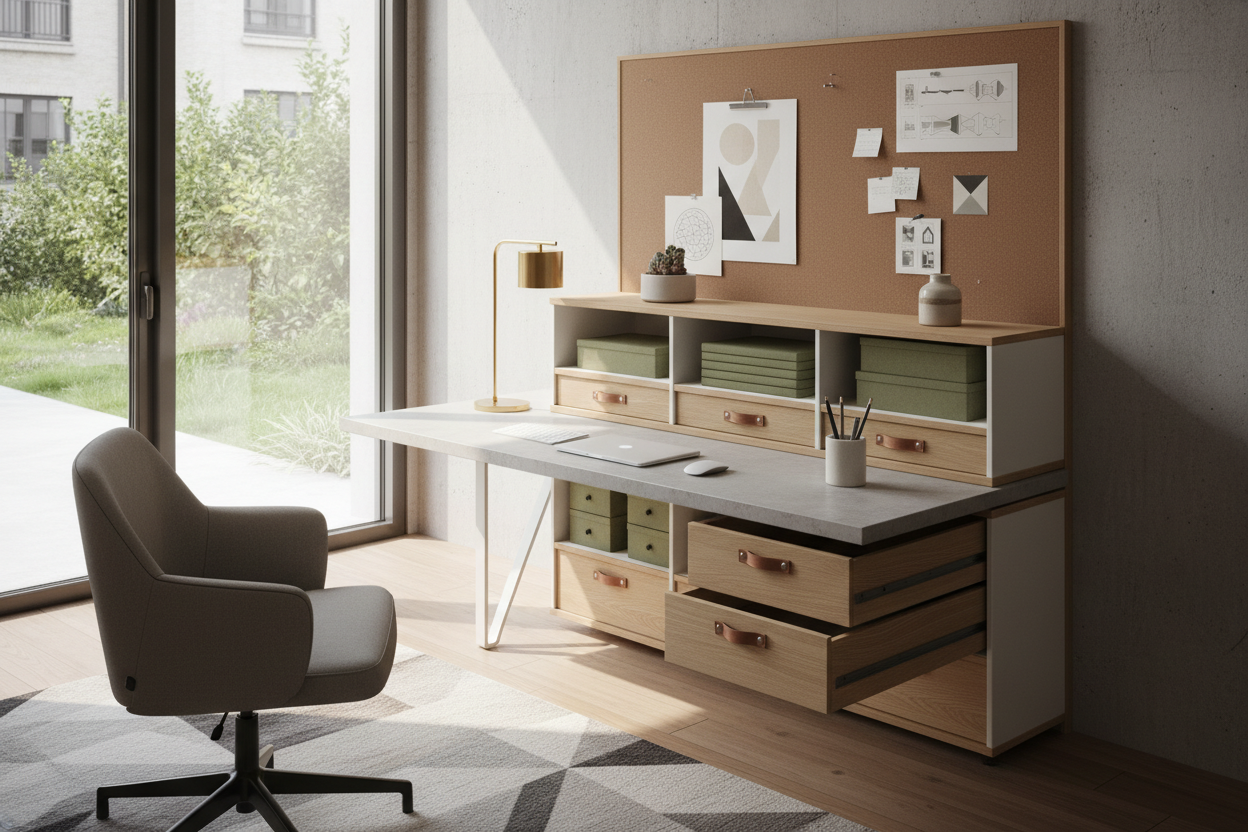
For those truly lacking square footage, a drop-leaf or secretary desk is incredibly effective. These tiny desk ideas allow you to fold away your clutter at 5 PM, instantly returning the room to its primary function. If you own your home, investing in a built in desk small space solution—like a custom slab fitted into an alcove—is the ultimate way to maximize every inch while keeping the footprint minimal. When evaluating creative desks for small spaces, always prioritize pieces that can multitask.
Styling Without the Clutter
Making It Look Intentional
Compact furniture often runs the risk of looking like it belongs in a dorm room. To source cute desk ideas for small spaces that still feel sophisticated, focus on material quality. A rich walnut veneer, a leather-wrapped top, or brushed brass hardware can make a petite profile feel high-end.
Keep your styling minimal. Mount your monitor on an articulating arm to free up surface area, and use a stylish architectural sconce instead of a bulky table lamp. Remember that your chair needs to coordinate with the rest of the room. Skip the massive ergonomic mesh chair and opt for a structured dining chair or an upholstered barrel chair that tucks neatly underneath.
Designer's Honest Take
Over the last 15 years, I have drafted countless workstation ideas for small spaces, and I have definitely made my share of mistakes. Early in my career, I specified a gorgeous, ultra-slim acrylic console to serve as a desk in a downtown condo. It looked incredible in photos.
The reality? It was a nightmare to live with. The 15-inch depth meant the client's monitor was practically touching their nose, and because the acrylic was completely transparent, the tangle of black power cords underneath ruined the entire aesthetic. I learned the hard way that when sourcing office desks for small spaces ideas, wire management and ergonomic depth are non-negotiable. Now, I never recommend a desk under 18 inches deep for daily computer work, and I always ensure there is a hidden channel or modesty panel to hide the inevitable cord chaos.
Frequently Asked Questions
What is the minimum size for a functional desk?
For comfortable typing and screen viewing, aim for a minimum of 36 inches wide and 18 to 20 inches deep. If you only use a laptop, you can scrape by with 15 inches of depth, but it is not ideal for long hours.
Are ladder desks good for small rooms?
Ladder desks are excellent desk designs for small spaces because they draw the eye upward and utilize vertical storage. However, they can be wobbly. Always secure them to the wall studs, especially if you have heavy equipment or pets.
How do I create a study area in a tiny bedroom?
When planning study desk ideas for small spaces, consider utilizing the closet. Removing the closet doors and tucking a desk inside (often called a 'cloffice') provides a dedicated workspace that does not encroach on the bedroom's floor plan.
What chair works best with a compact desk?
For small desk office ideas, avoid chairs with wide bases and armrests that prevent the chair from sliding all the way under the desk. An armless upholstered task chair or a stylish dining chair provides the best balance of comfort and space efficiency.

Leave a comment
This site is protected by hCaptcha and the hCaptcha Privacy Policy and Terms of Service apply.