










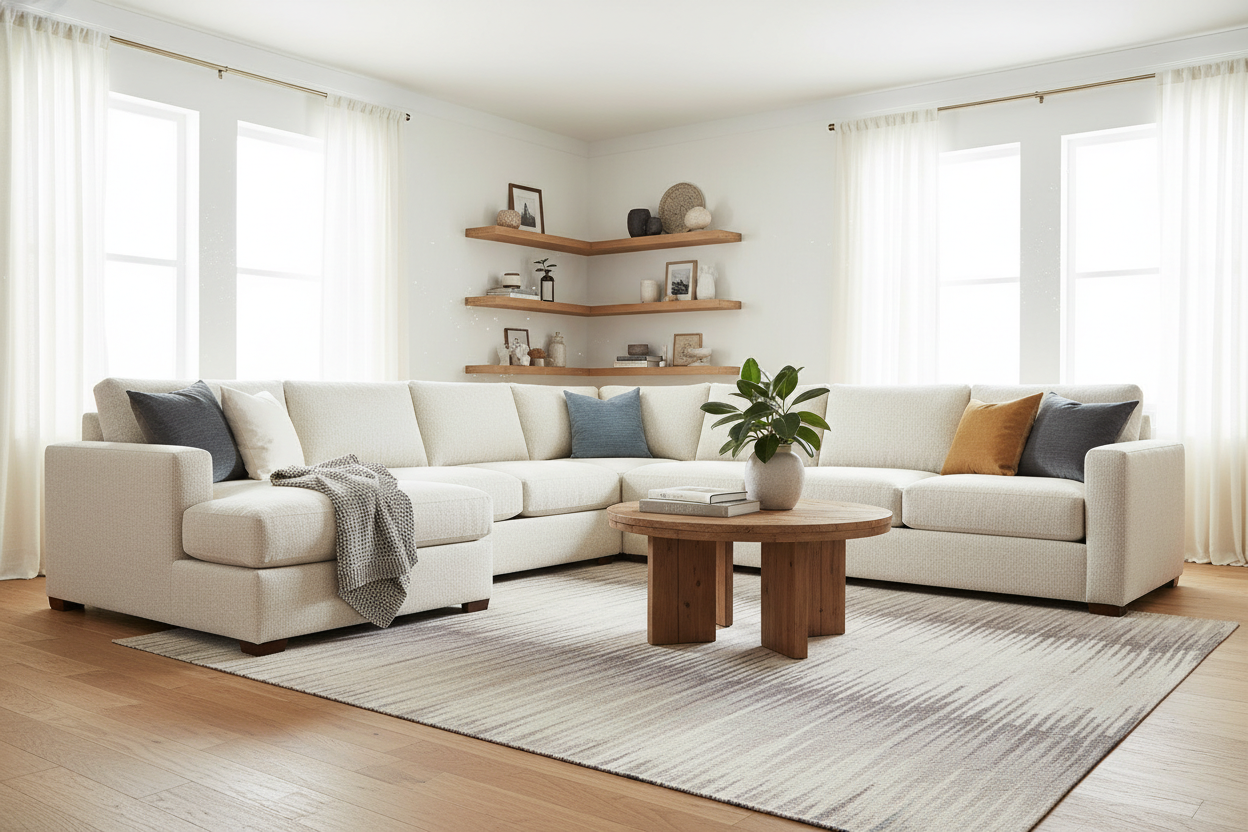
There is a pervasive myth in interior design that budget constraints must equal a compromise in aesthetics. I see clients struggle with this constantly; they want the grounding, conversational anchor of a sectional, but they fear that anything affordable will look flimsy or fall apart within a year. The truth is, sourcing a sectional couch under $800 is entirely possible, but it requires a shift in how you evaluate furniture. You aren't just buying a seat; you are investing in the architectural anchor of your living space.
Key Features to Look For
- Frame Construction: Look for kiln-dried hardwood or reinforced plywood rather than particleboard to prevent warping.
- Upholstery Durability: Prioritize performance fabrics or tight weaves with a high rub count (over 15,000 double rubs) for longevity.
- Cushion Density: High-density foam (1.8 lbs or higher) wrapped in dacron prevents the dreaded "pancake" effect.
- Modularity: A reversible chaise offers flexibility for future moves or layout changes.
- Suspension System: Sinuous springs generally offer better support than simple webbing in this price bracket.
Decoding Material Quality on a Budget
When working with a sub-$1000 budget, the margin for error is slim. You cannot rely on brand prestige; you must rely on material science. The most common pitfall I see is seduction by texture—specifically, cheap velvet. While visually appealing in a showroom, low-grade velvet on a sectional sofa under $800 can crush and bald rapidly.
Fabric Selection
Instead, I advise clients to look for polyester blends that mimic the weave of linen or tweed. These synthetic fibers offer superior stain resistance and hold their shape under tension. If you must have the softness of velvet, ensure it is a microfiber blend, which offers higher durability against abrasion.
The Silhouette and Scale
In design, visual weight is just as important as physical dimensions. A bulky, overstuffed sectional in a small apartment creates a claustrophobic atmosphere. For this price point, look for mid-century modern inspirations—tapered legs and clean lines elevate the piece, making it look significantly more expensive than it is. The negative space created by raised legs allows light to flow under the sofa, increasing the perceived square footage of the room.
Ergonomics and Comfort
A beautiful sofa that hurts your back is a failed design. In the budget category, seat depth is often sacrificed. Standard luxury depth is around 24 inches, but budget models often shrink to 20-22 inches. If you are tall, this is non-negotiable. Always check the seat depth specification.
Furthermore, pay attention to the back cushions. Loose back cushions offer a casual, inviting look but require constant fluffing to maintain their structure. Tight back (fixed) sofas generally retain their tailored appearance longer, which is crucial when the foam quality isn't top-tier.
Lessons from My Own Projects
I want to be completely transparent about what living with a budget-friendly sectional is actually like. Two years ago, I staged a rental property with a highly-rated grey sectional that cost roughly $750. Visually, it was stunning—clean lines, decent fabric.
However, during the assembly (which I did myself), I noticed the drill holes for the legs were slightly misaligned—a common issue in mass-produced furniture. I had to use my own power drill to correct it. More importantly, after six months of tenant use, the connection brackets that held the chaise to the main loveseat began to squeak. The fix was simple—I wrapped the metal connectors in felt tape to dampen the friction—but it’s a nuance you won't find in the product description. If you buy in this range, be prepared to do a little DIY maintenance to keep it feeling solid.
Conclusion
Your budget does not dictate your style; your choices do. By prioritizing structural integrity and performance fabric over fleeting trends, you can secure a sectional that serves as both a functional retreat and a stylish focal point. Measure twice, check the foam density, and trust your eye for clean lines.
Frequently Asked Questions
How do I clean a budget-friendly sectional fabric?
Always check the cleaning code found on the tag. Code "W" means water-based cleaners are safe, while "S" requires solvent-based dry cleaning fluids. Many affordable sectionals use "S" codes, so avoid using water which can leave rings.
Will a sectional under $800 fit through a narrow doorway?
Generally, yes. Most sectionals in this price range ship in flat-pack boxes (RTA or Ready-To-Assemble). This is actually a design advantage for apartment dwellers, as you can move the individual boxes through tight hallways before assembly.
How long can I expect a sectional in this price range to last?
With daily use, a sectional under $800 typically has a lifespan of 3 to 5 years before the cushions begin to lose significant loft. You can extend this by rotating cushions weekly and tightening the leg bolts every few months.

Leave a comment
This site is protected by hCaptcha and the hCaptcha Privacy Policy and Terms of Service apply.